Forestry Mulching vs. Bulldozing vs. Excavation: Which Land Clearing Method Is Right for Your Land?
Choosing between forestry mulching, a dozer, and an excavator comes down to what you want left on the ground when the equipment loads up. I started on a dozer in Georgia red clay at 19, and ran clearing spreads across 11 states for 20 years before launching Clearline Land Services in 2019. On our jobs, we use a single machine like a skid steer mounted with a spinning drum mulching head to shred vegetation in place, or we bring heavy iron to strip the land bare down to mineral soil. A skid steer unit runs $2,500 to 3,200 a day, with transport included inside 60 miles of the crew yard. Dozer or excavator work with an operator runs $150 to 200 per hour. Trucking fees add $600 to 1,300 per load. Call (888) 709-7985 or send the form. Marisol emails a budget range the same day and books the on-site estimate with the crew nearest you.
- 48 contiguous
states - Insured
crews - Same-day
budget range
48 statesContiguous coverage
$2,500–3,200Skid steer mulcher, per day
60 milesTransport included
Same dayBudget range by email
How Each Land Clearing Method Works on Overgrown Ground
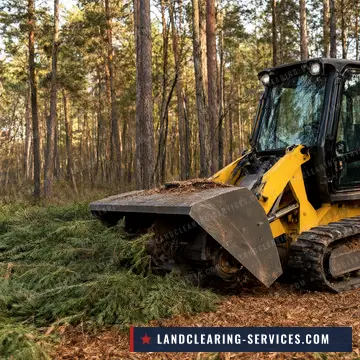
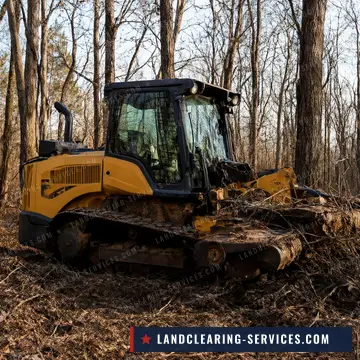
Every land clearing project requires matching the machine to the brush, trees, and ground structure. Forestry mulching uses a track carrier equipped with a spinning drum fitted with steel teeth. This attachment uses sharp teeth to clear brush and small trees up to 12 inches in diameter directly into wood chips. It is a one-step process that leaves a layer of mulch across the site. The equipment processes everything above the soil line in a single pass without uprooting the root system.
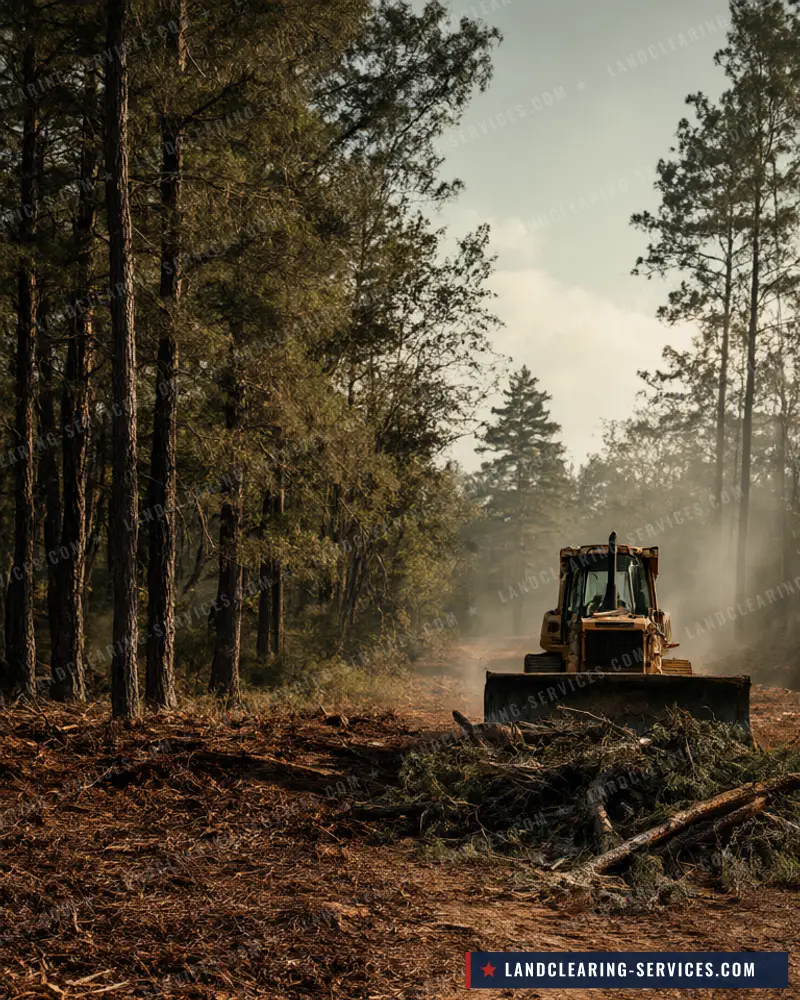
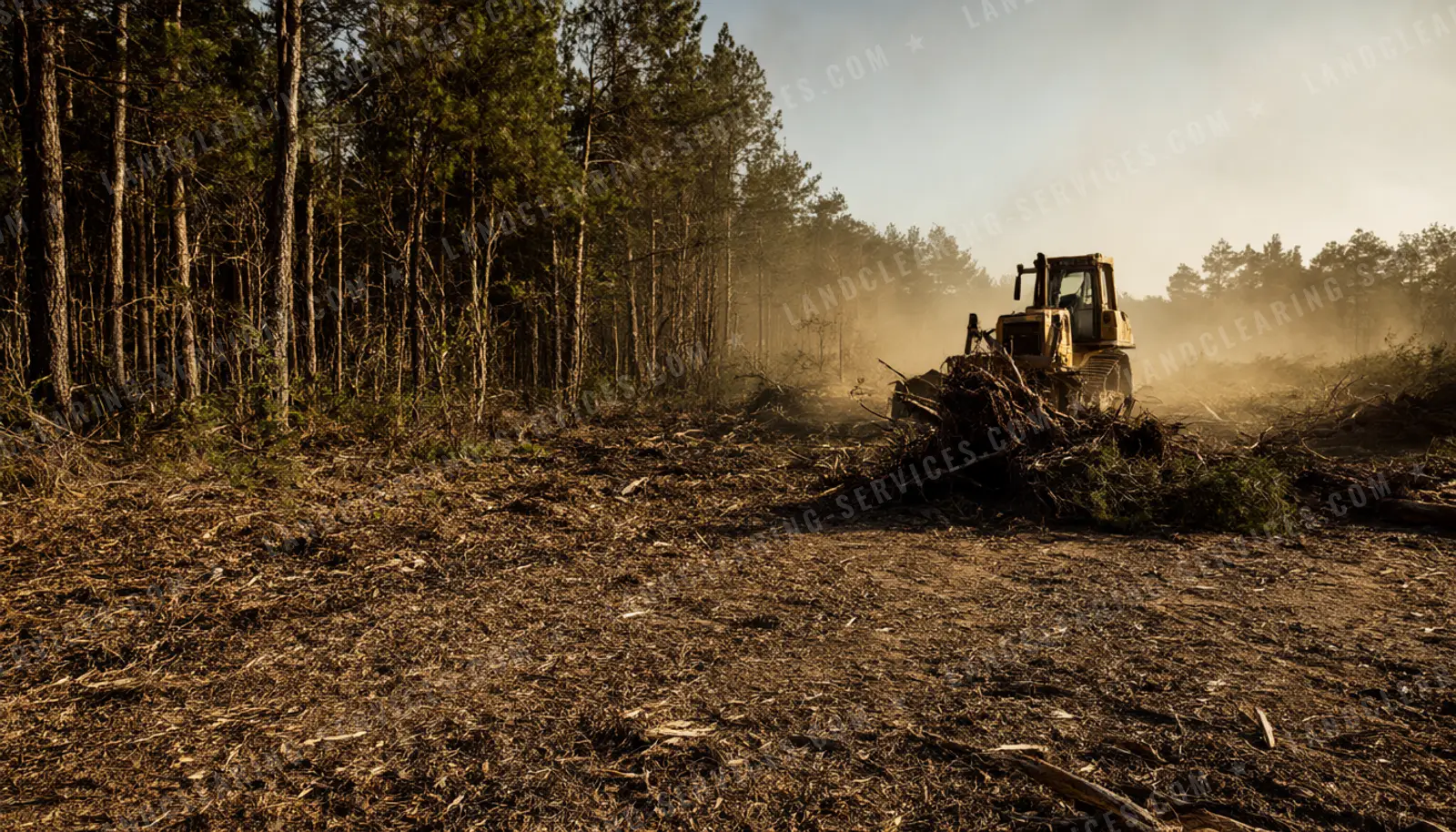
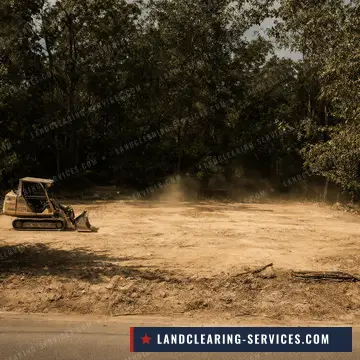
Bulldozing is a form of traditional clearing. A bulldozer uses a heavy front blade to bulldoze brush, shear roots, and push over standing growth. A tractor mounted with a blade or a Deere crawler can strip the land bare down to topsoil to displace root balls, creating large brush piles that require burning debris, burying, or trucking away. An excavator uses a bucket and thumb or an excavator to pull large stumps, dig out rock, clear slope areas, and load haul trucks. Traditional clearing methods take the ground to bare dirt, but unlike bulldozing, mulching leaves topsoil protected against heavy rainfall.
Cost Comparison per Acre and per Day: Mulcher vs Bulldozer Rates
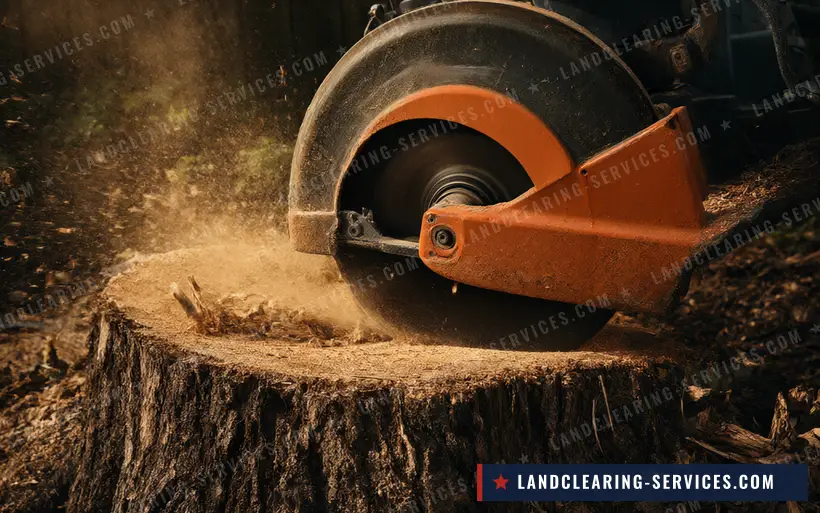
Pricing for clearing methods depends on machine fuel burn, wear parts, and the labor of multiple operators. I've priced thousands of tracts across the country, and the day-rate math remains constant. A skid steer unit costs $2,500 to 3,200 a day. A dedicated 300-hp unit runs $3,800 to 4,500 a day plus transport. For light to medium undergrowth, mulching services run $1,000 to 2,500 an acre. Dense overgrowth runs $2,500 to 4,000 per acre.
Traditional methods using a bulldozer or excavator run $150 to 200 per hour with operator. While machine hour rates look lower, total cost climbs once you add root raking, piling, cleanup, and trucking debris away. Trucking fees add $600 to 1,300 per load, with minimum trip fees running $1,000 to 1,500. Full clearing to dirt with tree stumps out runs $2,500 to 6,000 per acre. On a tract in Lake County, Florida last fall, we cleared a 10-acre dead citrus grove using push and root rake methods for $14,200 plus trucking costs. To get accurate line items for your lot, call (888) 709-7985 or submit your acreage details online. Marisol emails a budget range the same day.
Mulching vs. bulldozing Cost Calculator
Planning range from 2025–2026 national price data. Change any answer and the range updates.
Open the full land clearing cost calculatorClearing Speed: Acres per Day by Forestry Mulcher and Heavy Equipment
Mulching is faster than traditional land clearing when the ground stays intact. Mulching uses one machine to cut, shred, and spread organic material in one pass. A dedicated track or wheel carrier works through thick underbrush and fallen trees at a steady daily pace. Property owners save time because there is no secondary handling of material.
Bulldozers and excavators push thick growth quickly, but clearing speed slows during root extraction and pile management. Adding an excavator to pull stubborn stumps or stack piles means coordinating multiple machines. Choosing a mulcher to clear dense vegetation allows immediate access across property lines.
What Happens to the Debris: Layer of Mulch vs Burn Piles and Haul-Off
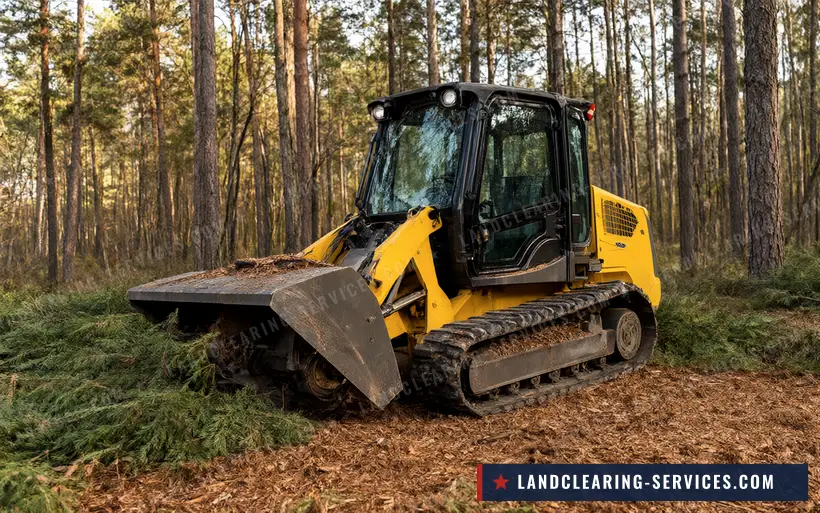
The primary environmental impact difference between these clearing methods is how they handle tree waste and woody debris. Forestry mulching leaves a uniform mulch layer spread across the ground. This layer of organic material acts as a barrier to suppress weed growth, retain moisture, and prevents erosion while enriching the soil over time.
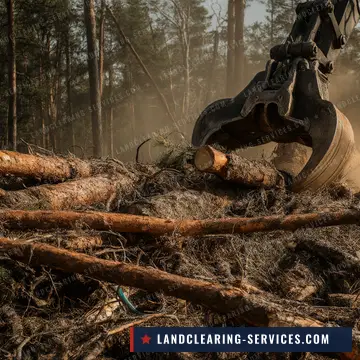
Bulldozers and excavators leave large brush piles mixed with dirt and rock. Disposing of these piles requires burning debris or trucking it offsite. Burning debris requires permits from state forestry or environmental agencies like the local DNR or DEQ, and local burn bans can stall projects for months. Hauling material offsite requires loading trucks, paying tip fees at municipal landfills, and risking road damage from heavy transport trucks. Having your land cleared with minimal environmental impact keeps topsoil intact and avoids open burning.
Soil Health, Erosion Control, and Root System Impacts
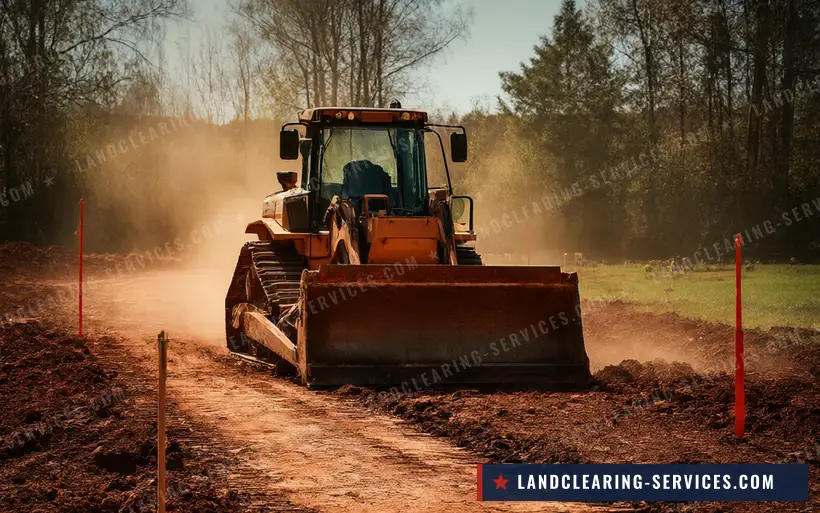
Bare dirt after a dozer pass raises erosion risks on any slope. Soil disturbance determines how ground behaves after heavy rain. This process leaves roots intact below the surface while it grinds everything above ground. Because mulching leaves roots, the root structure holds topsoil together and prevents soil loss on steep slope angles. Soil stays in place, making mulching ideal for selective clearing near stream buffers, utility pipeline corridors, or sensitive forest ground. Caliche is concrete that nobody poured, and grinding over rocky dirt saves machine teeth compared to digging roots out of hard pan.
Bulldozing strips topsoil bare. Shearing roots and pulling stumps disturbs topsoil layers, leaving open dirt susceptible to washout during severe weather. On clay soils, dozer tracks create deep ruts that fill with water. On sandy ground, removing all ground cover creates wind washout. In northern climates from December to March, frozen ground adds a day to dozer dirt work, whereas a mulching head on a track or wheel machine floats across frozen earth and cuts invasive plants like buckthorn or multiflora rose cleanly at ground level.
When You Need a Traditional Dozer for Building Site Prep
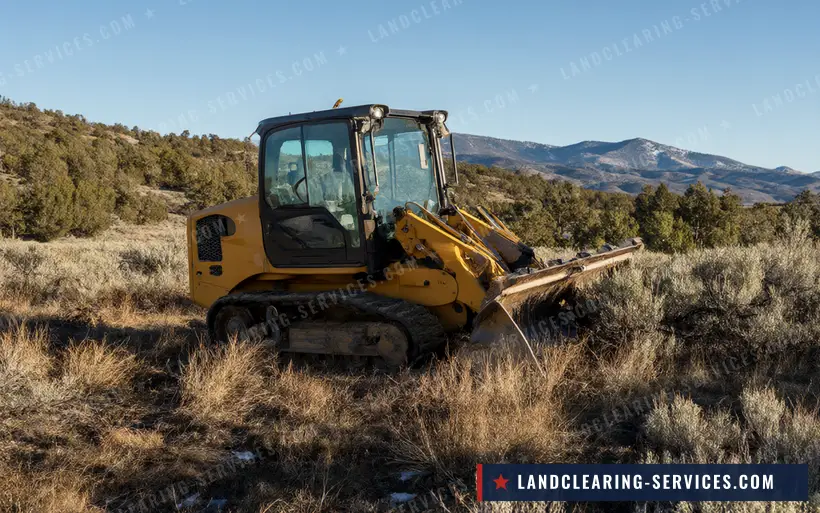
Forestry mulching is an efficient choice for vegetation management, but it cannot alter terrain grade. When your goal is building site prep, a dozer or excavator is mandatory. A mulcher cuts brush and trees, but it leaves tree stumps flush with the soil line. You cannot pour concrete foundations, trench utility lines, or build roads over buried stump roots.
A dozer or excavator is required when projects need ground leveling, basement excavation, drainage installation, or building site construction. On a job in Logan County, Oklahoma, we cleared 20 acres of eastern red cedar pasture using a dedicated 300-hp machine for $18,500 plus transport to reclaim grazing ground. However, if that client were building a commercial pad, a dozer would be necessary to strip the land bare, cut dirt, and roll base rock. We routinely recommend mulching brush first to clear vision, followed by targeted dozer work for the building footprint.
Which Land Clearing Method Fits Your Project Requirements
Selecting the right land clearing methods requires matching site requirements with machine capabilities. The table below outlines standard recommendations based on project goals.
| Project Type | Recommended Equipment | Primary Reason |
|---|---|---|
| Pasture Reclaim | Track Carrier | Grinds brush, leaves topsoil intact, enriching the soil |
| Wooded Residential Lot | Track Unit or Chainsaw | Selective removal around good trees as well as sapling growth |
| Defensible Space Firebreaks | Track Carrier | Eliminates ladder fuels, creates clear firebreaks quickly |
| Building Pad Site Prep | Dozer and Excavator | Removes tree stumps completely and levels subgrade dirt |
| Dead Citrus Grove or Orchard | Dozer with Root Rake | Pulls entire root systems out of sandy soil for clean replanting |
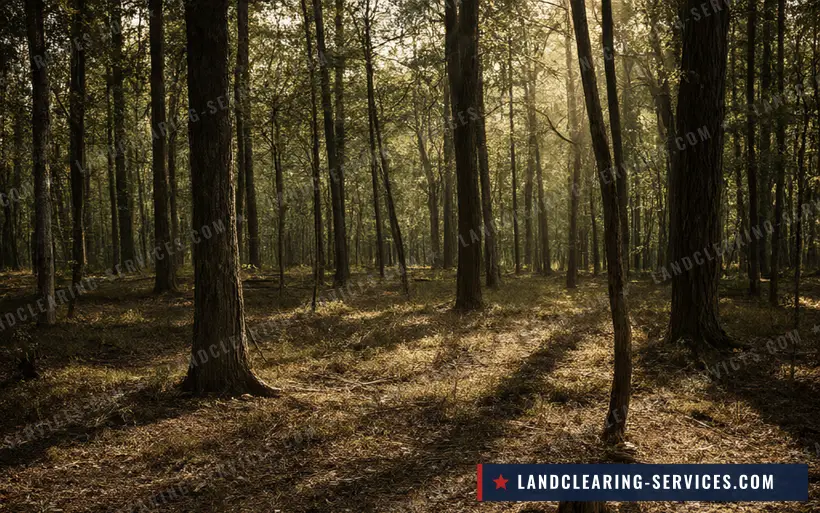
For selective clearing around mature hardwoods, a mulcher removes briar patches, small trees, and invasive plants without disturbing established root systems. When your acreage starts to overgrow with thick briar, wild saplings, and dense brush, our crews clear land fast and turn an impenetrable forest floor into park-like ground in a single day. If storm damage leaves scattered limbs across your boundary line, our crews clear brush rapidly. Call (888) 709-7985 to review equipment choices for your acreage.
Land Clearing and Forestry Mulching FAQ
Does forestry mulching remove tree stumps and root systems completely?
No, our crews clear ground by grinding woody growth flush with the soil line. The root system remains in place underground to hold soil and prevent washing. If your project requires foundation footings, driveway prep, or utility digging, an excavator to pull tree stumps is required.
Can a forestry mulcher fell larger trees or only brush?
High-flow skid steer units shred brush, saplings, and small trees up to 8 inches in diameter. Dedicated 300-hp track units fell and grind larger trees up to 12 or 14 inches. For timber larger than that, operators fell trees using a chainsaw pass before grinding the tops into mulch.
Is forestry mulching faster than traditional land clearing methods?
Yes, mulching is faster for clearing surface vegetation because it uses a single machine to cut and process material in one pass. Traditional methods require multiple steps: pushing trees with a bulldozer, piling brush with a loader, and hauling or burning debris.
Does the layer of mulch left behind damage topsoil health?
No, the layer of mulch protects topsoil from rain washout, retains ground moisture, and suppresses invasive plants like multiflora rose or buckthorn. As the wood chips decompose, they add organic material back into the soil. A thick layer can be spread thin with a tractor, loader, or rotary brush hog attachment.
When should I choose a bulldozer over a forestry mulcher?
Choose a bulldozer when you must strip topsoil, level a building site, cut roads, or pull root balls entirely out of the dirt. If you are preparing a house pad, installing commercial utilities, or cleaning out a dead orchard, dozer and excavator equipment is required.
 Land clearing
 Forestry mulching
 Lot clearing
 Brush clearing
 Tree clearing
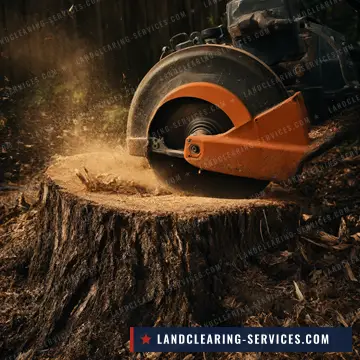 Stump grinding
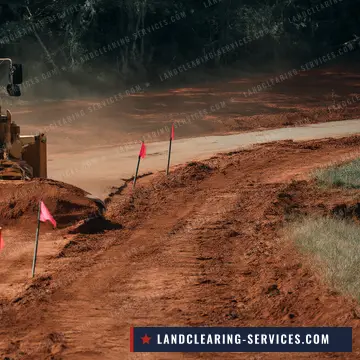 Site prep & dirt work
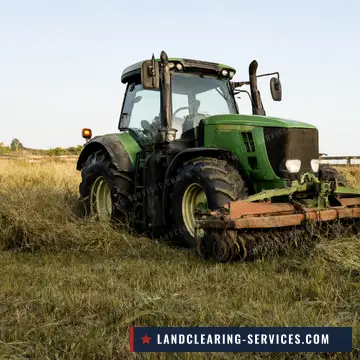 Bush hogging