Land Clearing Services in Indiana: Bush honeysuckle Cleared on Lots and Acreage from Indianapolis Metro to Central Indiana farm country
Bush honeysuckle and autumn olive take over local property if left alone for two seasons. An overgrown property requires heavy equipment to reclaim usable space. From glacial till in the northern region to southern limestone hills, brush clearing here means stopping invasive brush that chokes pasture, lot lines and timber. I started on a dozer in Georgia red clay at 19, and I've priced brush clearing across 11 states over 20 years. The math is simple: a skid steer mulcher runs $2,500 to $3,200 a day, transport included inside 60 miles of the crew's yard. Our crews deliver professional land clearing, lot clearing and site prep work across IN. Send the form or call (888) 709-7985. Marisol emails a budget range the same day and books the in-person estimate with the crew nearest you.
- 48 contiguous
states - Insured
crews - Same-day
budget range
48 statesContiguous coverage
$2,500–3,200Skid steer mulcher, per day
60 milesTransport included
Same dayBudget range by email
Land Clearing Services in Indiana
Brush removal and residential land clearing services require matching equipment to soil type and tree size. Clearline Land Services provides complete brush clearing and site prep so every landowner knows the numbers before machines move. Here is how our professional forestry mulching and traditional land clearing methods work on local ground:
Forestry mulching
single-pass brush clearing that leaves a rich mulch layer to protect topsoil. Costs $1,000 to $2,500 per acre for light to medium growth.
Full site clearing
grub, root rake, pile or haul off, plus rough grade to bare dirt. Costs $2,500 to $6,000 per acre depending on stem density, slope and rock.
Lot clearing
standard half-acre residential lot clearing for new home construction takes one day and runs $2,500 to $3,200.
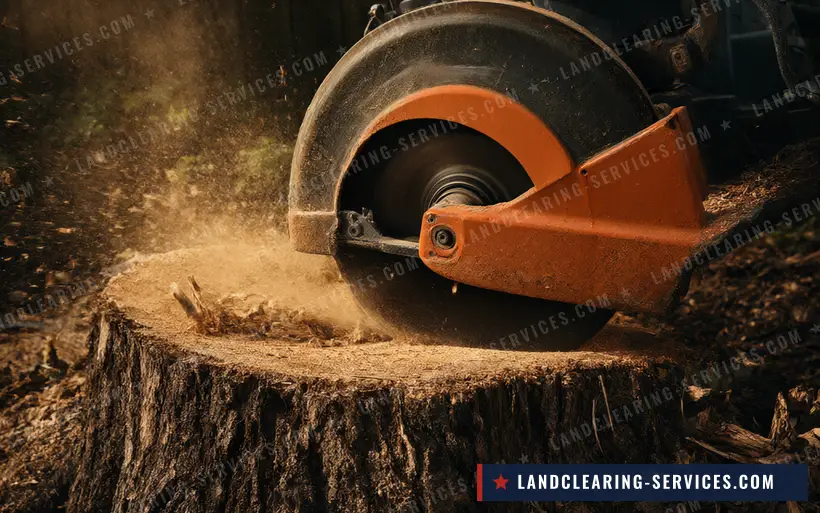
Stump grinding
individual stumps cost $3.50 to $5 per inch of diameter with a $150 to $200 minimum per stump. Large tracts with dozens of stumps are priced by the day.
Tree removal and sapling clearing
clear trees and brush together. Skid steer forestry mulchers handle small trees up to 8 inches, while larger timber takes a 300-hp machine or an excavator pass to remove trees responsibly.
Fence line and trail cutting
selective clearing to open fence lines, field borders, and trails through wooded acreage.
Pad work and driveway clearing
site preparation, pad work, culverts and driveway rough-ins at $150 to $200 per hour with an operator.
We do not pour concrete, drill wells or install septic systems. Our company clears brush, removes trees, grinds wood, and finishes cleanup so your build starts on clean dirt.

Land Clearing Across Indiana: Indianapolis Metro, Regions and Soils
Each region brings distinct soils and growth patterns that dictate daily production rates for land clearing experts.
contiguous states
- 01
Indianapolis Metro
Heavy clay and rolling ground mark Hamilton, Hendricks and Hancock counties. Bush honeysuckle, callery pear and multiflora rose overrun acreage near Hamilton and surrounding suburbs.
- 02
Northern Indiana
Glacial till, muck soils near low ditches, and dense autumn olive stands dominate areas near Fort Wayne and the Region. Winter frost gives solid footing across soft ground.
- 03
Southern Indiana Hills
Karst limestone and thin topsoil define terrain near Bloomington and Evansville. Eastern red cedar grows thick on limestone knobs, where rock requires careful teeth management on mulching heads.
- 04
Central Indiana Farm Country
Broad till plains where fence lines, ditch banks and borders fill with poison ivy, wild grapevine and dense brush.
Each area acts as a local service area. Transport is included inside 60 miles of the crew's yard, with clear mileage rates listed on the written estimate for longer moves.
What Indiana Landowners Clear Most: Honeysuckle and Invasive Brush
Amur honeysuckle, autumn olive, multiflora rose and callery pear dominate old fields and unmanaged woods across county land. Bush honeysuckle forms dense thickets under hardwoods, blocking light and stopping natural regrowth. In low river bottoms, cottonwood and willow spread fast, while fence rows choke with wild grapevine and poison ivy.
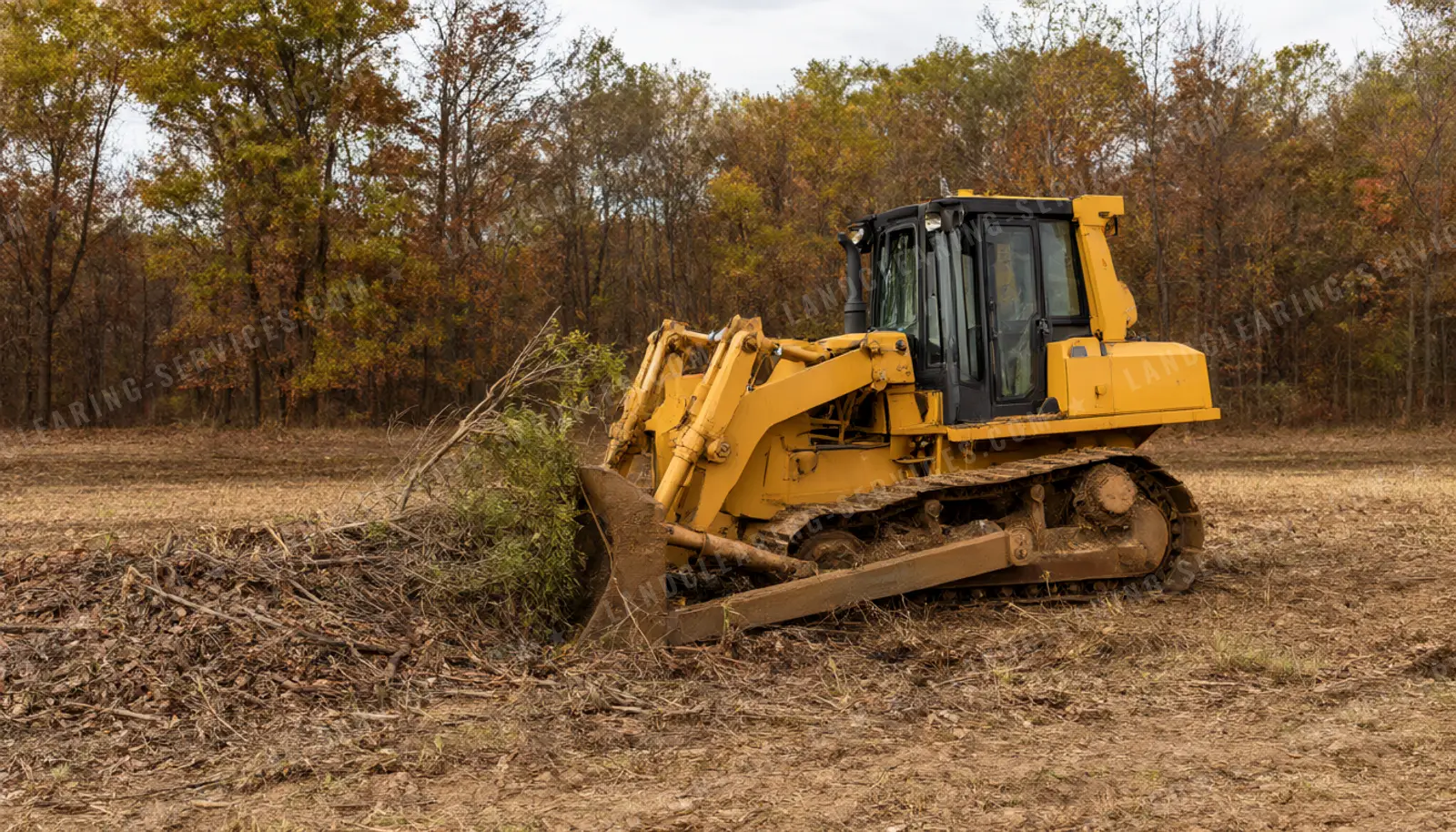
Minnesota buckthorn and local honeysuckle are the same job with different roots. Brush clearing with forestry mulchers turns dense brush and sapling growth into mulch that suppresses weeds and protects the soil. Eastern red cedar on southern limestone knobs does not resprout from a low stump cut, but honeysuckle and autumn olive return if root crowns remain intact. We help property owners plan post-clearing maintenance so your Indiana land is cleared and stays clear.
Land Clearing Cost in Indiana per Acre
Invasive brush like honeysuckle and autumn olive falls into light to medium pricing bands for forestry mulching services. We price every job using transparent day rates based on acreage and ground conditions.
Skid steer mulcher
$2,500 to $3,200 per day, transport included within 60 miles of the yard.
300-hp dedicated mulcher
$3,800 to $4,500 per day plus transport for large acreage.
Forestry mulching cost
$1,000 to $2,500 per acre for typical honeysuckle and sapling cover; $2,500 to $4,000 per acre for dense callery pear thickets and heavy hardwoods.
Full excavation to bare dirt
$2,500 to $6,000 per acre, governed by haul-off needs, slope and rock.
Dozer or excavator hourly rate
$150 to $200 per hour with operator. Minimum trip fee is $1,000 to $1,500.
I've priced acreage clearing across dozens of Midwestern counties. On a job in Hudson Valley, New York last winter, we cleared one acre of dense multiflora rose and buckthorn on frozen ground in one day for $3,100 using a skid steer mulcher. On a tract in Logan County, Oklahoma, one of our crews cleared 20 acres of dense cedar pasture over 4 days with a 300-hp machine for $18,500 plus transport. On a job in Weatherford, Texas, one of our Texas crews cleared a half-acre mesquite lot in a single day for $2,900. Review our detailed state cost breakdown at /land-clearing-cost/Indiana/ to learn more. Call (888) 709-7985 or submit our simple form for a direct price estimate from Marisol.
Land Clearing Cost Calculator for Indiana
Planning range from 2025–2026 national price data, adjusted to Indiana costs. Change any answer and the range updates.
Open the full land clearing cost calculatorBest Season to Clear Your Land in IN
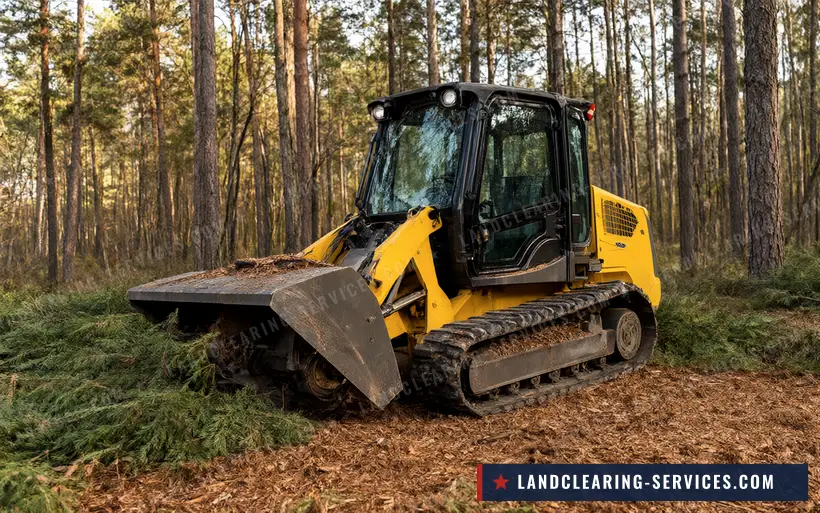
December through March provides excellent ground conditions for forestry mulching in Indiana. Frozen ground acts like a paved haul road, supporting heavy forestry mulchers without causing deep rutting or soil compaction across till plains.
Stump grubbing, dirt excavation and root raking should wait for spring thaw. March and April bring mud season to Central and northern clay, which adds a wet day to heavy dirt work when machines lose traction. Summer and fall offer firm footing for clearing for residential projects, driveway cutting and pasture expansion. Every state has a plant it is embarrassed about, and local landowners spend most of their summer trying to hide honeysuckle behind a field edge. When the ground freezes, our equipment moves fast across overgrow brush without getting stuck. You can use forestry mulching to mow down dense thickets quickly.
Indiana Permits, Burn Rules, Wetlands and Regulations
Knowing local environmental rules prevents costly job delays. Our team reviews these regulations before dispatching equipment to clear your land:
- 01
Open burning for brush removal requires IDEM's prior approval under state environmental management rules. Many townships ban open burning entirely. Using forestry mulching preserves organic topsoil, eliminates pile accumulation, and avoids hauling or burning waste.
- 02
Wetland and stream protection
Work inside floodways requires an IDNR Division of Water permit. Disturbing or filling jurisdictional wetlands triggers USACE Section 404 permits (Louisville or Detroit District) along with Indiana isolated wetlands regulations managed by IDEM.
- 03
Tree preservation
Municipal tree ordinances in Carmel, Fishers, Zionsville and Bloomington regulate tree cutting on residential lots and commercial site developments.
- 04
Invasive species regulations
The Indiana DNR enforces the Terrestrial Plant Rule (312 IAC 18-3-25), restricting invasive woody plants including Amur cork tree, Amur honeysuckle, Asian bittersweet, autumn olive, Bell's honeysuckle, and blunt-leaved privet.
- 05
Utility line safety
Indiana law (IC 8-1-26-16) mandates an 811 call before digging. Ground contact must be scheduled at least two (2) full working days but not more than ten (10) calendar days prior to excavation.
Cost-Share Programs: NRCS EQIP Brush Management in Indiana
Private landowners improving pasture, timberland or land and wildlife habitat can request federal financial assistance through the USDA Natural Resources Conservation Service. The Environmental Quality Incentives Program (EQIP) provides cost-share funding under practice code 314 for brush management.
This program targets invasive brush species like honeysuckle and autumn olive to restore working land back to productive use. Property owners apply through their local USDA service center. A conservation planner evaluates the acreage and drafts a custom plan detailing brush removal standards and erosion controls. Approval typically takes several months, so landowners should apply before scheduling clearing operations. Our crews clear vegetation strictly to NRCS plan guidelines.
Land Clearing in IN by County and Growth Metro
Data from the Census Building Permits Survey 2025 shows 19,877 single-family single-unit permits issued statewide in Indiana. Rapid growth drives steady demand for expert land clearing across major metropolitan areas.
- 01
Indianapolis Metro
Hamilton County issued 2,934 single-family permits in 2025; Hendricks County logged 1,583; Hancock County added 1,057. Expansion around Westfield, Noblesville and Brownsburg makes land clearing near Hamilton and nearby towns a primary focus for residential growth. Our crews handle land clearing in hamilton for new housing developments.
- 02
Fort Wayne and Allen County
Allen County recorded 1,300 single-family permits in 2025. Development in Fort Wayne involves clearing autumn olive, fallen trees, and overgrowth across northern glacial till. Our crews use specialized teeth to grind brush into fine organic mulch for commercial projects and utility companies.
- 03
Northwest Indiana
Lake County reported 1,262 single-family permits, while Porter County logged 564. Clearing near Lake and Porter counties involves managing high water tables and sandy loam soils near Lake Michigan.
- 04
Bloomington and Southern Hills
Monroe County issued 190 single-family permits in 2025. Site clearing near Bloomington requires specialized equipment designed for steep limestone slopes.
Our crews serve communities near Hamilton, Allen, Lake, and surrounding rural districts. Equipment mobilization inside 60 miles of our regional staging yards carries no extra transport line item.
Send the Form, Get a Range the Same Day, Walk the Land with the Indiana Crew
Clearline Land Services makes securing a written estimate straightforward:
- 1
Submit site details
Call (888) 709-7985 or fill out our online form with your acreage, county location, and vegetation conditions.
- 2
Receive budget estimate
Marisol reviews your details in our estimating office and emails a direct cost range that same day.
- 3
On-site consultation
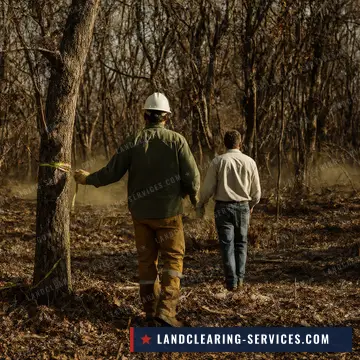
We schedule a free on-site estimate with the crew lead nearest you. We walk boundaries, identify trees to save, check slope and rock, and verify utility clearances.
Your written quote outlines daily machine rates, expected acreage output, transport fees, and contingencies for wet soil or limestone before equipment unloads. Our insured crews deliver environmentally responsible land restoration so you get usable land ready for building.
Frequently Asked Questions About Land Clearing in Indiana
How much does tree and brush removal cost per acre in Indiana?
Forestry mulching costs $1,000 to $2,500 per acre for typical bush honeysuckle and sapling cover, and $2,500 to $4,000 for dense thickets or small hardwoods. Full clearing to dirt with stump removal costs $2,500 to $6,000 per acre based on rock, slope and soil moisture.
Do I need a permit to clear brush in Indiana?
You do not need a state permit to clear brush and trees on private land outside protected areas. However, open burns require prior approval from the Indiana Department of Environmental Management (IDEM), floodway work requires an IDNR permit, and wetland fill requires a USACE Section 404 permit.
Can I burn brush piles after clearing land in Indiana?
Open burning of brush debris is regulated by IDEM and local county ordinances, with many townships banning outdoor fires completely. Using forestry mulchers avoids burning entirely by grinding brush directly into a beneficial mulch blanket that feeds the soil without generating smoke.
What is the best time of year to clear land in Indiana?
December through March is ideal for forestry mulching and land clearing because frozen ground supports heavy equipment without rutting wet soils. Summer and fall are best for root grubbing and dirt grading. Spring mud between March and April can add a wet day to heavy earthmoving work.
How fast can a crew clear my acreage?
After you contact us, Marisol emails a budget range the same day, and an estimator walks your ground within a few days.
How do I get an exact quote for my land clearing project?
Call (888) 709-7985 or send us your details online. Marisol emails a budget range the same day and sets up a free on-site walk with the crew leader nearest you to deliver a final written price.