Land Clearing Services in Colorado: Gambel oak and mountain mahogany Cleared on Lots and Acreage from Front Range to Eastern Plains
Land clearing in Colorado comes down to two obstacles: Gambel oak brush in the foothills and expansive clay across the Front Range. I started on a dozer in Georgia red clay at 19, and after 20 years pricing site work across 11 states, the math stays plain. A skid steer mulcher runs $2,500 to $3,200 a day, with transport included inside 60 miles of our crew's yard. Our crews clear lots, mountain tracts and build pads from Colorado Springs to the Western Slope. Call (888) 709-7985 or send the form. Marisol emails a budget range the same day and books the on-site estimate with the crew nearest you.
- 48 contiguous
states - Insured
crews - Same-day
budget range
48 statesContiguous coverage
$2,500–3,200Skid steer mulcher, per day
60 milesTransport included
Same dayBudget range by email
Land Clearing Services across Colorado
Clearline Land Services handles residential and acreage clearing across CO, pricing every job by the day or by the acre before equipment unloads. Knowing what a crew does not offer matters just as much, so our scope ends with a clear line.
Forestry mulching
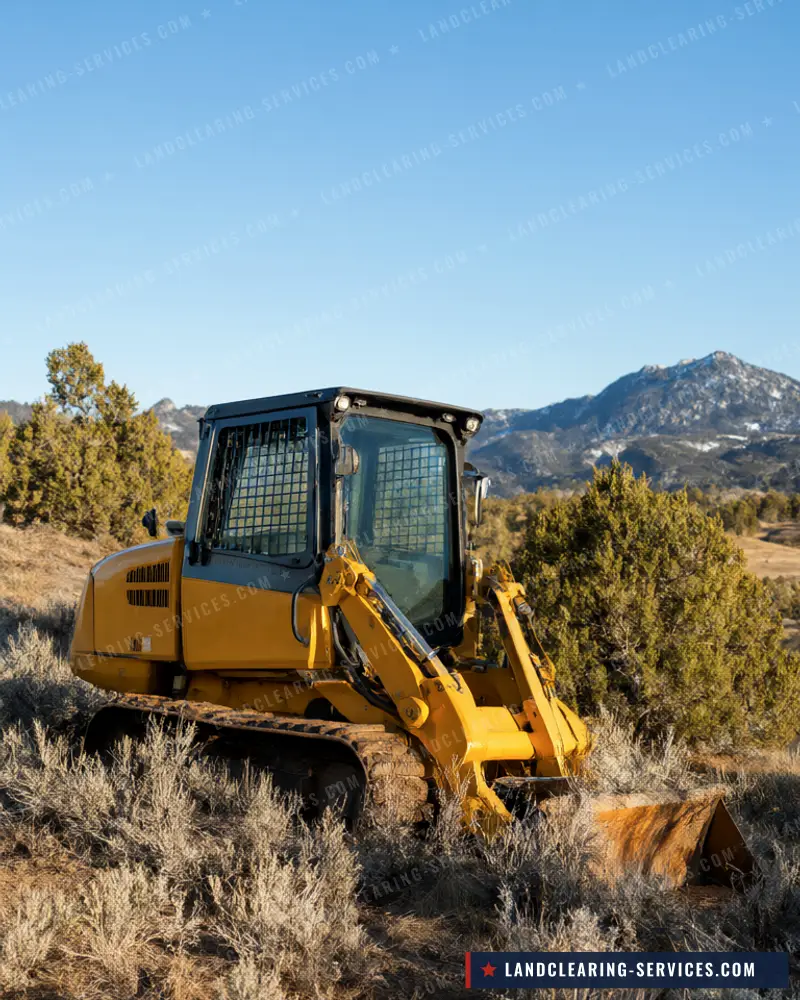
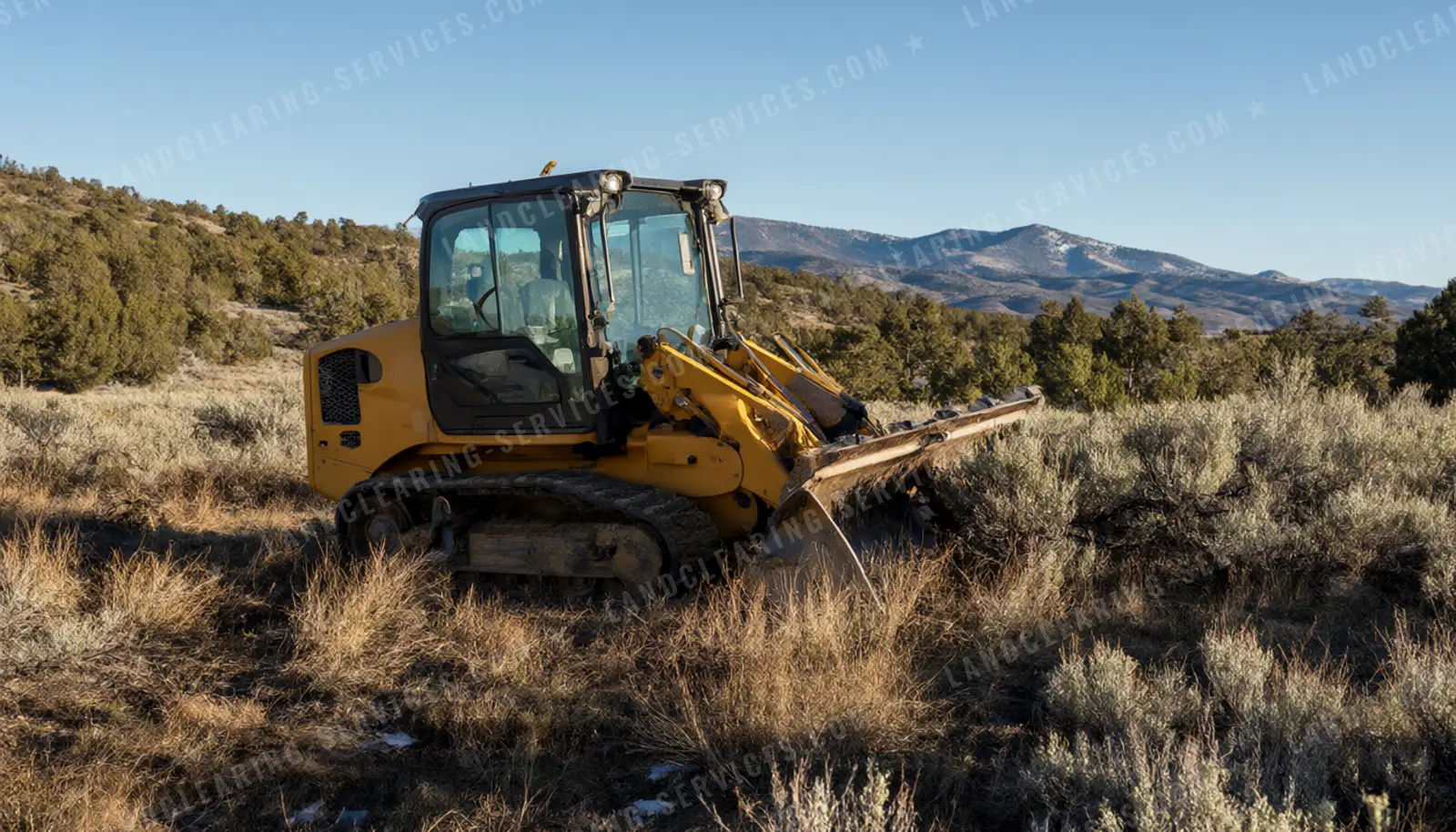
one pass, one operator, using a dedicated attachment to grind Gambel oak, pinyon-juniper and log slash into ground cover. $1,000 to $2,500 per acre for light to medium cover.
Lot clearing
preparing a residential parcel for construction. A half-acre building lot takes one day, running $2,500 to $3,200.
Wildfire mitigation and defensible space
brush removal and canopy spacing. Our land clearing service prices this work per 100 feet.
Full clear to dirt
grubbing roots, removing stumps, and rough grading. $2,500 to $6,000 per acre depending on rock and slope.
Stump grinding
$3.50 to $5 per inch of diameter, with a $150 to $200 minimum trip fee. Large stump removal projects are priced by the day.
Selective clearing
thinning beetle-kill pine or brush while preserving key trees.
Site preparation and excavation
foundation excavation, driveway cuts, culverts, and utility access at $150 to $200 per hour with an operator. We provide grinding services for tough stumps.
We do not pour concrete foundations, drill water wells, set septic tanks, or perform house demolition. Professional land clearing services stay focused on ground clearing, tree services, and earthmoving.

Land Clearing Across Colorado: Front Range, Foothills, Western Slope, and Eastern Plains
Elevation and soil dictate the day count on every clearing project in CO. Land clearing contractors who compare traditional land clearing to forestry mulching and land clearing often misjudge foothill granite. Our crews adapt to each region.
contiguous states
- 01
Front Range (Denver, Colorado Springs, Fort Collins)
expansive clay soil that swells when wet. Lot preparation for new housing requires precise grading, landscape planning, and stump clearance.
- 02
Foothills and Mountain Communities
decomposed granite, steep slopes, and thick Gambel oak. Rock adds a day on foundation excavation and pad clearing.
- 03
Western Slope (Grand Junction, Montrose)
adobe clay, shale, and dense pinyon-juniper stands. Land management focuses on pasture reclaim and irrigation access.
- 04
Eastern Plains
lighter soil, rabbitbrush, sage, and Russian olive along drainage ditches. Wind erosion requires careful vegetation management to protect wildlife habitat.
Each region operates from a local hub. Mobilization and transport are included inside 60 miles of the yard; distances beyond that are stated upfront on the written estimate.
What Colorado Landowners Clear Most
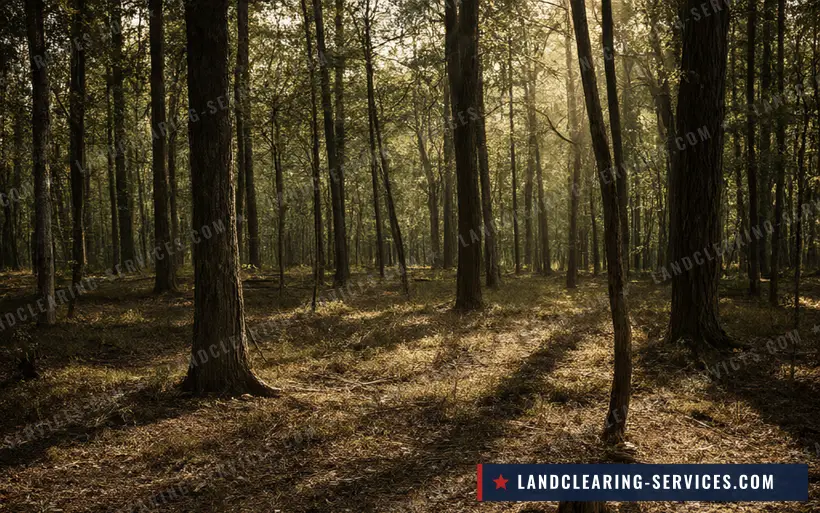
Gambel oak and mountain mahogany lead most foothill estimates. Gambel oak grows in tight clusters with heavy root systems that resprout aggressively if cut above ground. On the Western Slope and southern counties, pinyon-juniper encroaches on pasture and fence lines. Minnesota buckthorn and Colorado Gambel oak overgrow quickly with deep roots. Both demand a heavy mulching head or direct root extraction to control.
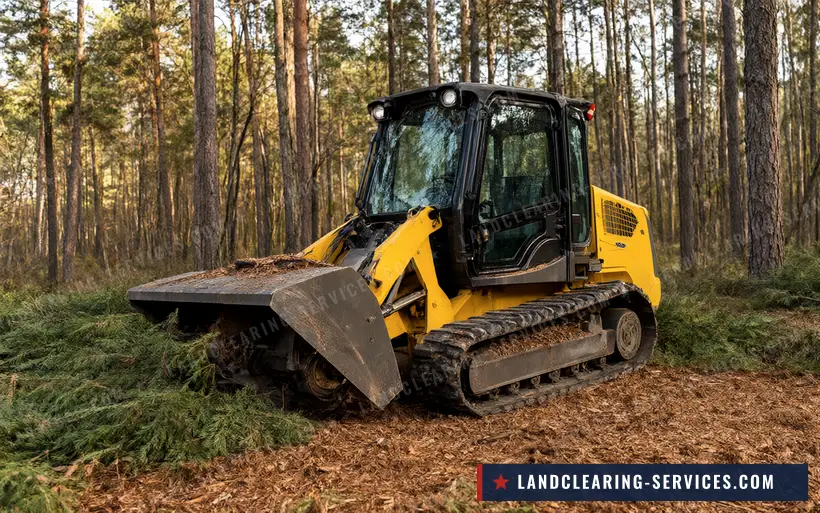
In higher timber zones, thinning beetle-kill lodgepole and ponderosa pine is standard fire mitigation. Along creeks and irrigation canals, invasive species like Russian olive and tamarisk block water flow. On the plains, sagebrush and rabbitbrush take over unmanaged acres. A heavy-duty forestry mulcher chews through thick brush and scatters fine mulch. This land clearing method minimizes soil disturbance and creates eco-friendly cover. This process offers an environmentally friendly way to manage thick vegetation without burning.
Land Clearing Cost in Colorado per Acre
Pricing on our jobs follows national baseline rates adjusted for mountain terrain, rock, and local fire codes. Here is the math we put on every proposal.
Skid steer mulcher
$2,500 to $3,200 per day, transport included inside 60 miles.
Dedicated 300-hp mulcher
$3,800 to $4,500 per day plus transport for dense timber and heavy stems.
Forestry mulching per acre
$1,000 to $2,500 light to medium density; $2,500 to $4,000 for heavy Gambel oak or dense juniper.
Full clearing to bare dirt with stumps out
$2,500 to $6,000 per acre. Rock, steep slope, and haul fees move it toward the top end.
Firewise defensible-space clearing
priced per 100 feet of perimeter around buildings.
Excavator or dozer with operator
$150 to $200 per hour. Minimum trip: $1,000 to $1,500. This process prepares any usable property for construction. Material haul-off runs $600 to $1,300 per truckload.
On a job in Bend, Oregon, we cleared 2 acres of juniper defensible space around a residence in 1.5 days for $4,600. On a tract in Oklahoma, we cleared 20 acres of dense cedar with a dedicated mulcher for $18,500 plus transport. Day rates times projected days plus terrain modifiers equal your total. Read our detailed land clearing cost Colorado guide for full pricing details. Call (888) 709-7985 or send our form to get your custom quote.
Land Clearing Cost Calculator for Colorado
Planning range from 2025–2026 national price data, adjusted to Colorado costs. Change any answer and the range updates.
Open the full land clearing cost calculatorBest Season to Clear Land in Colorado
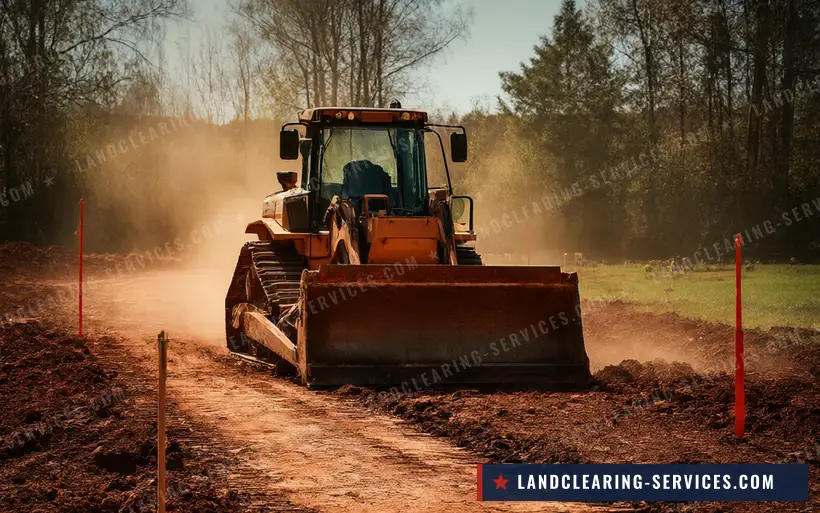
Elevation controls the working season across this state. Frozen ground from November to April above 7,000 feet stops traditional earthmoving, but a forestry mulcher runs cleanly on frozen ground without destroying topsoil. Snow up to a foot deep does not park a mulching head.
High summer (July through September) brings peak fire risk and high temperatures. Many mountain counties restrict hot-work or chainsaw operations during afternoon Stage 2 burn bans. Late spring and early fall offer the best dry window for heavy grading, tree removal, and major dirt work. High altitude weather changes fast, but cold air never broke a carbide tooth.
Colorado Permits, Burn Rules, Wetlands and Protected Trees
Navigating state regulations before heavy equipment arrives prevents project delays. We confirm compliance lines before turning a key.
- 01
Burn Permits
The Colorado Department of Public Health and Environment (CDPHE) Air Pollution Control Division oversees open burning, often delegated to local fire protection districts. Under AQCC Regulation 9, a small slash permit covers up to 50 piles per year (max pile size 8x8x8 feet, extinguished by sunset). Open burning is strictly prohibited Nov 1 through Mar 31 in the seven metro counties (Adams, Arapahoe, Boulder, Broomfield, Denver, Douglas, Jefferson). Larger clearing burns require a formal CDPHE smoke management permit.
- 02
Defensible Space Guidelines
The Colorado State Forest Service sets zone standards (0-5 ft non-combustible, 5-30 ft lean and clean, 30-100 ft reduced fuel). Communities adopting the state Fire Resiliency Code enforce these zones in the Wildland-Urban Interface.
- 03
Wetlands Protection
The US Army Corps of Engineers (USACE) Omaha District (northern CO) and Albuquerque District (southern CO) enforce Section 404 permits for soil placement in wetlands or streams.
- 04
Utility Clearance
Colorado law mandates an 811 call before digging, requiring 3 full business days for underground utility marking.
- 05
Noxious Weeds
The Colorado Department of Agriculture targets invasive species like Chinese clematis, Russian olive, and Salt cedar (List B) along with Siberian elm and Tree of Heaven (List C).
Forestry mulching services bypass slash pile rules entirely because vegetation stays on site as ground mulch rather than burn debris.
Cost-Share Programs: NRCS EQIP Brush Management in Colorado
The Environmental Quality Incentives Program (EQIP), administered by the USDA Natural Resources Conservation Service (NRCS) under practice code 314, offers cost-share funding for private landowners. This program targets brush management, pasture reclamation, and forest health improvements on working agricultural land and private acreage.
Landowners apply at their local USDA service center. An NRCS conservationist evaluates the land, identifies target vegetation like pinyon-juniper or Gambel oak, and drafts a management plan. Funding covers selective clearing that retains beneficial tree species while establishing ground cover. Approval cycles take several months, so landowners should apply well before scheduled property development projects. Our team reads your written plan and executes the mechanical clearing to meet NRCS specifications.
Land Clearing Companies by Colorado County and Metro
The Census Building Permits Survey recorded 17,406 single-family building permits in CO during 2025. Unprocessed parcels require vegetation removal and hazardous brush trimming before foundation work starts. Our crews serve four key population hubs.
- 01
Colorado Springs and El Paso County
El Paso County led the state with 2,721 permits in 2025. Terrain ranges from city expansion lots to foothill acreage with dense oak and rock.
- 02
Northern Front Range
Weld County recorded 2,011 permits and Larimer County logged 985. Worksites range from open agricultural acreage to foothill properties near Fort Collins.
- 03
Denver Metro South
Adams County (1,884 permits), Arapahoe County (1,735 permits), and Douglas County (1,465 permits) drive major residential growth requiring oak clearing and pad grading.
- 04
Western Slope
Mesa County logged 693 permits, where clearing projects tackle pinyon-juniper brush, sagebrush, and irrigation access.
We handle every land clearing project statewide. Our crews mow thick brush and include transport inside 60 miles.
Send the Form, Get a Range the Same Day, Walk the Land with the Colorado Crew
Getting your acreage cleared follows three simple steps. Call (888) 709-7985 or fill out our online form with your location, parcel acreage, and primary vegetation type. Marisol reviews the details from our estimating office and emails a detailed budget range the same day. She then schedules an on-site visit with our local crew lead.
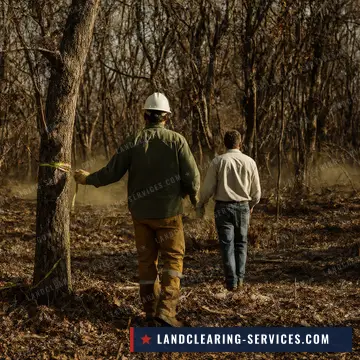
We walk the property line with you, mark wetland boundaries, note utility markers, and evaluate slope and rock conditions. I've priced jobs across the West, and I know landowners want clear facts. We put the daily rate, expected acres per day, and any extra charges for severe rock or frozen ground in writing before the lowboy moves. Since 2019, Clearline Land Services has deployed fully insured crews and professional equipment to deliver reliable clearing results. Contact us today to secure your estimate.
Land Clearing FAQ
How much does land clearing cost per acre in Colorado?
Forestry mulching runs $1,000 to $2,500 per acre for light brush and $2,500 to $4,000 for dense Gambel oak or pinyon-juniper. Full clearing to bare dirt with stump extraction ranges from $2,500 to $6,000 per acre. Steep foothill slopes and heavy rock move prices toward the higher end.
Do I need a permit to clear land in Colorado?
Clearing brush on private acreage does not require a state permit. However, open burning requires a permit from the Colorado Department of Public Health and Environment or local fire agency. County grading permits apply for steep earthmoving, and USACE Section 404 permits cover work near wetland channels.
Can I burn slash piles after clearing brush?
Burning is allowed under local fire district permits and CDPHE regulations, but it is strictly banned from Nov 1 to Mar 31 across the seven Denver metro counties. Piles must be small and monitored. Most landowners choose forestry mulching instead to skip burn permits and retain mulch ground cover.
What is the best time of year to clear mountain land?
Forestry mulching equipment operates year-round, running effectively on frozen ground from November to April above 7,000 feet. Deep dirt excavation and root grubbing work best during dry windows in late spring and fall when ground conditions are firm and free of deep snow.
How fast can a clearing crew start on my property?
Marisol sends an estimated budget range by email the same day you submit your request. Site visits occur within a week for locations inside 60 miles of a crew yard.
How do I request an accurate land clearing quote?
Call (888) 709-7985 or submit the online contact form with your property location, estimated acreage, and brush density. Marisol emails a budget range the same day and sets up a free site walk with the nearest crew lead to verify project details.