Land Clearing Services in Wisconsin: Common and glossy buckthorn Cleared on Lots and Acreage from Madison to Western Wisconsin
Work on Wisconsin land comes down to buckthorn invasion and frozen ground. Loess and limestone mark the Driftless southwest. On our jobs across the state, the core math stays simple. A skid steer mulcher runs $2,500 to $3,200 a day, transport included inside 60 miles of the yard. Our crews handle lot clearing, pasture reclamation, and dirt work from Madison to the Northwoods. Call (888) 709-7985 or send the online form. Marisol emails a budget range the same day and books the free on-site estimate with the crew nearest you.
- 48 contiguous
states - Insured
crews - Same-day
budget range
48 statesContiguous coverage
$2,500–3,200Skid steer mulcher, per day
60 milesTransport included
Same dayBudget range by email
Land Clearing Services and Professional Forestry Mulching in Wisconsin
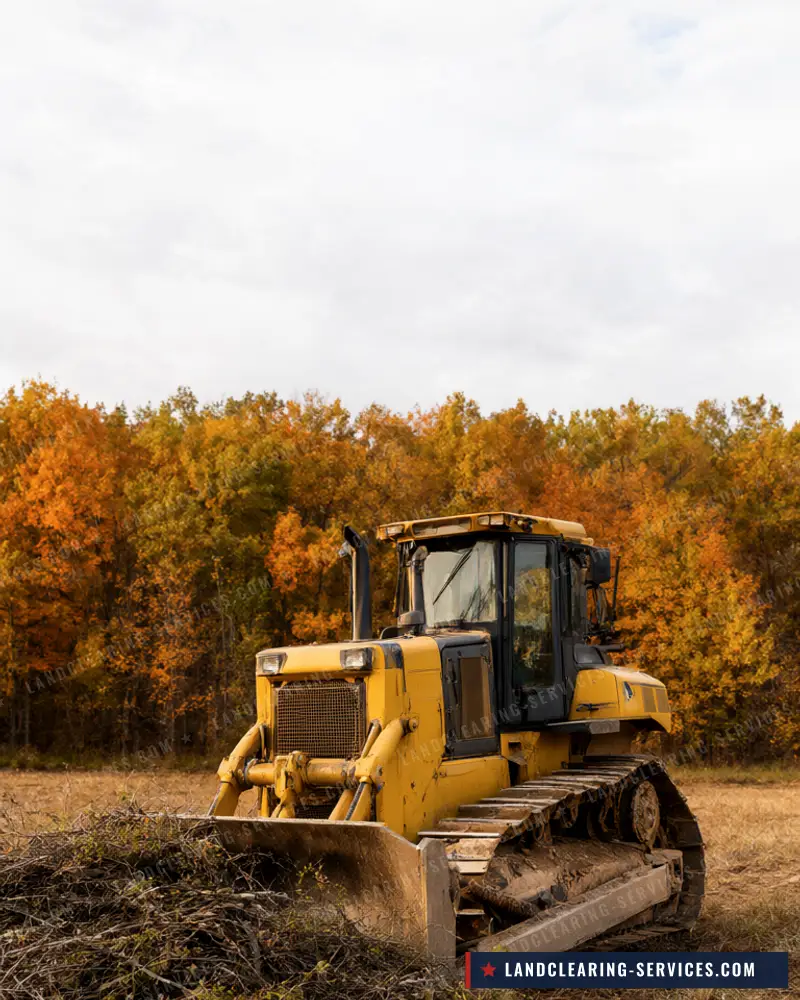
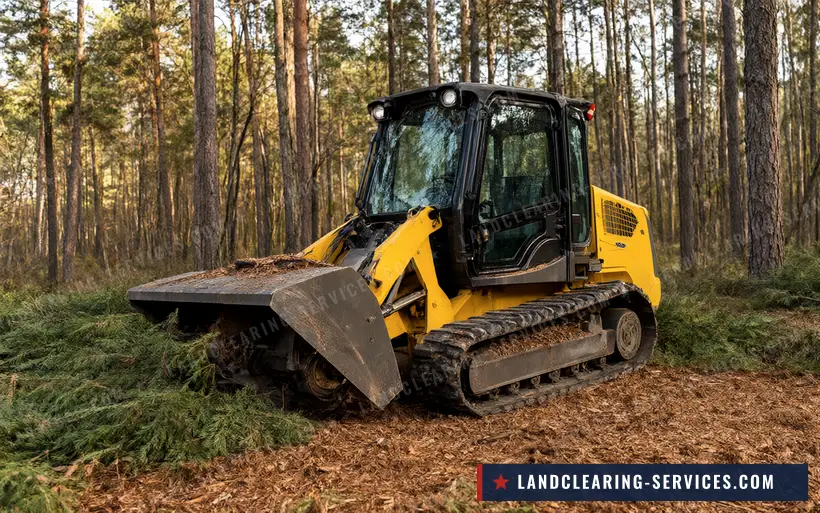
Work across this state requires matching machine weight to seasonal frost and slope. We deliver expert land clearing with fixed day rates and clear per-acre estimates, whether you need lot clearing for new home construction or brush clearing along pasture fence lines. Our crews deliver professional land clearing on every job. Mulchers cut standing woody stems and grind brush directly into a beneficial mulch layer. Mulchers can mow heavy overgrowth efficiently. This process protects the soil from erosion on hillsides and eliminates the expense of hauling or burning debris. Every job is scoped based on acreage, timber density, and terrain.
Forestry mulching and land clearing
single-pass cutting for small trees and brush clearing. Light to medium brush runs $1,000 to $2,500 an acre; dense brush runs $2,500 to $4,000 an acre.
Traditional land clearing methods
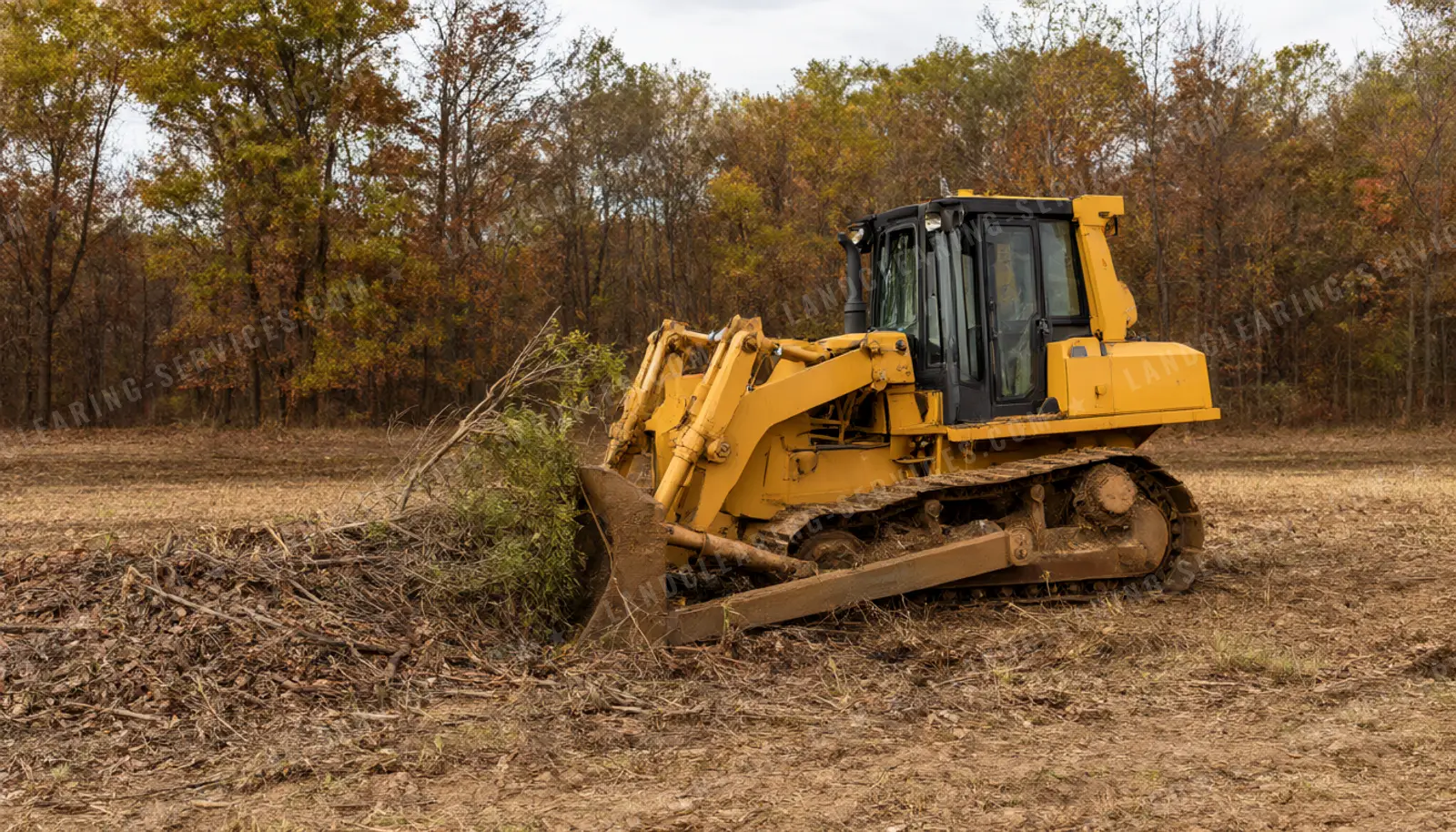
clear to dirt using excavators and dozers to root-rake, pile, and rough-grade. $2,500 to $6,000 per acre depending on stumps, slope, and stone.
Residential land clearing and lot clearing
a half-acre building site takes one day, running $2,500 to $3,200.
Selective tree removal
clear vegetation and small trees together for home sites, yards, and driveways while leaving prime hardwoods standing.
Stump grinding
$3.50 to $5 per inch of stem diameter, with a $150 to $200 minimum per stump site.
Ground preparation and dirt work
pad cutting, driveway paths, and culvert installs at $150 to $200 an hour with operator.
We do not pour concrete, install septic systems, drill wells, or demolish structures. I know specialists here who do those jobs. Clear promises build trust before any machine unloads.

Land Clearing Across Wisconsin: Madison, Milwaukee Suburbs, Fox Valley, and Northwoods
Wisconsin geography changes sharply across five key regions, and each region dictates how land is cleared safely. Experienced land clearing experts adjust machine selection to local dirt, surface rock, and water levels. We remove trees cleanly.
contiguous states
- 01
Madison and Dane County
rolling glacial till, high agricultural value, and aggressive buckthorn growth along woodlot edges. Work in Dane County balances fast land clearing in dane county with county land conservation standards.
- 02
Milwaukee Suburbs and Waukesha
heavy clay soils, tight suburban boundary lines, and high demand for residential lot expansion. Waukesha projects often require precise selective clearing for new builds.
- 03
Northwoods and Lake Country
sandy soils, dense aspen and birch regrowth, and heavy tag alder thickets. Shoreland regulations govern work near lakes and streams.
- 04
Western Wisconsin
steep bluffs and limestone ledges along the Mississippi River corridor, where red cedar and invasive brush overgrow old pasture slopes.
Every region operates as a direct service territory near Dane County and statewide. Equipment transport is included within 60 miles of the local crew yard, with explicit distance charges documented up front for remote acreage.
Invasive Brush and Native Vegetation Across Wisconsin
Common and glossy buckthorn dominate woodlot edges across the state, choked with invasive species that block light from young hardwood sapling growth and hide boundary lines. On higher ground, aspen and birch produce rapid regrowth after clearing, tag alder dominates wet spots, and red cedar invades limestone bluffs.
Clearing brush requires a clear plan for private landowners. We use forestry mulching for land clearing in Wisconsin, while forestry mulching preserves desirable trees by shredding invasive vegetation into a flat mulch blanket. Minnesota buckthorn and Oklahoma cedar are the same job with different roots. Buckthorn and honeysuckle return from seed for years unless treated, so budget for follow-up maintenance on overgrown property. Mulching slows seed germination by covering bare dirt, helping land and wildlife recover naturally without burning off topsoil. Shredded wood decomposes naturally into soil.
Land Clearing Cost in Wisconsin: Per-Acre and Day-Rate Breakdown
Local clearing rates stay within standard national baseline figures, modified by seasonal mud, limestone ledges, and thick buckthorn mats.
Skid steer mulcher
$2,500 to $3,200 per day, transport included inside 60 miles.
Dedicated 300-hp mulcher
$3,800 to $4,500 per day plus transport for heavy timber and dense brush.
Light to medium forestry mulching services
$1,000 to $2,500 per acre.
Dense brush clearing and clear-to-dirt grading
$2,500 to $6,000 per acre based on haul-off distance and slope.
Excavator or dozer service
$150 to $200 per hour; haul-off runs $600 to $1,300 per load with a $1,000 to $1,500 trip minimum.
I've priced acreage projects across 11 states since 2019, and solid field math always beats a rough guess. On a job in Hudson Valley, New York, last winter, our crew cleared 1 acre of dense buckthorn and multiflora rose on frozen ground in a single day for $3,100 using a skid steer mulcher. On a tract in Logan County, Oklahoma, heavy cedar clearing on 20 acres took four days with a dedicated 300-hp mulching unit for $18,500 plus transport. Whether you need land restoration, pasture maintenance, or clearing for residential projects, our team establishes fair terms before equipment leaves the yard. Call (888) 709-7985 or submit the site form to receive a preliminary budget estimate today.
Land Clearing Cost Calculator for Wisconsin
Planning range from 2025–2026 national price data, adjusted to Wisconsin costs. Change any answer and the range updates.
Open the full land clearing cost calculatorBest Season to Clear Land in Wisconsin: The Frozen Ground Advantage
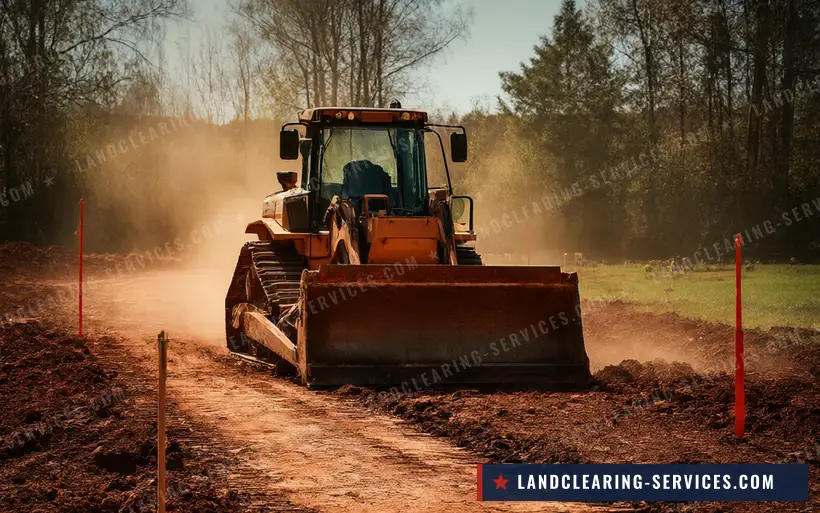
Winter operating conditions from December through March offer the ideal window to clear your land in northern states. Frozen ground acts as the best natural road a mulcher ever drove on, giving heavy tracked equipment superior traction over low ground, peat, and saturated clay without causing deep ruts.
Forestry mulchers operate efficiently over frozen soil because the machinery rides over underlying ground structures, mulching standing stems cleanly at the surface. We use equipment designed for cold weather. Spring mud season in April and May typically adds a day to dirt projects as saturated clay slows earthmoving equipment. Property owners who plan new home construction or driveway cuts for spring should schedule initial mulching work during winter freeze-up to keep projects moving on schedule.
Wisconsin Permits, Burn Rules, Wetlands, and Tree Rules
A landowner can clear brush and trees on local ground, but several state and local regulations apply to large projects. Knowing these rules in advance helps us work responsibly and avoids administrative delays.
- 01
Burn permits
The Wisconsin Department of Natural Resources requires written permission from a DNR fire warden for debris burning in forest protection areas. Mulching eliminates burning entirely.
- 02
Wetlands
Nonfederal wetlands fall under Wisconsin DNR regulation, alongside federal oversight by the US Army Corps of Engineers (St. Paul District) under Section 404 for fill placement. We map low ground carefully and keep heavy machines off fragile wetland buffers.
- 03
Shoreland zoning
Statewide county rules restrict vegetation removal within 35 feet of navigable waters to prevent erosion and preserve water quality.
- 04
Tree ordinances
Municipalities near Madison and Milwaukee suburbs enforce local canopy preservation standards and street tree restrictions on residential sites.
- 05
Adm. Code NR 40.05 govern listed invasives, including Tree of Heaven, Japanese barberry, Oriental bittersweet, Russian olive, and Autumn olive.
- 06
Utility line safety
State law (Wis. Stat. 182.0175(2)(am)1.) mandates calling 811 at least 3 working days (excluding weekends and legal holidays) before digging or driving ground stakes. Utility companies keep infrastructure safe when notified early.
- 07
Timber trespass rules
Under Wis. Stat. 26.09(3)(b), cutting a neighbor's trees or removing fallen trees across boundaries carries 1x stumpage value if relying on a recorded survey, 2x for reasonable precautions, and 4x stumpage or 2x fair market value if no precautions were taken.
Our insured crews review boundary markers, flag utility corridors, and check that every job meets local codes before work starts.
Cost-Share Programs: NRCS EQIP Brush Management in Wisconsin
Landowners working to reclaim overgrown pasture, managed forestland, or wildlife openings can access federal cost-share support through the NRCS Environmental Quality Incentives Program (EQIP). Practice Code 314 covers brush management to control invasive woody species like buckthorn, honeysuckle, and prickly ash on agricultural and forest lands.
Interested property owners apply directly at their local USDA Service Center. An assigned conservation planner conducts an on-site land evaluation and drafts a plan detailing approved clearing methods, target vegetation, and post-clearing re-seeding strategies. Funding approval takes several months, so landowners should submit documentation well before clearing begins. Once approved, our crews execute selective mulching to meet program specifications cleanly and help property owners get usable land back.
Land Clearing Companies by Wisconsin County and Metro
Wisconsin recorded 13,405 single-family building permits in 2025 according to the Census Building Permits Survey. Rapid residential expansion across key growth corridors creates ongoing demand for lot clearing and site prep on commercial projects and home sites. Our company operates across high-growth metros nationwide.
- 01
Dane County (Madison, Sun Prairie, Verona, Waunakee)
1,437 single-family permits. Heavy residential development driving high demand for lot clearing, brush clearing, and driveway cuts.
- 02
Waukesha and Washington Counties
963 permits in Waukesha County and 292 in Washington County. Sub-divisional clearing, custom home site preparation, and invasive brush clearing.
- 03
Brown and Outagamie Counties (Green Bay, Appleton)
641 permits in Brown County and 412 in Outagamie County. Industrial park clearing, acreage prep, and pasture reclamation.
- 04
St. Croix County (Hudson, Twin Cities border): 456 permits. Commuter lot growth, wooded lot clearing, trail cutting, and trails through wooded acreage.
Specific county and city service pages will launch in the next phase of our site expansion. Clearline Land Services delivers full-coverage support statewide right now, with transport included within 60 miles of our nearest equipment yard.
Send the Form, Get a Range the Same Day, Walk the Land with the Crew
Call (888) 709-7985 or submit your details through our site form, including acreage size, county location, and dominant growth type. Marisol reviews your details in our office, emails a clear budget estimate the same day, and schedules a visit with our local crew leader.
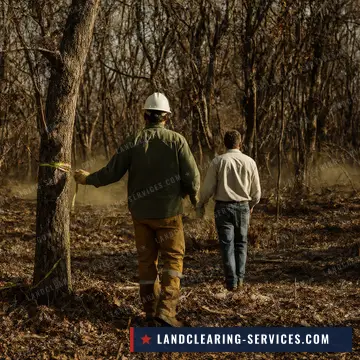
We walk it together during the initial visit to flag wetland boundaries, protect legacy hardwoods, check slope conditions, and confirm equipment access. Your final written estimate spells out the daily machine rate, estimated acres per day, and any clear adjustments for heavy rock or mud before equipment moves. I have never met a soil I could not price. I have met a few I would not dig in March. Our insured crews respect your schedule and your boundaries, delivering environmentally responsible land-clearing on clear written terms.
Frequently Asked Questions About Land Clearing Services in Wisconsin
How much does land clearing cost per acre in Wisconsin?
Light to medium forestry mulching runs $1,000 to $2,500 per acre, while dense buckthorn and heavy timber cost $2,500 to $4,000 per acre. Full clear-to-dirt projects with stump extraction run $2,500 to $6,000 per acre depending on rock, slope, and disposal requirements. Half-acre house lots typically take one day and cost $2,500 to $3,200.
Do I need a permit to clear brush in Wisconsin?
General brush cutting on private land does not require a state permit. However, burning brush piles requires a Wisconsin Department of Natural Resources burn permit from a local DNR fire warden in designated protection areas. Projects involving wetland fill require US Army Corps of Engineers Section 404 permits, and shoreland zoning rules protect land within 35 feet of lakes and streams.
Can I burn brush piles after clearing my land?
Landowners can burn brush piles outside strict forest protection areas when local fire restrictions permit. Within DNR forest protection zones, burning requires written permission from a fire warden and strict adherence to snow-cover requirements from January through May. Most of our clients use forestry mulchers instead to grind brush into mulch, eliminating hauling or burning requirements entirely.
What is the best time of year to clear property in Wisconsin?
Winter from December through March provides ideal conditions for forestry mulching. Frozen ground supports heavy machinery over low areas, saturated clay, and delicate soils without rutting or causing heavy erosion.
How fast can a land clearing crew clear my acreage?
Marisol emails a budget range the same day you contact us, and an estimator walks your acreage within a week.
How do I get an exact land clearing quote?
Call (888) 709-7985 or fill out our online contact form with your acreage location, estimated size, and target vegetation types. If you need land clearing near your town, Marisol provides a line-item budget range by email the same day and arranges a consultation with the crew nearest you. You receive a written quote listing daily equipment rates and expected completion times before work starts for final cleanup.