Land Clearing Services in Washington: Himalayan blackberry and Scotch broom Cleared on Lots and Acreage from Puget Sound to Olympic Peninsula
Land clearing in Washington state usually starts in a tangle of thickets. Himalayan blackberry and Scotch broom choke native growth on almost every unmanaged parcel, while glacial till and heavy clay in Puget Sound stay saturated from October through May. I have priced land clearing across 11 states over 20 years, and the basic pricing model never changes. A skid steer mulcher with an operator runs $2,500 to $3,200 a day. Our land clearing service minimizes soil disturbance. Our local crews clear building sites, pasture land, and overgrown residential lots across both sides of the Cascades. Call (888) 709-7985 or submit your job details through our form. Marisol in our estimating office emails a realistic budget range the same day and arranges an on-site estimate with the crew nearest you.
- 48 contiguous
states - Insured
crews - Same-day
budget range
48 statesContiguous coverage
$2,500–3,200Skid steer mulcher, per day
60 milesTransport included
Same dayBudget range by email
Professional Land Clearing Services and Site Preparation in WA
Land clearing projects across western Washington and eastern WA require the right machinery for the density of the brush.
Clear to dirt
We remove stumps, grub roots, pile or haul brush, and handle rough grading for $2,500 to $6,000 per acre depending on rock, slope, and density.
Forestry mulching
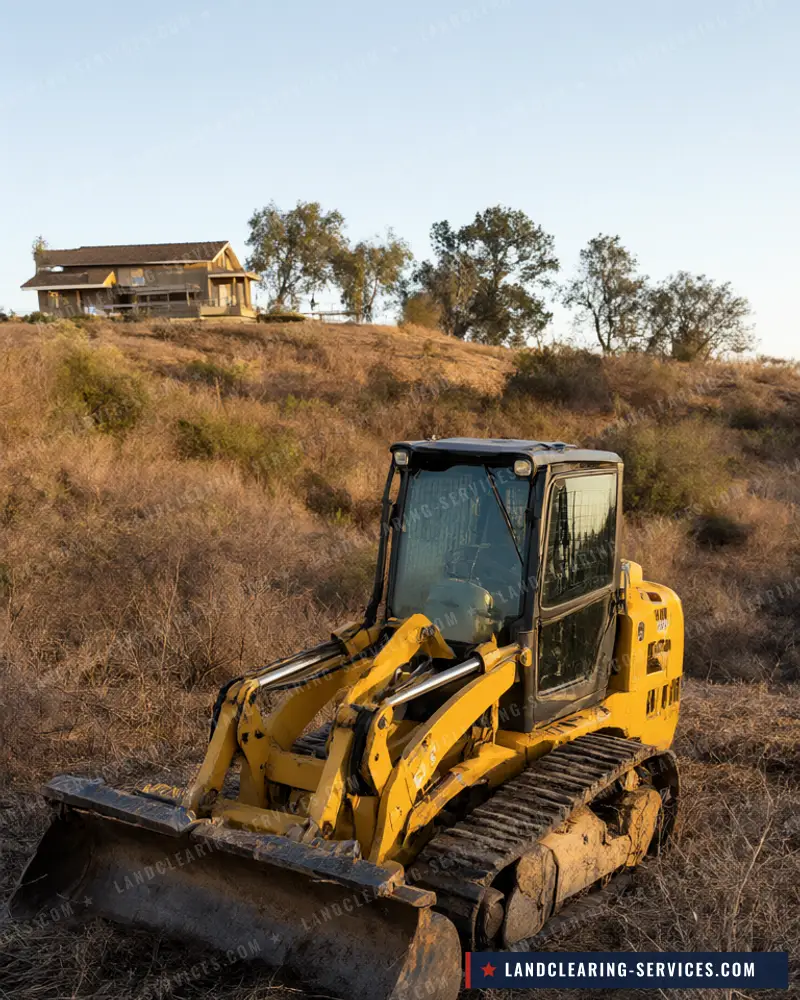
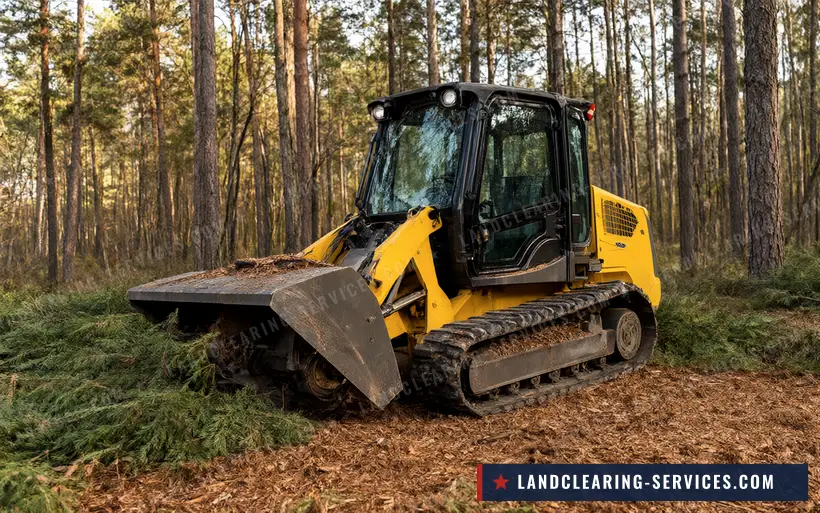
A single operator with a tracked mulcher shreds brush, saplings, and slash in one pass, leaving a blanket of ground mulch that controls soil erosion. Light to medium brush costs $1,000 to $2,500 per acre, while thick stands run $2,500 to $4,000 per acre.
Lot clearing
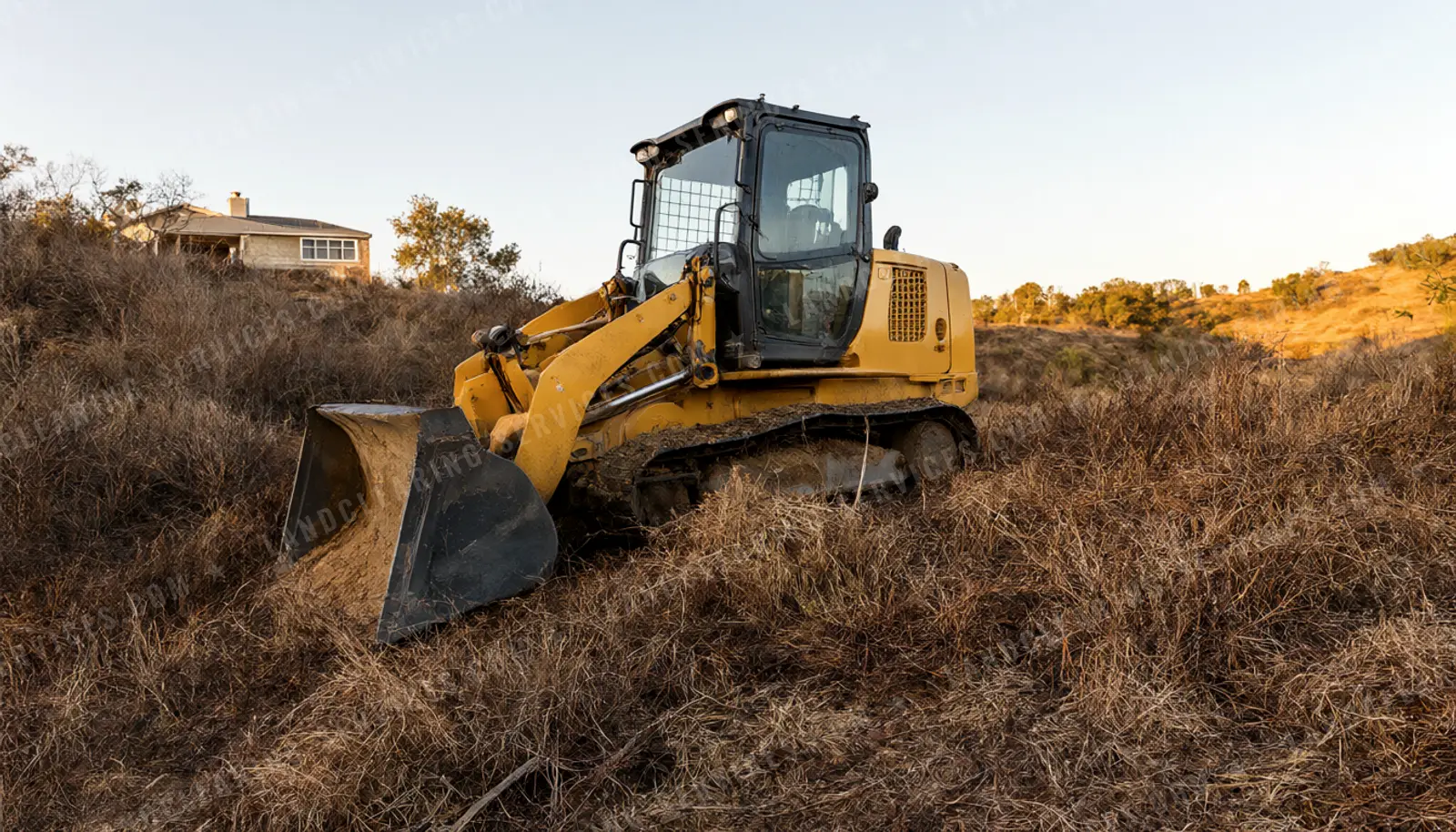
Preparing a half-acre residential parcel of property for construction generally takes one day and costs $2,500 to $3,200.
Brush removal
Mechanical clearing of Himalayan blackberry, Scotch broom, and salmonberry thickets while preserving desirable fir and cedar trees.
Stump grinding services
We grind individual stumps for $3.50 to $5 per inch of diameter, with a $150 to $200 minimum per stump. Large stump clearing projects are priced by the day.
Selective tree removal
Clearing unwanted saplings, alder patches, and understory brush around mature timber without destroying the surrounding canopy.
Excavation and site preparation
Foundation excavation, driveway shaping, and ditch culvert setting at $150 to $200 per hour with a dedicated operator.
We offer tree services and brush clearing, but we do not pour foundation concrete, drill wells, or build structures. We stick strictly to earthmoving, brush management, and tree clearing.

Land Clearing Across Washington: Puget Sound, Central WA, and Inland Northwest
Washington state features five distinct soil profiles and climate zones. Specialized local equipment operator crews understand how local ground conditions impact machine output and overall timeline.
contiguous states
- 01
Puget Sound (King, Snohomish, Pierce, and Thurston counties)
Heavily overgrown with blackberry and alder over wet glacial till and clay soils that demand tracked forestry mulchers to minimize ground compaction.
- 02
Southwest Washington (Clark County and Vancouver)
Rich volcanic loam where dense brush and Douglas-fir slash require fast mechanical clearing for active residential property development projects.
- 03
Spokane and the Inland Northwest
Basalt, loess, and dry timber stands where wildfire mitigation and defensible space clearing take priority around homes.
- 04
Central Washington (Yakima, Tri-Cities, and Wenatchee)
Columbia Basin sand, sagebrush, and bitterbrush ladder fuels where mechanical clearing opens up agriculture ground and irrigation corridors.
- 05
Olympic Peninsula and Kitsap County
Dense rainforest understory, salal, and heavy salmonberry growth that require high-horsepower mulchers to open up clearings.
Every region functions within a fixed service area. Equipment mobilization stays included inside 60 miles. Equipment transport stays included on all jobs inside 60 miles of the regional crew yard.
What Washington Landowners Clear Most: Blackberry, Broom, and Ladder Fuels
Invasive Himalayan blackberry and Scotch broom cover thousands of acres from Puget Sound down through Clark County. Himalayan blackberry vines swallow any fence, clog road corridors, and hide old tree stumps. Scotch broom spreads rapidly across open pastures, overgrow zones, and logged clearings. On eastern WA properties, ponderosa pine slash, bitterbrush, and sagebrush form dangerous fire ladders near structures.
Minnesota buckthorn and Washington blackberry present similar mechanical challenges on a tractor, but blackberry requires a planned follow-up mow because roots send up fresh canes if left untreated. On our jobs, a heavy forestry mulching attachment grinds thick brush down to ground level without disturbing topsoil stability. Alder, salal, and Douglas-fir log slash chew through teeth quickly, but mulching turns hazardous brush into useful mulch that retains moisture and prevents immediate weed return.

Land Clearing Cost in Washington per Acre and Day Rates
Vegetation density, ground moisture, and steep slopes drive clearing pricing across the Pacific Northwest. Here is how we break down estimates for local landowners.
Tracked skid steer mulcher
$2,500 to $3,200 per day, including transportation inside a 60-mile radius.
High-horsepower 300-hp dedicated mulcher
$3,800 to $4,500 per day plus heavy equipment transport fees.
Forestry mulching per acre
$1,000 to $2,500 for light to medium brush; $2,500 to $4,000 for thick, overgrown acreage.
Traditional land clearing to bare dirt
$2,500 to $6,000 per acre including root grubbing, piling, or haul-off.
Hourly operator rate
Excavator or dozer work runs $150 to $200 per hour, with haul-off adding $600 to $1,300 per dump load.
On a tract in Oregon near Bend, our forestry mulching services cleared 2 acres of thick juniper ladder fuels around a home in 1.5 days for $4,600. On a job in the Hudson Valley during January, we mulched an acre of dense brush over frozen ground for $3,100 in a single day. Call (888) 709-7985 or submit our form to get exact pricing on our land clearing cost page.
Land Clearing Cost Calculator for Washington
Planning range from 2025–2026 national price data, adjusted to Washington costs. Change any answer and the range updates.
Open the full land clearing cost calculatorBest Season to Clear Land in WA: Weather Windows and Seasonal Rules
Timing your land clearing method around seasonal weather prevents extra machine costs and protects sensitive ground. Heavy rainfall from October through April saturates western Washington clay soils and glacial till. Tracked forestry mulchers float across muddy surfaces better than heavy dozers, but deep mud can still slow down machine travel speeds.
The dry summer months from July through September bring dangerous fire conditions. The Washington State Department of Natural Resources (DNR) enforces summer burn bans across forested lands, and high fire-danger ratings can restrict hot industrial machinery operation during late afternoons. Clearing brush and removing invasive brush during late spring or early fall gives operators optimal soil traction while meeting local fire safety guidelines.
Washington Permits, Burn Rules, Critical Areas, and Tree Ordinances
Navigating state regulations keeps your site development legal and avoids heavy fines. I outline these local requirements on every written estimate before sending an operator to the job site.
- 01
Outdoor burning permits
The Washington State Department of Natural Resources regulates burning on forest lands. Land clearing burns are prohibited in nonattainment areas, urban growth areas, and cities with over 10,000 residents under WAC 173-425-040. The DNR closed burn season runs from April 15 through October 15 under RCW 76.04.005. Mulching avoids burn restriction delays entirely.
- 02
Critical Areas Ordinances
Regulated under the Growth Management Act, individual counties set buffer distances around streams, steep slopes, and wetlands. Filling or grading in regulated aquatic zones requires approvals from the Washington Department of Ecology and a USACE Section 404 permit from the Seattle District.
- 03
County clearing permits
King, Snohomish, and Pierce counties require formal clearing and grading permits if you disturb soil beyond specific square-footage thresholds or remove canopy trees over designated limits.
- 04
Call 811 before digging
Washington law under RCW 19.122.030(2) requires notification not less than 2 full business days and not more than 10 full business days before starting excavation or root grubbing work.
- 05
Timber trespass laws
Cutting trees across a property line carries treble damages under RCW 64.12.030 and RCW 64.12.040, though courts may reduce awards if the trespass was casual, involuntary, or based on a mistaken belief of ownership.
- 06
State noxious weed lists
The Washington State Noxious Weed Control Board lists tree-of-heaven, Russian olive, old man's beard, Himalayan blackberry, black locust, and common holly as Class C invasive plants under WAC 16-750-015.
Invasive species require persistent clearing tactics. Our eco-friendly forestry mulching and land clearing protects your ground habitat. Glacial ground can feel like dry concrete in August and slick grease in December.
Cost-Share Programs: NRCS EQIP Brush Management in Washington State
Landowners working to clear brush on timberland, grazing acreage, or farm ground can apply for federal financial assistance through the USDA. Our environmentally friendly methods make your ground usable. The Natural Resources Conservation Service (NRCS) offers the Environmental Quality Incentives Program (EQIP), using practice code 314 for brush management.
This program assists with removing invasive woody plants, thinning ladder fuels, and restoring native wildlife pasture land. Applications must be submitted through your local USDA service center before work begins. An assigned NRCS conservation planner inspects your acreage, sets targeted clearing zones, and writes a conservation plan. We review these technical specifications with landowners to match our forestry mulching equipment output directly to the grant guidelines.
Land Clearing Services by Washington County and Metro Area
According to the 2025 Census Building Permits Survey, Washington issued 17,780 single-family building permits, demonstrating strong demand for site preparation and residential property development. Our clearing crews work across all major growth corridors.
- 01
Clark County (Vancouver, Ridgefield, Battle Ground)
2,190 single-family permits. Fast-growing acreage, brush removal, and volcanic loam topsoil work.
- 02
King and Snohomish counties (Seattle, Maple Valley, Lake Stevens, Monroe): 2,510 permits in King and 1,909 in Snohomish. Heavy blackberry growth, strict county critical area buffers, and lot clearing for custom homes.
- 03
Pierce and Thurston counties (Tacoma, Puyallup, Yelm, Lacey)
1,717 permits in Pierce and 743 in Thurston. Glacial till, Scotch broom thickets, and foundation excavation prep.
- 04
Spokane County (Spokane Valley, Deer Park)
1,375 permits. Ponderosa pine thinning, Firewise defensible space creation, and basalt rock ground conditions.
- 05
Benton and Franklin counties (Tri-Cities, Kennewick, Pasco)
1,012 permits in Benton and 369 in Franklin. Columbia Basin sagebrush, sand, and vegetation management for land development.
Whether you need a small building site cleared in Kitsap County or multi-acre pasture restoration in Auburn, we bring commercial-grade machinery directly to your parcel line.
Send the Form, Get a Range the Same Day, Walk the Land with the Crew
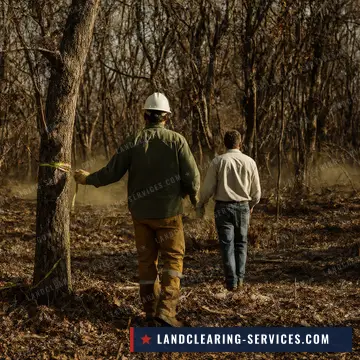
We keep our site estimate process simple and transparent. Call (888) 709-7985 or fill out our online site form with your property location, estimated acreage, and brush density. Marisol in our office reviews the details and emails a realistic cost range the same day. Next, we schedule an on-site visit with our local machine operator.
We walk your boundaries together, mark wetland buffer boundaries, check access for equipment transport trailers, and verify which mature trees you wish to keep. You receive a final written estimate detailing the exact daily rate, estimated acres per day, and any potential extra line items for heavy rock or excessive mud before work begins. Our insured crews deliver dependable results for home construction, pasture reclamation, or long-term land management.
Land Clearing FAQ for Washington Landowners
What is the average cost to clear an acre of land in Washington?
Forestry mulching for light to medium brush like blackberry or Scotch broom runs $1,000 to $2,500 per acre. Dense brush or timber slash costs $2,500 to $4,000 per acre. Complete clearing to bare ground with root stump removal ranges from $2,500 to $6,000 per acre depending on rock, slope, and wet soil conditions.
Do I need a permit to clear brush and trees on my property?
You generally do not need a permit for simple brush removal or trimming on private land. However, the Washington State Department of Natural Resources regulates burning, and counties like King, Pierce, and Snohomish require clearing permits above specific acreage thresholds or near critical wetland buffers under local Growth Management Act rules.
Can I burn my land clearing debris piles in Washington?
Outdoor burning depends on your location. Land clearing burning is banned in urban growth areas, cities over 10,000 people, and nonattainment zones under WAC 173-425-040. Our vegetation removal service handles heavy brush cleanly. The DNR enforces a statewide closed burn season from April 15 through October 15. Forestry mulching shreds brush into mulch, avoiding burn bans completely. A fresh mulch layer creates an attractive landscape on your site.
What is the best time of year for forestry mulching in western Washington?
Late spring through early fall offers the firmest ground conditions for heavy machinery. While tracked skid steer mulchers can operate on wet winter clay without sinking, dry weather allows faster production speeds and minimizes ground churning around root zones.
How quickly can a crew clear my acreage?
A experienced equipment operator using a tracked mulching attachment can clear a typical half-acre residential lot in one day. Marisol emails an estimate range the same day you submit your project details.
How do I request an estimate for my land clearing project?
Call (888) 709-7985 or complete our simple website form. Provide your county, total acreage, and a brief description of the brush or trees. Marisol emails a budget estimate the same day and books an on-site consultation with a local machine operator inside 60 miles of our yard.