Land Clearing Services in Idaho: Sagebrush and rabbitbrush Cleared on Lots and Acreage from Treasure Valley to Magic Valley
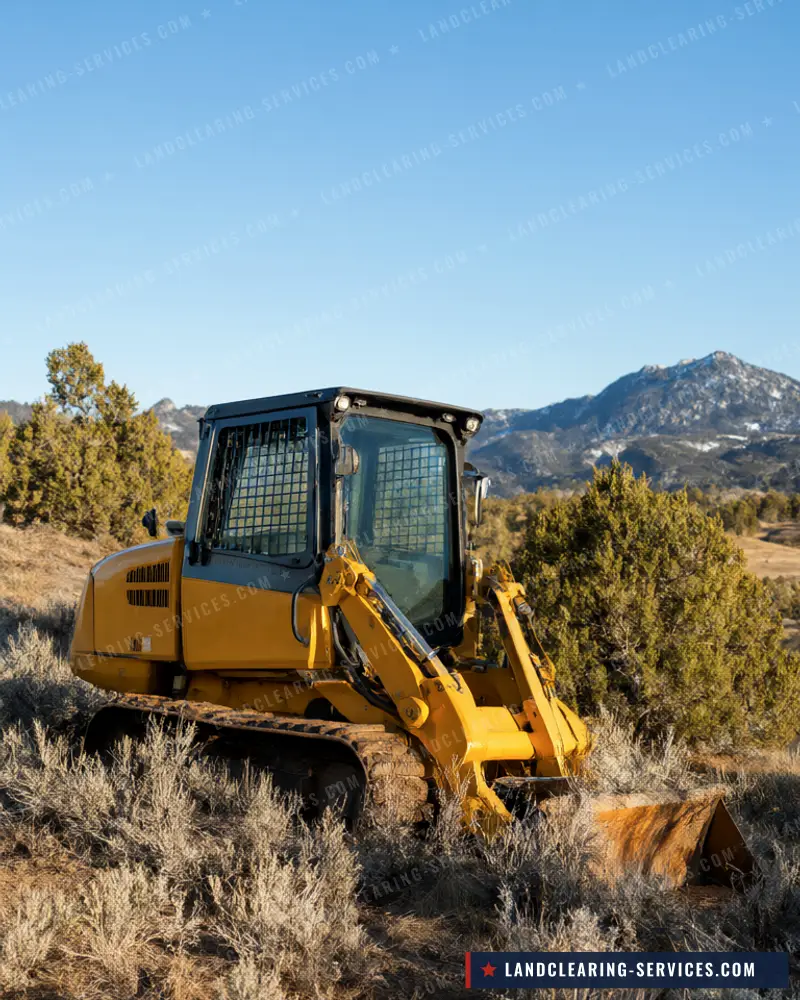
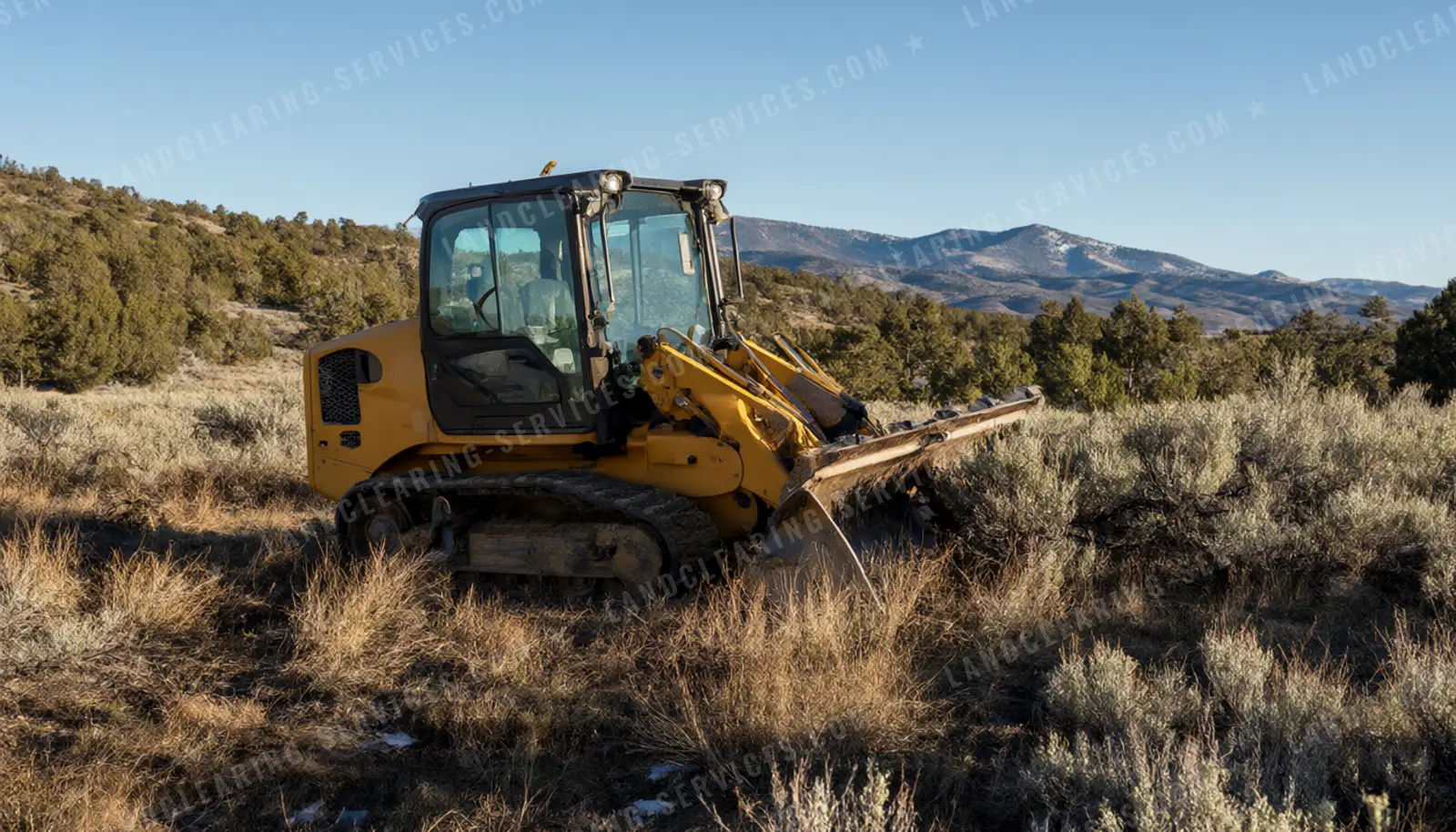
Idaho land clearing starts with two facts: sagebrush and rabbitbrush dominate the southern benches, while loess and basalt cobble sit right under the root zone in the Treasure Valley. I ran clearing crews in 11 states for 20 years before launching Clearline in 2019, and the basic day rate does not change. A skid steer mulcher runs $2,500 to 3,200 a day, transport included inside 60 miles of the crew's yard. Our crews clear lots, residential acreage, and build sites from Ada County to the Panhandle. Send the form or call (888) 709-7985. Marisol emails a budget range the same day and books the on-site estimate with the crew nearest you.
- 48 contiguous
states - Insured
crews - Same-day
budget range
48 statesContiguous coverage
$2,500–3,200Skid steer mulcher, per day
60 milesTransport included
Same dayBudget range by email
Land Clearing Services and Forestry Mulching in Idaho
Our crews handle forestry mulching and land clearing on the same tract when the job needs both. A land clearing service in this state comes in seven main forms, priced by the day or the acre. Professional land clearing services ought to put limits on their scope up front so everyone stays on the same page.
Clear to dirt
grub out roots, pile or haul off debris, and handle rough grading. $2,500 to 6,000 an acre based on stem density and rock.
Mulching
one operator, a heavy attachment, and the mulch stays on site to stabilize soil. $1,000 to 2,500 an acre for light to medium cover.
Lot clearing
a half-acre building parcel for residential development projects takes one day, $2,500 to 3,200.
Brush clearing and brush removal
systematic vegetation removal targeting sagebrush, rabbitbrush, and bitterbrush while preserving key native trees.
Stump grinding
$3.50 to 5 per inch of diameter, with a $150 to 200 minimum per stump. Dedicated grinding services grind out large fields by the day.
Selective tree removal
targeted tree clearing of ladder fuels around houses and fence lines. Tree services handle single ornamental yard trees; we clear stands and acreage.
Site preparation and excavation
driveways, pad prep, foundation excavation, and ditch culverts at $150 to 200 an hour with an operator.
We do not pour concrete, drill water wells, set septic tanks, or demolish standing homes. I know local specialists who handle those tasks. Every clearing project gets a firm price before equipment unloads.

Land Clearing Across Idaho: Treasure Valley, North Idaho, Eastern Idaho, and Magic Valley
This state spans distinct soils and plant zones, and each region alters the work pace. Contractors who only work flat dirt often miscalculate ground conditions on timber hillsides or lava rock. Our local crews handle all four zones.
contiguous states
- 01
Treasure Valley
loess topsoil over basalt cobble around Boise, Nampa, and Meridian. Sagebrush clearing and site preparation for housing growth drive the schedule here.
- 02
North Idaho
dense timber, forest duff over granite rock, and steep slopes in Coeur d'Alene and Sandpoint. Ponderosa pine, Douglas-fir ladder fuels, and invasive Scotch Broom require selective thin passes for hazardous fire mitigation.
- 03
Eastern Idaho
high altitude, short summers, and underlying lava rock in Idaho Falls and Pocatello. High wind makes piling risky, making forestry mulching services the natural pick.
- 04
Magic Valley
shallow soils, sagebrush, and scattered Russian olive near canal systems around Twin Falls. Dirt work on farmland or pasture edges moves fast once rock ledges are identified.
Sagebrush does not care if it sits in Ada County or Oregon. It breaks under a head all the same. Transport is included inside 60 miles of our local yard, with any extra haul miles written explicitly into the bid.
What Idaho Landowners Clear Most: Sagebrush, Bitterbrush, and Ladder Fuels
Sagebrush and rabbitbrush cover millions of acres across southern benches, representing the most common vegetation management task on rural parcels. Foothill properties host heavy bitterbrush and juniper. Near irrigation ditches, Russian olive and invasive species like Saltcedar take over wet margins.
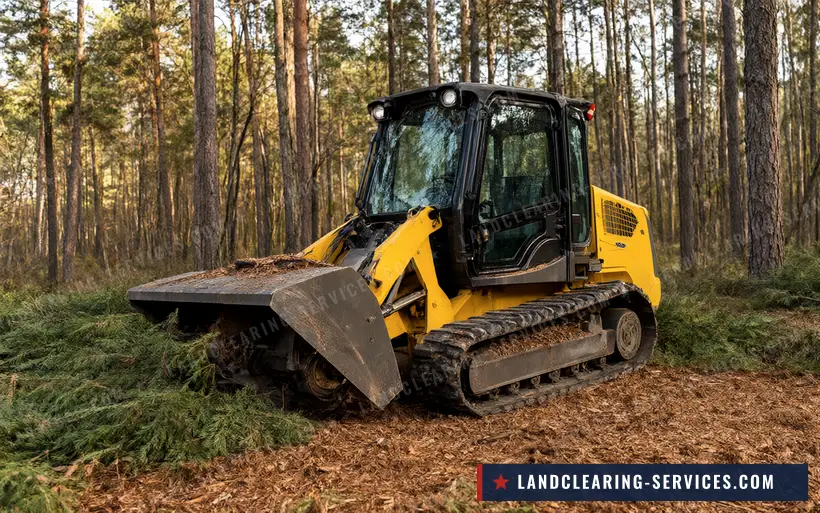
Up in North Idaho, clearing focuses on thick timber understory for wildfire mitigation. Removing ladder fuels creates defensible space that helps protect homes during severe summer burns. A forestry mulcher converts woody brush into a ground cover mat in a single pass. That eco-friendly layer minimizes soil erosion on exposed slopes and retains groundwater. I log hours on heavy gear to tackle buckthorn or sagebrush with ease. This land clearing method avoids wide disturbance on fragile rangeland soil.
Land Clearing Cost in Idaho per Acre
Sagebrush runs light per acre compared to eastern hardwoods, but surface rock and slope determine the final daily total. Here is the exact math we use on every field estimate.
Skid steer mulcher
$2,500 to 3,200 a day, transport included inside 60 miles. Dedicated 300-hp mulcher: $3,800 to 4,500 a day plus mobilization.
Forestry mulching
$1,000 to 2,500 per acre for sagebrush and light bitterbrush. Dense timber underbrush in the north runs $2,500 to 4,000 per acre.
Traditional land clearing to bare dirt with roots pulled
$2,500 to 6,000 an acre. Top-end rates reflect basalt ledges, steep grades, and heavy haul costs.
Dozer or excavator with operator
$150 to 200 per hour. Minimum equipment trip: $1,000 to 1,500.
Defensible-space clearing is priced per 100 feet of perimeter around home sites.
On a job in central Oregon near Bend, we cleared 2 acres of thick juniper and brush for fire mitigation around a home in 1.5 days for $4,600. On a tract in Logan County, Oklahoma, one of our crews reclaimed 20 acres of dense brush using a 300-hp mulcher over 4 days for $18,500 plus transport. Day rates times projected days, plus terrain factors, gives you the total. Check our full price breakdown on the land clearing cost ID page. Call (888) 709-7985 or send the form for a fast budget response from Marisol.
Land Clearing Cost Calculator for Idaho
Planning range from 2025–2026 national price data, adjusted to Idaho costs. Change any answer and the range updates.
Open the full land clearing cost calculatorBest Season for Vegetation Management and Site Prep in Idaho
The core operating window for dirt work and grading runs from late spring through early fall. Frozen ground from November to April at higher elevations locks up heavy excavators and dozers, adding machine wear and extra labor days on foundation work.
Forestry mulching machinery runs exceptionally well on frozen ground because the hard surface supports heavy tracks without damaging lower soil layers. However, fire season from July to September brings strict restrictions on hot equipment in dry timber. Closed burn windows prevent open piles during mid-summer. Mulching avoids open flame hazards completely, turning brush into a safe protective layer during dry periods.
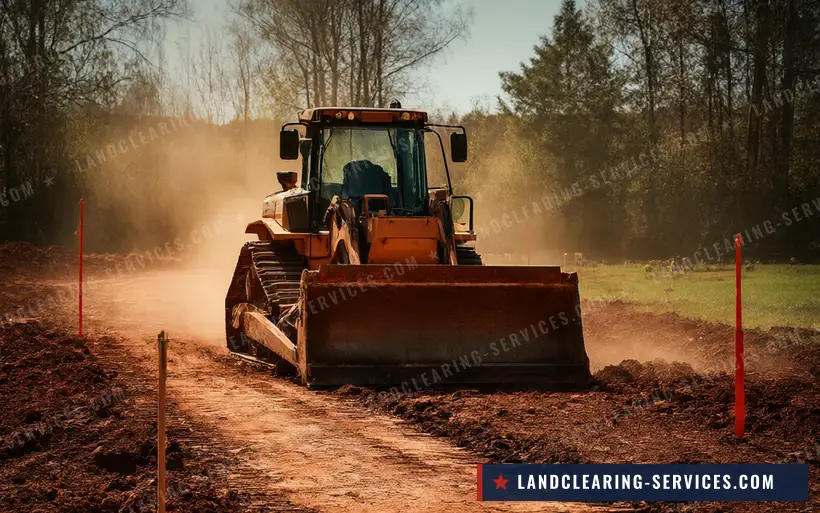
Idaho Permits, Burn Rules, Wetlands, and Property Line Laws
State laws do not mandate a general land clearing permit for private property, but several specific state statutes touch on land management activities. We highlight these on our initial estimates to prevent project delays.
- 01
Burn Rules
The Fire warden of the forest protective district enforces the Idaho Forestry Act (Idaho Code 38-115). The standard closed burn season runs from May 10 to October 20, though the director can adjust these dates based on local conditions.
- 02
Defensible Space
Guidance through IDL and county Firewise programs provides layout rules for the Boise foothills and Panhandle locations to lower fire risks.
- 03
Stream Alterations
The USACE Section 404 permit (Walla Walla District) regulates fill in designated wetlands, while IDWR stream channel alteration permits cover work along active creeks.
- 04
811 Dig Line
Call 811 before excavation. Idaho Code 55-2205 requires notice of 2 to 10 business days prior to digging.
- 05
Timber Trespass
Idaho Code 6-202 sets treble damages for civil trespass involving tree cutting on another person's parcel without authorization. We verify lines before cutting.
- 06
Noxious Weeds
IDAPA 02.06.09 (Idaho State Department of Agriculture) restricts invasive species like Scotch Broom and Saltcedar, requiring proper handling to limit spread.
Understanding environmental guidelines keeps your site compliant from start to finish.
Cost-Share Programs: NRCS EQIP Brush Management in ID
NRCS EQIP brush management under practice code 314 provides federal cost-share support for land clearing on active agricultural land, working timberland, and livestock pasture. It is not designed for small residential house lots. Landowners apply through their county USDA service center.
An assigned conservation planner establishes the scope: target species like encroaching sagebrush or juniper to clear, desirable forage or trees to preserve, and proper reseeding steps. The process relies on selective land clearing to improve wildlife habitat, protect watershed health, and raise livestock carrying capacity. Program approval takes time, so submit paperwork well ahead of machine arrival. I review these plans with clients so our bid matches NRCS rules.
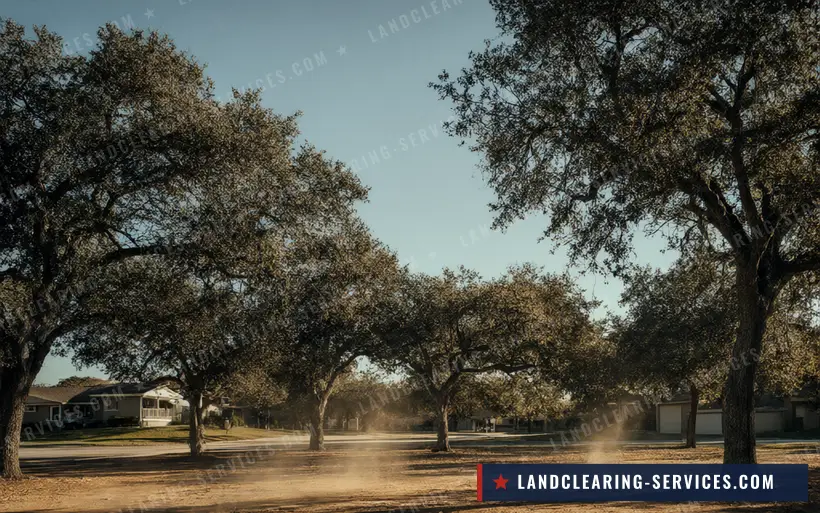
Land Clearing Projects by Idaho County and Growth Metro
This state generated 14,112 single-family housing permits in 2025 according to the Census Building Permits Survey. Rapid expansion turns rural acreage into usable property for construction, requiring brush clearing and grading ahead of builders. Selective thinning prepares property development plots efficiently across key growth centers.
- 01
Treasure Valley (Ada and Canyon Counties)
Ada County recorded 4,637 single-family permits; Canyon County recorded 3,045. Sagebrush removal and pad preparation dominate local orders.
- 02
Coeur d'Alene (Kootenai County)
Kootenai County logged 1,217 single-family permits. Work here centers on steep-slope timber thinning, clearing ladder fuels, and trimming brush on home sites in heavy forest.
- 03
Idaho Falls (Bonneville County)
Bonneville County registered 713 permits. Broad acreage projects require high-capacity mulching across lava-rock terrain.
- 04
Twin Falls (Twin Falls County)
Twin Falls County tallied 501 permits. Work includes canal clearing, brush removal, and preparing agricultural land for commercial expansion.
Future phases will add specific city and county pages. Equipment mobilization outside our 60-mile base circle is clearly listed as a single line item on your bid.
Send the Form, Get a Range the Same Day, Walk the Land with the Crew
Our process is straightforward. First, call (888) 709-7985 or fill out the contact form with your property location, county, total acreage, and current brush conditions. Marisol emails a clear budget range the same day from our main estimating office and schedules an on-site visit with the crew lead nearest to your parcel.
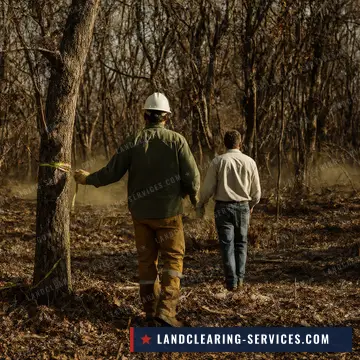
We walked it with owners on past jobs to locate property corners, mark protected trees, identify wet swales, and inspect soil conditions for hidden basalt or hardpan. Our forestry mulching process preserves the landscape and minimizes soil impact while creating clear land for your project. The written quote details daily equipment rates, expected acreage completed per day, and any extra days required for severe slopes or embedded rock before any trailer arrives. Insured crews, explicit start dates, and clear terms give you complete control. Whether you want to mow down overgrow areas, establish a pasture, or execute a complex land clearing project, we price every task in writing before work begins.
Land Clearing and Selective Brush Removal FAQ
How much does land clearing cost per acre in ID?
Forestry mulching costs $1,000 to 2,500 an acre for light sagebrush or bitterbrush, and $2,500 to 4,000 for dense mountain timber underbrush. Clearing to dirt with stump removal runs $2,500 to 6,000 per acre depending on rock density and slope. A half-acre home lot takes one day at $2,500 to 3,200.
Do I need a permit for clearing land in Idaho?
General clearing on private land does not require a state permit. However, open burning requires a permit from the Fire warden of the forest protective district under Idaho Code 38-115 during the closed season from May 10 to October 20. Wetland fill needs a USACE Section 404 permit, and stream alterations require IDWR approval.
Can I burn brush piles after clearing my tract?
Piled brush can be burned outside restricted summer windows or during open burn periods authorized by local fire wardens and air quality agencies. During hot summer months, burning is prohibited due to fire hazards. Many landowners prefer forestry mulching services because environmentally friendly grinding eliminates piles entirely without smoke.
What is the best time of year to clear property here?
Late spring through fall offers optimal ground conditions for excavation and pad grading. A forestry mulching process can run right through winter because frozen ground supports heavy equipment tracks without causing rutting. Mid-summer work requires caution regarding spark hazards in dry timber zones.
How fast can a crew clear my acreage?
Our estimating office sends a budget range the same day you call, and field estimates are scheduled within a week inside 60 miles of a regional yard.
How do I request an estimate for my clearing project?
Call (888) 709-7985 or submit your details through our web form with the county and estimated acreage. Marisol emails a budget range the same day and arranges an on-site walkthrough with the nearest local crew. The written bid outlines daily equipment rates, production targets, and rock contingencies up front.