Land Clearing Services in Kansas: Eastern red cedar Cleared on Lots and Acreage from Kansas City Metro to Western Kansas
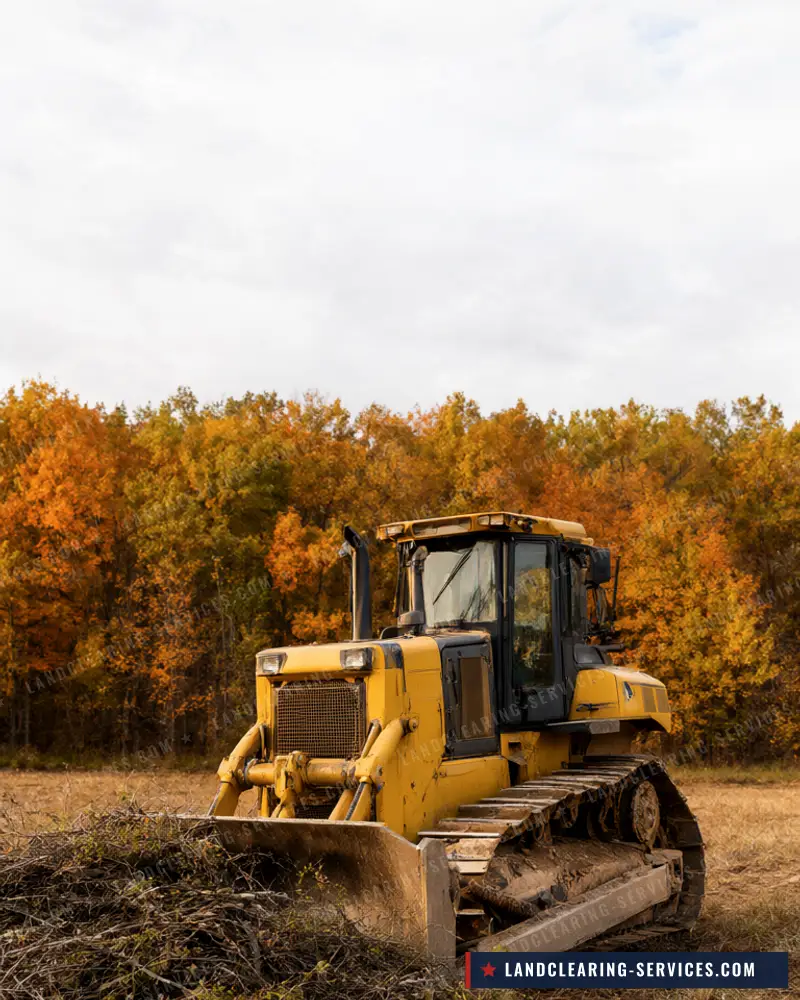
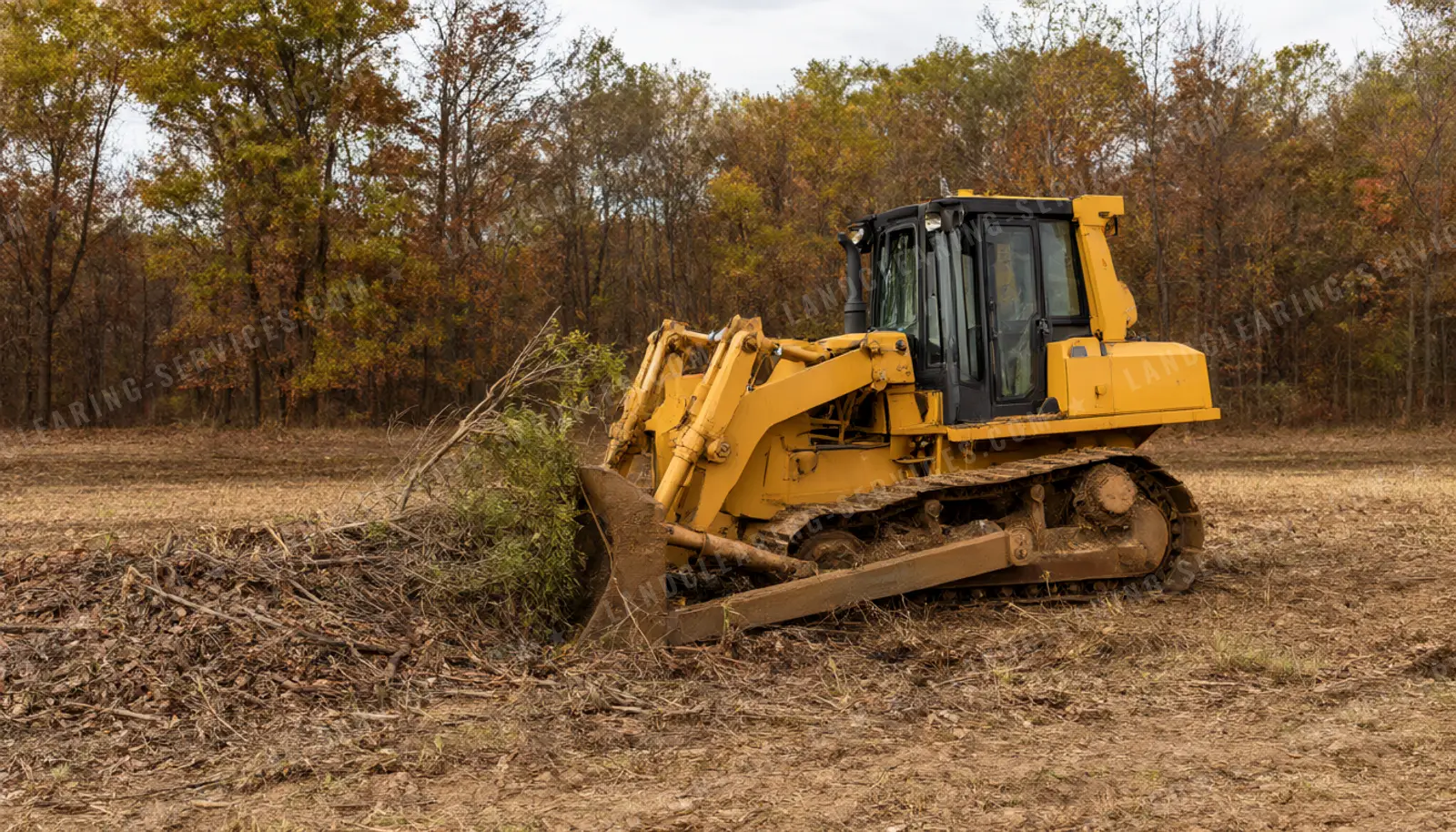
Kansas land clearing starts with eastern red cedar taking over native pasture and Osage orange hedgerows holding tight to property lines. I started on a dozer in Georgia red clay at 19, and after 20 years running crews in 11 states, the math stays constant. The basic driver for our land-clearing services is machine time. A skid steer mulcher runs $2,500 to 3,200 a day, transport included inside 60 miles of the crew's yard. Heavy clay and limestone near the surface in the Flint Hills test teeth, but our crews in KS handle everything from site preparation to pasture reclamation. Send the form or call (888) 709-7985 to clear brush today. Marisol emails a budget range the same day and books the free on-site estimate with the crew nearest you.
- 48 contiguous
states - Insured
crews - Same-day
budget range
48 statesContiguous coverage
$2,500–3,200Skid steer mulcher, per day
60 milesTransport included
Same dayBudget range by email
Land Clearing Services in Kansas
Land clearing services across the Sunflower State require matching the right equipment to the growth and soil. We price land clearing and brush work by the day or by the acre so you know the total price before the machine unloads.
Clear to dirt
grubbing, piling, removal off site or burning, and rough grading. $2,500 to 6,000 per acre depending on stem density and rock.
Forestry mulching
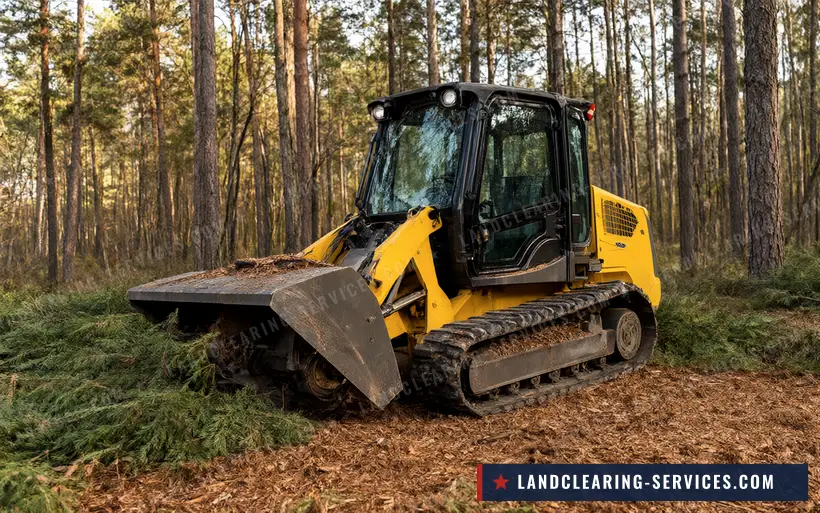
one forestry mulcher, one operator, turning vegetation into mulch in a single pass. $1,000 to 2,500 an acre for light to medium growth.
Lot clearing
a typical residential lot under one acre takes one day, running $2,500 to 3,200.
Brush clearing and brush removal
taking out honey locust, dogwood, and smooth sumac while preserving desirable shade trees.
Stump grinding
$3.50 to 5 per inch of diameter, with a $150 to 200 minimum per stump.
Selective tree removal at scale
selective tree cutting to remove problem species while leaving hardwood timber intact.
site prep and excavation services
site preparation for a pad, driveway cut, or adding a culvert at the road entrance at $150 to 200 an hour with an operator.
We do not pour concrete, drill water wells, install septic tanks, or demolish houses. Trusted land clearing companies establish those boundaries up front. If you need building pad work or right of way clearing, our forestry services and excavation service cover the ground work across KS. Professional land clearing services keep your project moving with services available across every county.

Land Clearing Across KS: Kansas City Metro, Flint Hills, Wichita and Western Plains
Land clearing contractors working here face four distinct regions, each with unique soil conditions and plant life. Transport is included inside 60 miles of the yard serving your service area.
contiguous states
- 01
Kansas City Metro
Johnson County, Leavenworth, and Miami County feature heavy clay soils and dense oak-hickory pockets mixed with cedar. Infill lots and suburban land development drive high demand for mulching services here. Our clear teams serve this area.
- 02
Flint Hills and Manhattan
Thin soils over solid limestone ledge. Eastern red cedar encroaches on native prairie quickly. Ground engagement equipment must avoid deep digging on rocky slopes.
- 03
Wichita and South Central area
Sedgwick County and Butler County feature silt loam and sandy ground. Salt cedar dominates river bottoms while locust spreads across old pasture.
- 04
Western plains
Hardpan soils and dry conditions create unique clearing challenges. Wind limits open burn days, making a forestry mulcher the most practical tool for overgrown land.
Our land clearing company maintains machinery ready for all soil conditions. We serve 5 acres near Lawrence or a long fence line out west. Our statewide crews clear your ground right on schedule. We handle way clearing for utility access and pipeline spreads with equal speed.
What Kansas Landowners Clear Most
Eastern red cedar is the primary plant our crews handle in this state. Left alone, cedar will overgrow native Bluestem pasture in less than a decade. Osage orange hedgerows, planted generations ago as windbreaks, create extremely dense lines with sharp thorns and heavy wood. Honey locust, dogwood thickets, smooth sumac, and invasive salt cedar along river channels round out the common hit list.
Minnesota buckthorn and local cedar are the same job with different roots. Cedar does not resprout from the stump once cut below the lowest green branch, making it ideal for cost-effective mulch work. Osage orange and honey locust, however, will push vigorous stump sprouts unless root-grubbed or treated chemically. On our jobs, we convert brush and tree stems directly into mulch, turning thick trees and brush into mulch that protects topsoil and helps clear land to clear brush. Effective vegetation management requires knowing which roots will fight back after the first pass.

Land Clearing Cost per Acre in KS
Understanding the cost to clear land requires breaking down stem size, terrain, and total acreage. Cedar pasture runs light to medium per acre, while dense old cedar and Osage orange push prices toward the top end of standard ranges. Mulch equipment helps clear pasture fast.
Skid steer mulcher
$2,500 to 3,200 a day, transport inside 60 miles included.
Dedicated 300-hp mulcher
$3,800 to 4,500 a day plus transport for large jobs with heavy timber.
Forestry mulching
$1,000 to 2,500 per acre for light to medium brush clearing; $2,500 to 4,000 per acre for dense stands.
Full clear to dirt with stumps out
$2,500 to 6,000 per acre depending on removal in Kansas requirements and rock.
Dozer or excavator
$150 to 200 per hour. Minimum equipment trip is $1,000 to 1,500.
I've priced pasture reclamation across the plains for years. On a job in Logan County, Oklahoma, just south of the state line, we cleared 20 acres of dense eastern red cedar pasture using a dedicated 300-hp mulcher. That job took 4 days and cost $18,500 plus transport. On a smaller residential lot in Weatherford, Texas, one of our Texas crews finished a half-acre mesquite job in 1 day for $2,900. Your total cost depends on acres per day and equipment selection. To clear your land, view our complete state cost guide. Call (888) 709-7985 or send the form for a free estimate.
Land Clearing Cost Calculator for Kansas
Planning range from 2025–2026 national price data, adjusted to Kansas costs. Change any answer and the range updates.
Open the full land clearing cost calculatorBest Season to Clear Land in this State: Fall and Winter
Fall and winter represent the peak season for cedar land clearing in this region. Frozen ground from December through February allows heavy tracked machinery to operate over soft lowlands without rutting the soil. Mulchers operate efficiently in sub-freezing temperatures, and leafless deciduous brush makes target stems easy to identify.
Spring brings heavy mud in March and April, which can add a day to ground-disturbing excavation work. Summer introduces high temperatures and strong prairie winds that frequently trigger county burn bans. Land clearing today during late fall or winter avoids fire risks entirely because mulched material stays flat on the ground. Dedicated land clearing operations run year-round, but booking winter work ensures your site preparation is complete before spring building begins. When you need land cleared before the wet season, scheduling early is the smartest path forward.
Kansas Permits, Burn Rules, Wetlands and Protected Trees to Know Before Clearing
Before launching a clearing project, landowners must verify local regulations to prevent unexpected delays or fines. I outline these requirements on every estimate before machines roll onto the site.
- 01
811 Dig Safe
State law (K.S.A. 66-1804) requires calling 811 at least 2 full working days (and no more than 20 calendar days) before excavation or stump grubbing begins.
- 02
Open Burning
Open burning permits run through the county under the Kansas Flint Hills Smoke Management Plan for April range burns, with KDHE rules governing land clearing debris disposal. County burn bans take effect during drought conditions.
- 03
Wetlands and Waterways
The US Army Corps of Engineers Section 404 permit regulates fill or heavy equipment disturbance in designated wetlands and streams, managed by the Kansas City and Tulsa Districts.
- 04
Tree Ordinances
Major municipalities in Johnson County maintain strict tree protection ordinances governing tree removal on residential construction site projects.
- 05
Utilities
Right of way clearing and way clearing near utility lines require coordination with power and pipeline owners.
I walk the property line to minimize project delays and clear your ground cleanly.
Cost-Share Programs: NRCS EQIP Brush Management in Kansas
Landowners seeking assistance for pasture restoration can apply for the NRCS EQIP program. Practice code 314 covers brush management, offering cost-share financial support to combat invasive eastern red cedar, honey locust, and sumac on working agricultural ground.
To participate, you must apply through your local USDA service center before clearing begins. A district conservationist will walk the land to develop a formal land management plan. Clear land with our clearing service. This plan establishes target species, dictates selective clearing standards, and sets guidelines to preserve beneficial grass cover. We clear brush and mulch trees. Once approved, our crews execute the mechanical clearing according to NRCS specifications. Since 2019, we have helped owners align machine work with federal practice codes across the region.
Land Clearing Companies by County and Metro
According to the 2025 Census Building Permits Survey, this state issued 6,121 single-family home permits statewide. Residential and commercial development drives strong demand for professional land clearing services across four major population corridors.
- 01
Johnson County (Olathe, Overland Park, Gardner)
2,055 single-family permits. Heavy suburban growth requires precise lot clearing, selective tree cutting, and strict adherence to municipal erosion guidelines.
- 02
Wichita and Sedgwick County
Sedgwick County issued 1,256 permits, with nearby Butler County adding 129. Work ranges from residential pad prep to large pasture clear projects.
- 03
Lawrence and Leavenworth
Douglas County recorded 230 permits and Leavenworth County logged 281. Mixing wooded river hills with expanding acreage subdivisions.
- 04
Manhattan and the Flint Hills
Riley County accounted for 93 permits, focused heavily on rocky terrain clearing and university corridor expansion.
Whether you manage acres of land in Wyandotte County (222 permits) or rural ground out west, our land clearing company brings the right equipment to your county and all surrounding areas.
Send the Form, Get a Range the Same Day, Walk the Land with the Local Crew
Getting your ground cleared starts with a clear, reliable process. Step one: send the online form or call (888) 709-7985 with your project details, location, and total acreage. Marisol in our estimating office reviews the details and emails a budget range the same day.
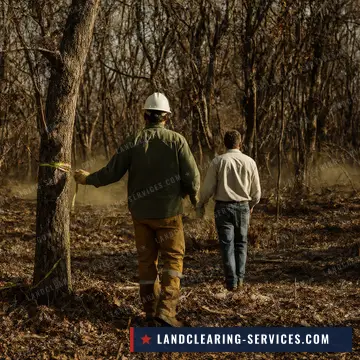
Step two: we schedule a free consultation and on-site walk with the crew nearest you. The crew lead will walk the property line, evaluate brush density, check for shallow limestone ledge, and verify slope considerations. You receive a formal written proposal detailing equipment day rates, target acres per day, and any extra days required for severe rock or heavy mud. We handle projects of all sizes, from a single residential lot to 5 acres or several hundred acres of pasture. Insured crews, plain language, and transparent pricing mean clear quotes. Call (888) 709-7985 or submit the form today to evaluate your land clearing needs.
Land Clearing FAQ
How much does land clearing cost per acre in Kansas?
Forestry mulching for light to medium brush or cedar pasture runs $1,000 to 2,500 per acre. Dense cedar stands, Osage orange hedgerows, or heavy timber cost $2,500 to 4,000 per acre. Full clearing to bare dirt with root grubbing runs $2,500 to 6,000 per acre depending on haul distance and rock depth.
Do I need a permit to clear land in Kansas?
State law does not require a permit simply to cut brush on your own land. However, open burning permits run through the county under the Kansas Flint Hills Smoke Management Plan for April range burns, with KDHE rules on land clearing debris. Excavation work requires an 811 utility call, and filling streams or wetlands triggers USACE Section 404 oversight.
Can I burn the brush piles after clearing?
Yes, provided your county is not under an active drought burn ban and you follow KDHE air quality regulations. In the Flint Hills, April range burns must align with the state smoke management plan. Many owners skip burning entirely by choosing forestry mulching, which turns vegetation into mulch that decomposes naturally.
What is the best time of year to clear land in Kansas?
Late fall and winter are ideal. Frozen ground from December through February allows heavy machinery to cross low areas without sinking, leaves are down, and cold weather eliminates summer burn ban restrictions. Winter mulching gets your ground ready for early spring site prep and construction.
How fast can a land clearing crew get to my job?
After you submit your request, Marisol emails a budget range the same day.
How do I get a land clearing quote in Kansas?
Call (888) 709-7985 or fill out the website request form with your county, estimated acreage, and vegetation description. Marisol provides a baseline budget range the same day and arranges a free on-site meeting with the local crew lead to deliver a written estimate.