Land Clearing Services in Texas: Ashe juniper (cedar) and mesquite Cleared on Lots and Acreage from East Texas Piney Woods to South
Land clearing here starts with two stubborn plants: ashe juniper (cedar) and mesquite. In Central TX and the Hill Country, shallow soil over limestone sits right under cedar roots. In northern counties, wet blackland clay turns heavy after winter rain. I ran crews across 11 states for 20 years before starting Clearline in 2019, and the number that sets the price here stays simple. A skid steer mulcher costs $2,500 to $3,200 a day, transport included inside 60 miles of the crew's yard. Our crews clear lots, acreage, and pads from the eastern Piney Woods to South TX. Call (888) 709-7985 or send the form. Marisol emails a budget range the same day and books the free estimate on-site with the crew nearest you.
- 48 contiguous
states - Insured
crews - Same-day
budget range
48 statesContiguous coverage
$2,500–3,200Skid steer mulcher, per day
60 milesTransport included
Same dayBudget range by email
Land Clearing Services in Texas
Land clearing and brush removal in this state requires matching the right machine to your soil. A professional land clearing company should state what they cover and what they do not, so we keep our list plain.
Clear to dirt
We grub roots, pile debris, and rough grade the soil to clear your land. $2,500 to $6,000 per acre depending on cedar density, slope, and rock.
Forestry mulching
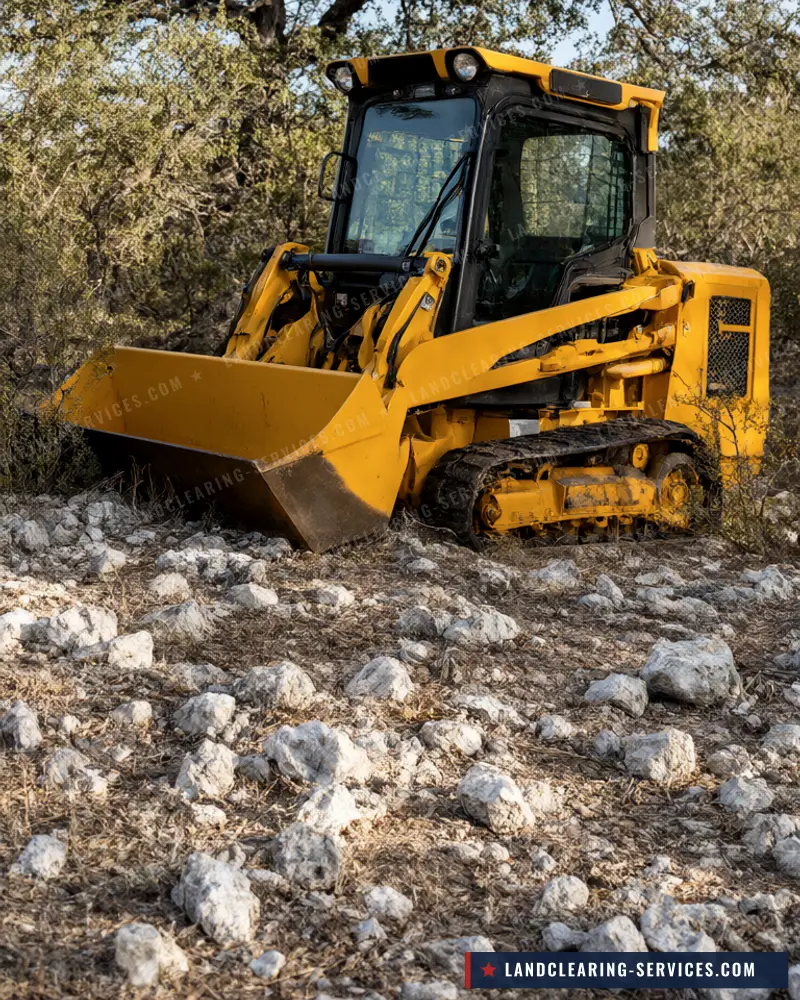
A single forestry mulcher shreds brush in one pass, turning brush and tree growth into a protective mulch layer. $1,000 to $2,500 per acre for light to medium growth, and $2,500 to $4,000 per acre for dense thickets.
Lot clearing
A standard half-acre residential lot takes one day on site for $2,500 to $3,200.
Brush clearing and brush removal in Texas
We strip mesquite, huisache, and yaupon while saving healthy post oaks and live oaks.
Stump grinding
$3.50 to $5 per inch of diameter, with a $150 to $200 minimum per stump.
Selective tree removal
Selective clearing lets us clear unwanted growth across whole pasture blocks.
Site prep and excavation services
Pad construction, driveway cuts, and placing a driveway culvert run $150 to $200 per hour.
Right of way clearing
Utility lines, fence lines, and access roads clear fast with dedicated land mulching equipment.
We do not pour foundation concrete, drill water wells, set septic tanks, or demolish houses. I know trusted contractors here who do. As one of the trusted land clearing companies, we offer a cost-effective service for every clearing project.

Land Clearing Across Texas: Piney Woods, DFW, Central Texas, Coast, and South TX
Land clearing contractors who treat East Texas loam like Hill Country rock usually miscalculate both the day count and the cutter teeth required. Our professional land clearing services handle every region across TX.
contiguous states
- 01
Forestry services clear these thickets cleanly with a single skid steer pass.
- 02
North Texas and DFW
Blackland clay and Cross Timbers sand surrounding Fort Worth, Collin County, and Denton County. Winter rain turns blackland clay slick, requiring flexible scheduling to prevent deep rutting.
- 03
Hill Country and Central regions
Shallow soil over limestone and caliche around Austin, San Marcos, and San Antonio.
- 04
Gulf Coast and Greater Houston
Heavy gumbo clay, high water tables, and thick Chinese tallow from Harris County down to Brazoria. June through September brings a coastal wet-season day modifier on low ground.
Each region operates from a local crew yard. Transport is included inside 60 miles of the yard.
What Texas Landowners Clear Most
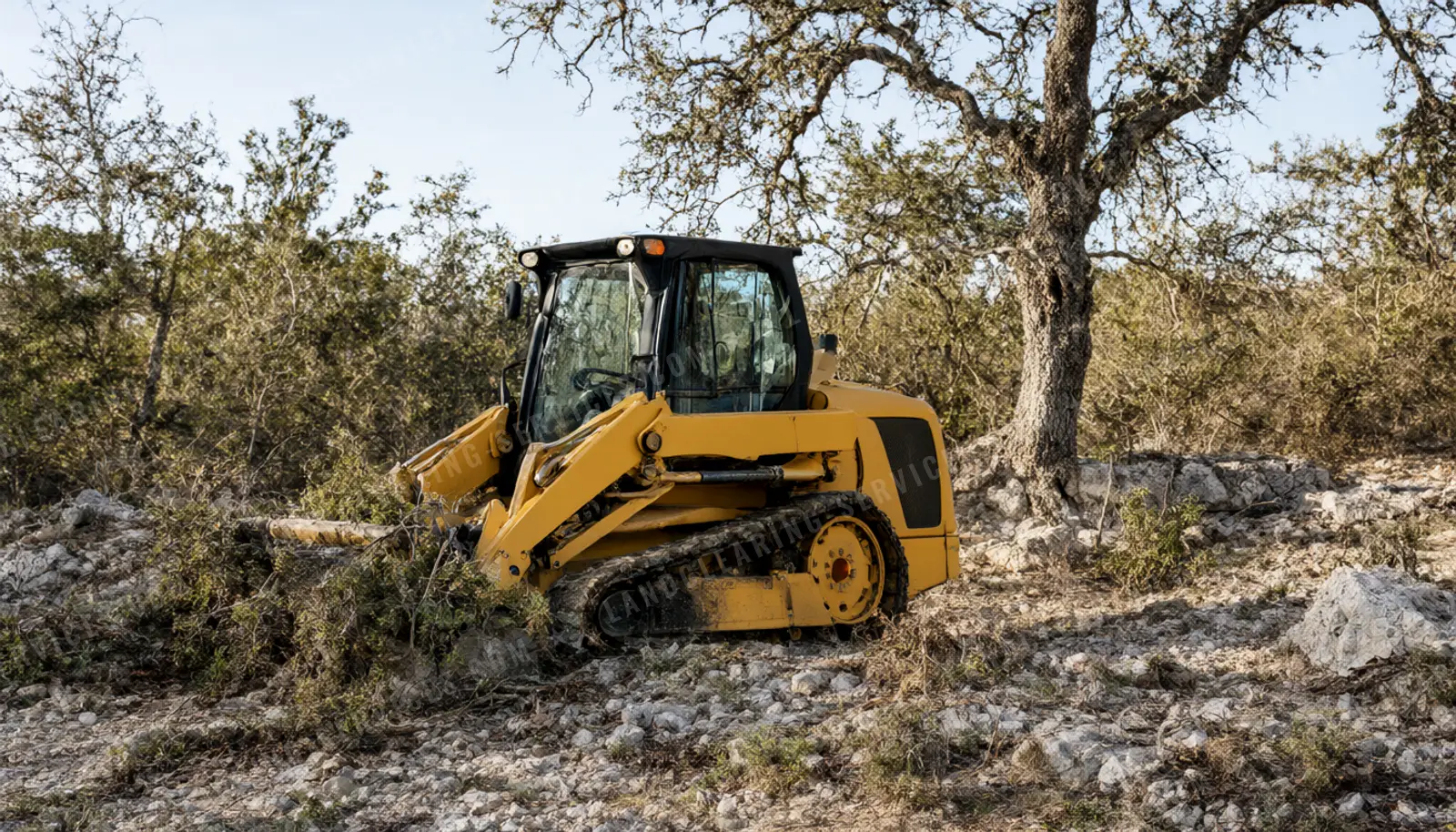
Ashe juniper (cedar) and mesquite dominate most of our central and western jobs, while eastern brush takes a totally different shape. In Central areas and the Hill Country, cedar choking out native grass is the main project. On South and West working land, mesquite spreads fast across grazing acres.
Along the Gulf Coast, invasive Chinese tallow trees overgrow unmanaged pastures, while yaupon covers eastern tracts. Hackberry and bois d'arc crowd fence lines throughout northern regions. When we clear land, selective tree removal lets us take out these invasive species while leaving mature post oak and live oak motts untouched. Vegetation management means understanding how these plants recover after cutting. Proper brush clearing converts scrub vegetation into mulch that slows soil erosion. Our crews spread extra mulch across cleared soil.
Land Clearing Cost in Texas per Acre
Pricing for land clearing here depends on brush density, terrain slope, and rock. Cedar density directly drives the time needed on site to clear trees and brush.
Skid steer mulcher
$2,500 to $3,200 per day, including standard transport within 60 miles.
Dedicated 300-hp mulcher
$3,800 to $4,500 per day plus transport for large jobs.
Forestry mulching per acre
$1,000 to $2,500 for light to medium growth; $2,500 to $4,000 for dense, overgrown land.
Full clearing to dirt (grubbed, root-raked, rough graded)
$2,500 to $6,000 per acre.
Dozer or excavator with operator
$150 to $200 per hour, with a minimum trip charge of $1,000 to $1,500.
Debris removal
$600 to $1,300 per load if material cannot remain on site.
I've priced acreage in every soil type here. On a half-acre lot in Weatherford, one of our Texas crews finished in one day for $2,900. On a larger tract in Logan County, Oklahoma, we used a dedicated 300-hp mulcher to handle 20 acres of dense eastern red cedar pasture reclaim over four days for $18,500 plus transport. When you need land cleared, your final cost is simply the daily rate multiplied by the acres per day required, plus any extra day needed for caliche or mud. Review our complete state pricing guide on our cost page to minimize extra expenses. Call (888) 709-7985 or submit our quick form to get your free estimate range from Marisol.
Land Clearing Cost Calculator for Texas
Planning range from 2025–2026 national price data, adjusted to Texas costs. Change any answer and the range updates.
Open the full land clearing cost calculatorBest Season to Clear Land in Texas
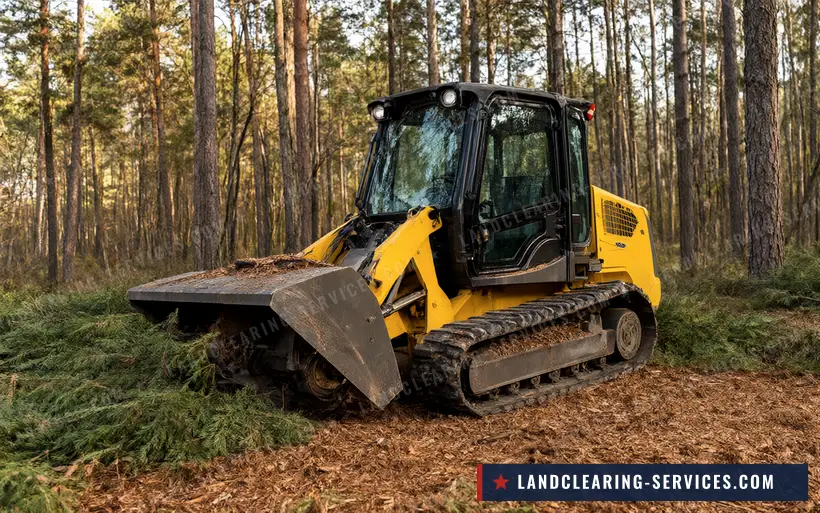
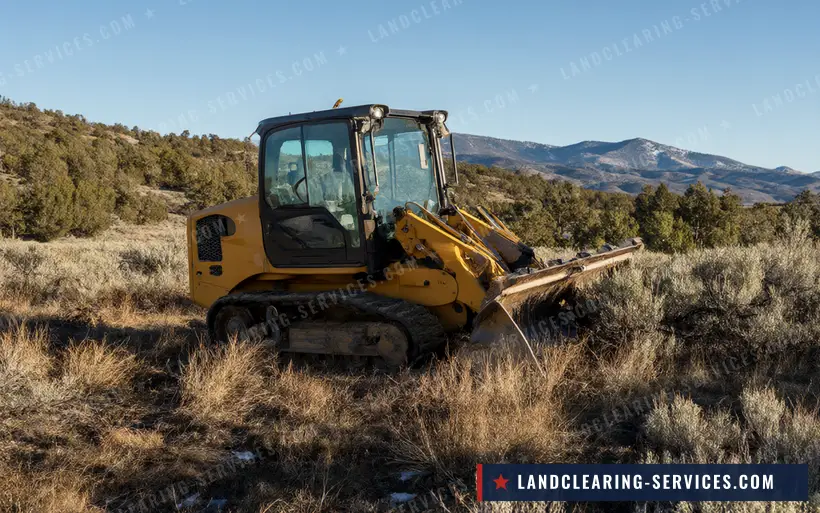
Texas allows clearing year-round, but picking the right season keeps project timelines on schedule. In North areas and DFW, wet blackland clay between November and April can delay dozers. A rubber-tracked forestry mulcher floats over wet soil better than steel tracks, but deep mud still adds an extra day if ground turns to grease.
Winter ground clears fastest and keeps project costs predictable.
Texas Permits, Burn Rules, Wetlands and Protected Trees to Know Before Clearing
While this state has no single general permit to clear your land on private property, specific environmental laws, municipal codes, and water rules affect work across the state. We clear these compliance items before moving equipment to your site.
- 01
Outdoor Burning Rules
The Texas Commission on Environmental Quality (TCEQ) regulates debris burning under Outdoor Burning Rule 30 TAC Chapter 111 Subchapter B. Land-clearing materials may be burned only at the site of the land clearing; they may not be moved to burn elsewhere. Burning must occur downwind or at least 300 feet from adjacent structures unless you secure written approval. In nonattainment counties, burning is restricted unless no practical alternative exists to service the tract.
- 02
Wetlands and Waterways
The US Army Corps of Engineers (USACE) regulates fill under Section 404 permits through the Fort Worth District for inland waters and the Galveston District for coastal zones. Placing fill in streams or wetlands requires federal approval. We flag wetland boundaries and keep heavy dirt work outside those lines.
- 03
Edwards Aquifer Protection
In Travis, Hays, Comal, Bexar, and Kendall counties, land development over the Edwards Aquifer Recharge Zone requires a TCEQ Water Pollution Abatement Plan before disturbing soil.
- 04
Endangered Species Windows
Hill Country projects must account for golden-cheeked warbler nesting season from March to July under TPWD and USFWS guidance. Clearing dense old-growth cedar during these months requires checking habitat boundaries first.
- 05
City Tree Ordinances
Austin, San Antonio, Georgetown, and Fort Worth enforce tree protection rules for heritage live oaks and post oaks over designated diameter limits. Selective tree practices clear your site while keeping your project fully compliant.
- 06
Floodplain Management
Work in FEMA floodplains requires county floodplain development permits, while Harris County jobs fall under the Harris County Flood Control District.
- 07
811 Call Before Digging
State law requires an 811 notification at least two business days before any ground-penetrating excavation work (Tex. Util. Code Section 251.151).
Handling utility lines, floodplain rules, and municipal codes smoothly keeps your construction site on schedule without unexpected delays.
Cost-Share Programs: NRCS EQIP Brush Management in Texas
Local ranchers and land management owners can often offset clearing costs through the USDA Natural Resources Conservation Service (NRCS) Environmental Quality Incentives Program (EQIP). Under practice code 314 (Brush Management), EQIP provides cost-share funding to control encroaching cedar, mesquite, and huisache on pasture and rangeland.
To access these funds, submit an application at your local USDA service center before clearing begins. An NRCS conservation planner surveys your acreage and designs a management schedule. The plan specifies target invasive species to clear, desirable tree species to keep, and required post-clearing grass seeding. Approval takes several months, so file your application early. Once approved, our crews execute the work strictly to NRCS specifications so your cost-share reimbursement processes smoothly.
Land Clearing Companies by Texas County and Metro
This state generated 140,579 single-family building permits in 2025 according to the Census Building Permits Survey, leading the nation in new residential development. Converting wooded acres of land into ready building pads keeps our crews busy across four major metro hubs.
- 01
Greater Houston Ring
Harris County recorded 16,940 permits, Montgomery County added 11,597, and Fort Bend County logged 9,638. Dense brush, gumbo clay, and standing water require heavy mulching services and site preparation.
- 02
DFW North
Collin County generated 11,136 permits, Tarrant County logged 8,658, and Denton County recorded 6,357.
- 03
Austin and Central
Travis County logged 4,727 permits, Hays County had 4,153, and Williamson County recorded 3,945. Shallow limestone and thick ashe juniper mean high-horsepower mulchers run constantly throughout San Marcos, Georgetown, and Austin.
- 04
San Antonio Area
Bexar County logged 4,589 permits and Comal County added 1,726. Crews handle rock, dense cedar, and mesquite thickets from Bexar County out toward the Hill Country border.
Our services available cover all surrounding areas across rural TX. Transport remains simple: inside 60 miles of our nearest yard, haul charges are included in your standard daily rate.
Send the Form, Get a Range the Same Day, Walk the Property with Our Crew
Getting your acreage cleared follows a direct three-step process. Call (888) 709-7985 or send our online form detailing your acreage, location, and vegetation type. Marisol reviews your details in our estimating office, emails you a reliable budget range the same day, and schedules an on-site visit with our local crew lead.
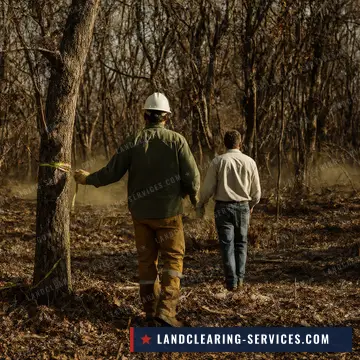
Our crew lead will walk the property with you during the free consultation to review your land clearing needs. We check dirt composition, flag protected live oaks, mark wetland buffers, and assess machine access roads. We then issue a clear written contract that details daily machinery rates, expected acres per day, and explicit conditions that might add an extra day, such as heavy caliche or deep gumbo mud. You get insured crews, clear start dates, and straight communication from an estimator who knows the ground. Whether you are clearing a single residential lot, a 5 acres homestead, or a commercial construction site, we arrive with the right equipment to handle projects of any scale. Start land clearing today with confidence by securing an upfront price before machinery unloads.
Texas Land Clearing FAQ
How much does land clearing cost per acre in TX?
Mulch clearing costs $1,000 to $2,500 per acre for light cedar or mesquite. You can mulch dense growth for $2,500 to $4,000 per acre. Clearing to bare dirt with root grubbing runs $2,500 to $6,000 per acre. Shallow caliche or deep gumbo clay adds an extra day on difficult terrain.
Do I need a permit to clear land here?
Private land-clearing services do not require a general state permit here. Outdoor debris burning must follow TCEQ Rule 30 TAC Chapter 111. Disturbing streams or wetlands requires a USACE Section 404 permit, and cities like Austin, San Antonio, and Fort Worth enforce tree protection ordinances for large oaks.
Can I burn the brush piles after clearing?
Under TCEQ rules, you can burn land-clearing materials on the site where they were cleared, provided the burn pile sits downwind or at least 300 feet from neighboring structures. Nonattainment counties restrict burning when mulching options exist. Most clients choose forestry mulch methods to skip the pile and the burn ban.
What is the best season to clear land here?
Winter cold dries out heavy blackland clay in North Texas, while cooler months protect operators working through thick cedar and mesquite in Central and the southern region.
How fast can a crew clear my land?
Marisol sends your budget range by email the same day you inquire, with an on-site estimate booked within a few days inside 60 miles of a yard. Our team works to clear trees efficiently on site.
How do I get a land clearing quote?
Call (888) 709-7985 or fill out our online form with your location, total acreage, and brush density. Marisol emails a budget estimate and sets up your free consultation for land clearing today.