Land Clearing Cost per Acre in Texas (2026): Ashe juniper (cedar) and mesquite, Lots and Acreage Priced from Real Jobs
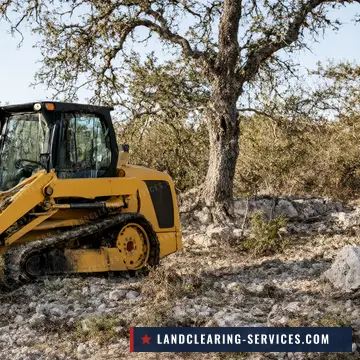
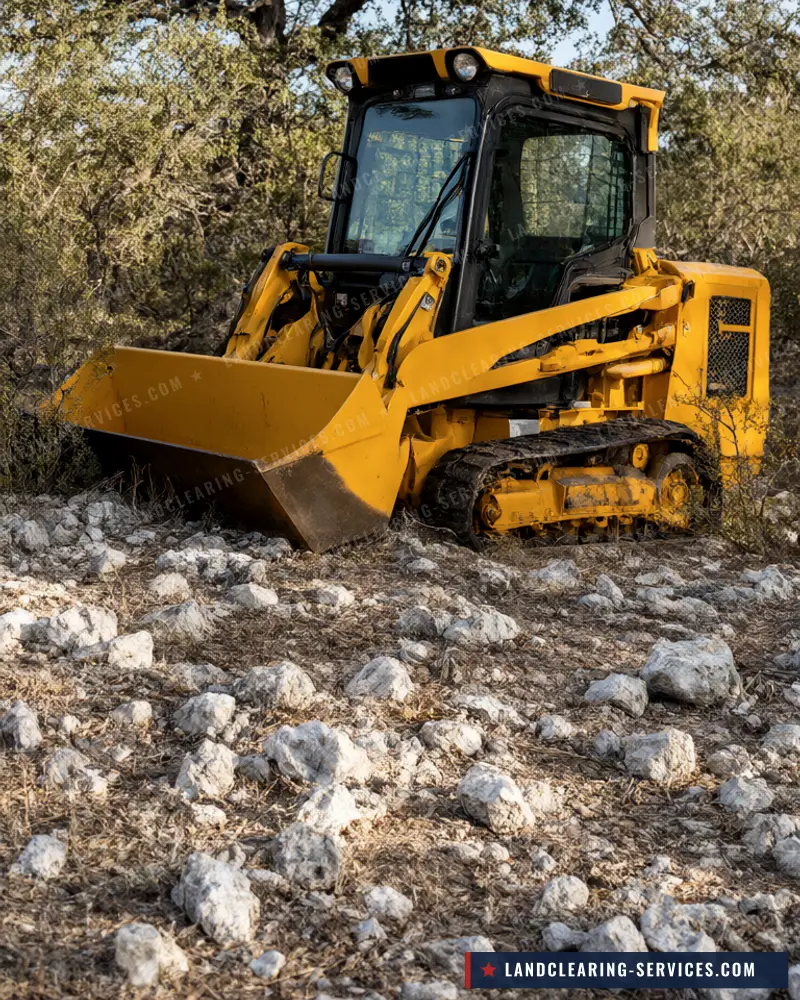
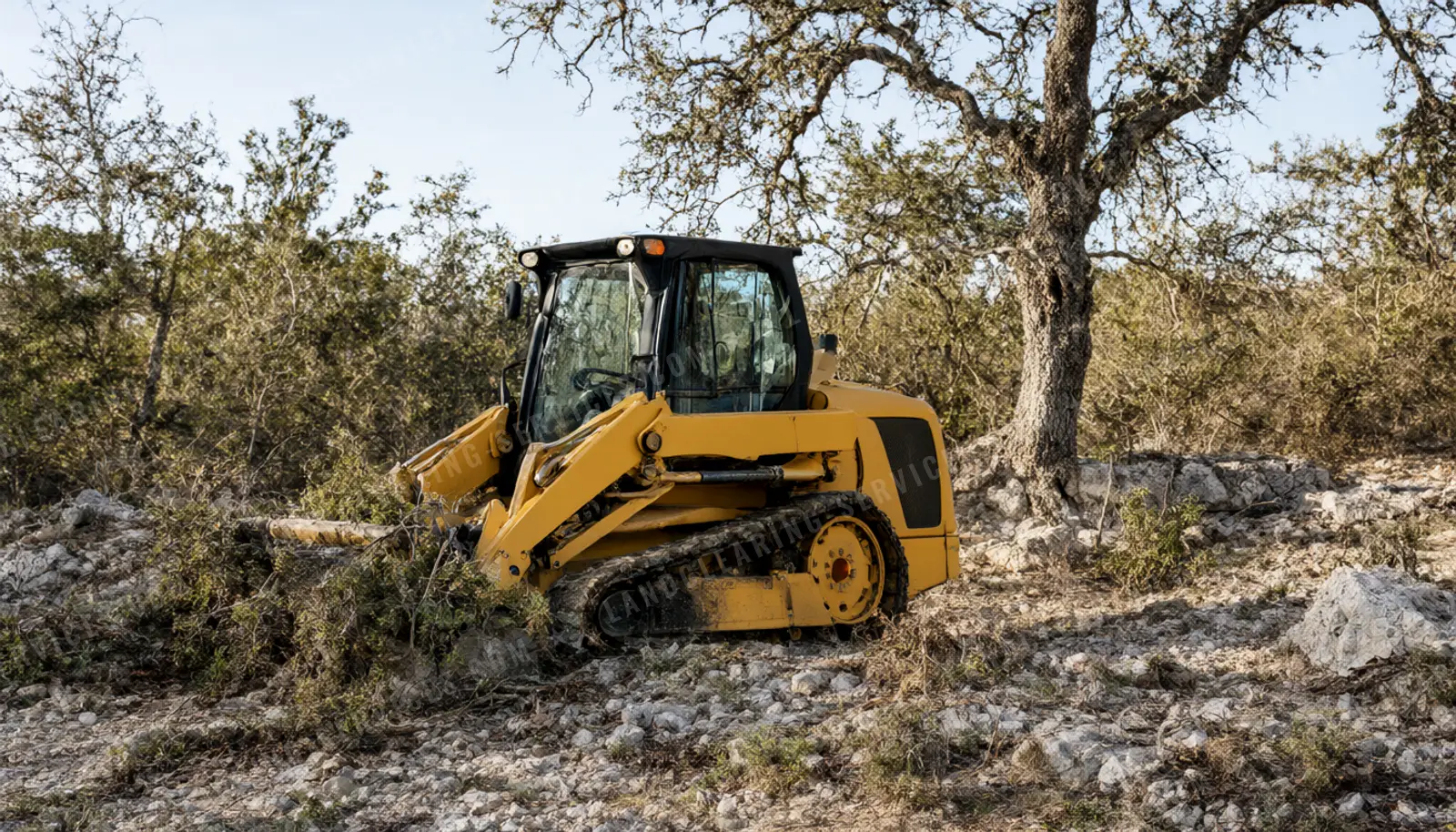
Land clearing cost per acre in Texas depends on trees and brush density, stem size and what sits under the topsoil. An acre of ashe juniper or mesquite runs $1,000 to $2,500 per acre for light brush clearing and up to $4,000 per acre for heavily wooded ground. Full clearing to dirt with stumps out runs $2,500 to $6,000 an acre depending on rock and haul distance. On a job in Weatherford, one of our state crews cleared a half-acre lot overrun with mesquite in one day for $2,900. Caliche is concrete that nobody poured, and subsurface rock adds a day on many jobs here. Skid steer forestry mulching runs $2,500 to $3,200 a day with transport included inside 60 miles of the yard. Send the form or call (888) 709-7985. Marisol emails a budget range the same day and books the free on-site estimate with the crew nearest you.
- 48 contiguous
states - Insured
crews - Same-day
budget range
48 statesContiguous coverage
$2,500–3,200Skid steer mulcher, per day
60 milesTransport included
Same dayBudget range by email
How Much Does It Cost to Clear Land in Texas? Average Cost per Acre
Understanding average land clearing prices requires looking at the actual work performed on an acre of land. Land clearing cost per acre in this state follows national baselines, but local soil conditions and thick brush shift the final price on the estimate. A landowner considering land clearing can use this pricing calculator guide to clear brush. Our clear price guide helps you plan your project budget.
Forestry mulching cost per acre
$1,000 to $2,500 per acre for light to medium growth; $2,500 to $4,000 for dense thickets.
Full clearing to dirt
$2,500 to $6,000 per acre to grub roots, rake, pile and rough grade.
Lot clearing for residential sites
half an acre runs $2,500 to $3,200 for a standard single day pass.
Bush hogging mowers
$50 to $100 per acre with a $350 to $450 minimum trip fee.
Stump removal and grinding
$3.50 to $5 per inch of diameter with a $150 to $200 minimum per stump.
Total land costs stay predictable when you know how much does it cost before work begins. We state fixed daily rates to calculate the average cost to clear land, total project cost, and expected production speeds up front. To learn what cost of land clearing applies to your acreage, call (888) 709-7985 to review your land clearing project.
Land Clearing Cost Calculator for Texas
Planning range from 2025–2026 national price data, adjusted to Texas costs. Change any answer and the range updates.
Open the full land clearing cost calculatorCost to Clear 1/2 Acre, 1 Acre, 2 Acres, 5 Acres and 20 Acres in Texas
Scale changes the per acre to clear land. Small parcels under a full acre carry fixed equipment mobilization expenses, while larger acreage projects lower the unit pricing per acre as machines remain on site for multiple days.
Half acre
$2,500 to $3,200. Most half acre residential lot jobs wrap up in a single day using a skid steer track mulcher.
Single acre
$1,000 to $4,000 for mulching; $2,500 to $6,000 for complete grubbing and dirt prep when clearing one acre.
On 5 acres, a dedicated 300-hp mulcher covers more ground per hour and keeps daily rates efficient.
20 acres
Our land clearing company uses fixed daily rates for large pasture reclamation. Large pasture reclamation projects reduce per acre costs, though support equipment adds a fixed cost.
Since 2019, our team has cleared small building pads and expansive ranch pastures using daily production logs. Knowing production speeds helps set realistic timelines for clearing projects across various parcel sizes. Every land owner gets a clear production schedule before work starts.
Cost by Method in Texas: Forestry Mulching vs. Dozer vs. Excavator and Haul-Off
Choosing your method of clearing dictates equipment requirements, site disturbance and total expense. Traditional clearing methods rely on heavy machinery like a dozer or excavator to rip roots, whereas forestry mulching grinds standing material into ground cover.
| Clearing Method | Typical Cost Range | Best Application | Ground Impact |
|---|---|---|---|
| Forestry Mulching | $1,000 - $4,000 / acre | Understory, brush, selective tree removal | Minimal soil disturbance, leaves mulch layer |
| Dozer Clearing | $150 - $200 / hour | Mass land grading, pushing large timber | Exposes raw dirt, requires erosion control |
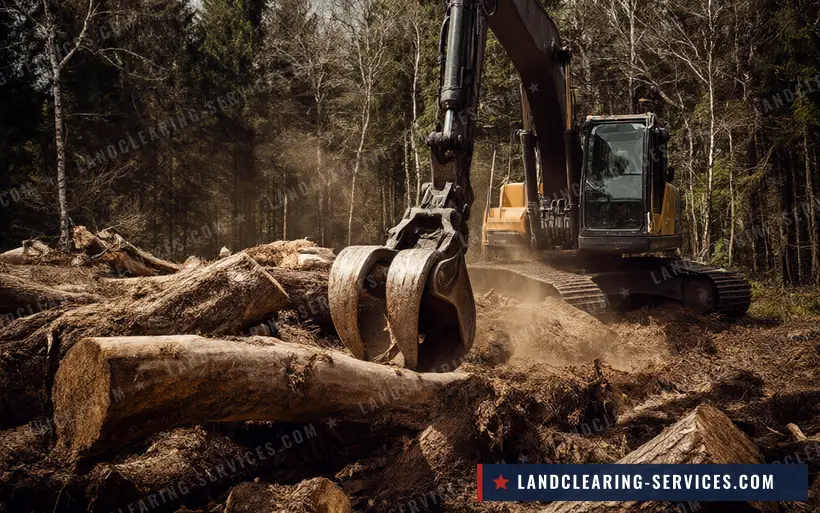
| Excavator & Root Rake | $150 - $200 / hour | Stump removal, targeted digging | Creates dirt piles, unearths large roots |
| Haul-Off Services | $600 - $1,300 / load | Debris removal from restricted sites | High transport expense, eliminates piles |
Debris disposal rules affect your project budget. Under state environmental rules (TCEQ Outdoor Burning Rule 30 TAC Chapter 111 Subchapter B), land-clearing materials may be burned only at the site of origin and must be positioned downwind or at least 300 feet from adjacent structures. Burning restrictions make mulching an efficient choice for many property owners.
Cost by Vegetation: Cedar, Mesquite, Hardwoods and Coastal Brush
Vegetation density is a primary cost factor that determines machine selection and production time. Ashe juniper and mesquite dominate Central and West regions, where canopy density drives the pace. Dense cedar thickets take longer to grind into wood chips, pushing prices toward the top of the scale.
The eastern pine belt features dense understory, yaupon and sweetgum, which offer consistent grinding conditions. Along the Gulf Coast, thick stands of Chinese tallow and wax myrtle grow on soft soil. North Texas properties often contend with heavy hackberry and stubborn bois d'arc. When working around post oak and live oak motts, selective clearing preserves valuable shade trees while removing invasive underbrush. I've priced jobs across every region, and matching equipment to plant density protects both your soil and your budget.

Cost by Region: Soil and Terrain Across Texas
Geographic terrain and local dirt dictate how fast equipment moves across a tract. The Hill Country presents hard limestone and abrasive caliche that wear down mulcher teeth quickly, often adding a rock day to heavy excavation cost totals. In eastern sandy loam, tracks move fast, but high pine stem counts require sustained horsepower.
contiguous states
Northern counties feature sticky blackland clay that limits heavy machinery after rain events. The Gulf Coast presents gumbo clay, where wet conditions require wide track equipment to prevent bogging down. On our jobs in South Texas, dense brush like huisache and mesquite requires heavy-duty guarding on all machines. Regional soil differences directly affect land clearing production rates and total equipment wear.
What Adds a Day in Texas: Weather, Rock and Ground Conditions
Site conditions can extend the expected timeline on a clearing job. We put ground condition terms in writing so the price to clear land stays clear from the start.
- 01
Rock and caliche
Shallow limestone in the Hill Country adds an extra day for stump removal or foundation pad excavation.
- 02
Wet blackland clay
November through April rain cycles turn northern clay into heavy mud, adding a day for dozer operations.
- 03
Coastal gumbo
High moisture levels on the coast from June through September extend job timelines on low ground.
- 04
Summer heat
Extreme July and August heat limits operator shift lengths and requires added equipment cooling cycles.
These natural elements impact time and cost directly. Budgeting for an extra day due to local weather or subsurface rock keeps your overall schedule realistic when clearing brush.
Lot Clearing Cost for a New Home in Texas Metros
Preparing a wooded lot or residential lot for construction involves tight access, underground utilities and local tree protection rules. Clearing a half acre heavily wooded lot in a suburban neighborhood usually takes one full day, costing between $2,500 and $3,200.
Building activity across major metro areas drives consistent demand for lot clearing and site preparation. According to the Census Building Permits Survey for 2025, single-family permit totals highlight high-growth corridors:
- 01
Houston ring
Harris County logged 16,940 permits, Montgomery County recorded 11,597, and Fort Bend County added 9,638.
- 02
DFW metro
Collin County reached 11,136 permits, Tarrant County saw 8,658, and Denton County issued 6,357.
- 03
Austin and Hill Country
Travis County registered 4,727 permits, Hays County had 4,153, and Williamson County recorded 3,945.
- 04
San Antonio area
Bexar County logged 4,589 permits, while Comal County added 1,726.
Before digging on any residential site, state law requires calling 811 at least two business days prior to excavation under Tex. Util. Code §251.151. City ordinances in Austin, San Antonio, Georgetown and Fort Worth also restrict the removal of protected heritage trees during site prep.
Real Jobs and What They Cost
Reviewing historical project numbers provides realistic benchmarks for land clearing investment decisions on wooded land or agricultural land.
- Job log
Half-acre lot in Weatherford, TX
$2,900Overgrown with dense mesquite and native brush. Completed in 1 day using a track mulcher for $2,900.
- Job log
20 acres in Logan County, Oklahoma
$18,500Pasture reclamation covered in dense eastern red cedar. Required 4 days with a dedicated 300-hp mulcher, costing $18,500 plus equipment transport.
- Job log
1 acre in Hudson Valley, New York
$3,100Multiflora rose and buckthorn cleared during frozen ground conditions in January. Completed in 1 day for $3,100.
We cleared these properties by matching machine capacity to vegetation density. Evaluating real job logs ensures accurate estimates for future land clearing tasks. Efficient clearing land requires matching the machine size to the vegetation.
Day Rates and Equipment Hourly Rates in Texas
Equipment cost per hour and daily rates structure the financial basis of our estimates. Knowing machine rates helps landowners clear trees efficiently and compare our professional land clearing service to other proposals.
High-flow skid steer mulcher
$2,500 to $3,200 per day, including transport within 60 miles of our crew yard. Handles brush and small trees up to 8 inches in diameter.
Dedicated 300-hp forestry mulcher
$3,800 to $4,500 per day plus transport. Grinds heavy timber up to 14 inches in diameter.
Dozer or excavator with operator
$150 to $200 per hour for traditional clearing and dirt moving.
Minimum trip charge
$1,000 to $1,500 to cover equipment trailering and setup.
Haul-off fees
$600 to $1,300 per heavy truckload depending on dump location distance.
Every professional land clearing contractor on our crew operates insured equipment to clear land on fixed daily schedules.
EQIP Cost-Share and Tax Questions for Landowners
Agricultural land managers can often offset brush clearing cost totals through federal conservation grants. The NRCS EQIP program provides financial assistance under practice code 314 for brush management on working pasture and timberland. Property owners apply through their local USDA service center before clearing work starts.
For tax deductions, clearing expenses incurred for agricultural maintenance or property improvement may be deductible, but you should consult a qualified CPA or tax professional regarding your specific situation.

Get an Exact Texas Quote
Planning to clear land requires accurate numbers based on your land's specific ground cover and soil type. Whether you clear brush for a home pad or clear pasture across expansive acreage, we offer clear rates per acre depending on terrain.
Call (888) 709-7985 or send our online form today. Marisol in our estimating office will answer your frequently asked questions and email a complete budget range the same day. Learn more about our regional field operations on our state hub page.