Land Clearing Services in Alabama: Loblolly pine understory Cleared on Lots and Acreage from North Alabama to Gulf Coast
Land clearing in AL starts with loblolly pine understory and red clay uplands. I started on a dozer in Georgia red clay at 19, and Alabama land works the same way. A skid steer mulcher runs $2,500 to $3,200 a day, transport included inside 60 miles of the crew's yard. Clearline Land Services brings insured crews for professional land clearing in Alabama across central AL, the Tennessee Valley, and down to the coast. Call (888) 709-7985 or send the form. Marisol emails a budget range the same day and books a free estimate with the crew lead nearest you.
- 48 contiguous
states - Insured
crews - Same-day
budget range
48 statesContiguous coverage
$2,500–3,200Skid steer mulcher, per day
60 milesTransport included
Same dayBudget range by email
Full-Service Land Clearing and Site Preparation Services
Our land clearing company handles residential and commercial projects across the state. We bring the right equipment to every job site, whether you need lot clearing for a home or site preparation services for a larger build. Every project gets a written price per acre or by the day before machines move.
Forestry Mulching
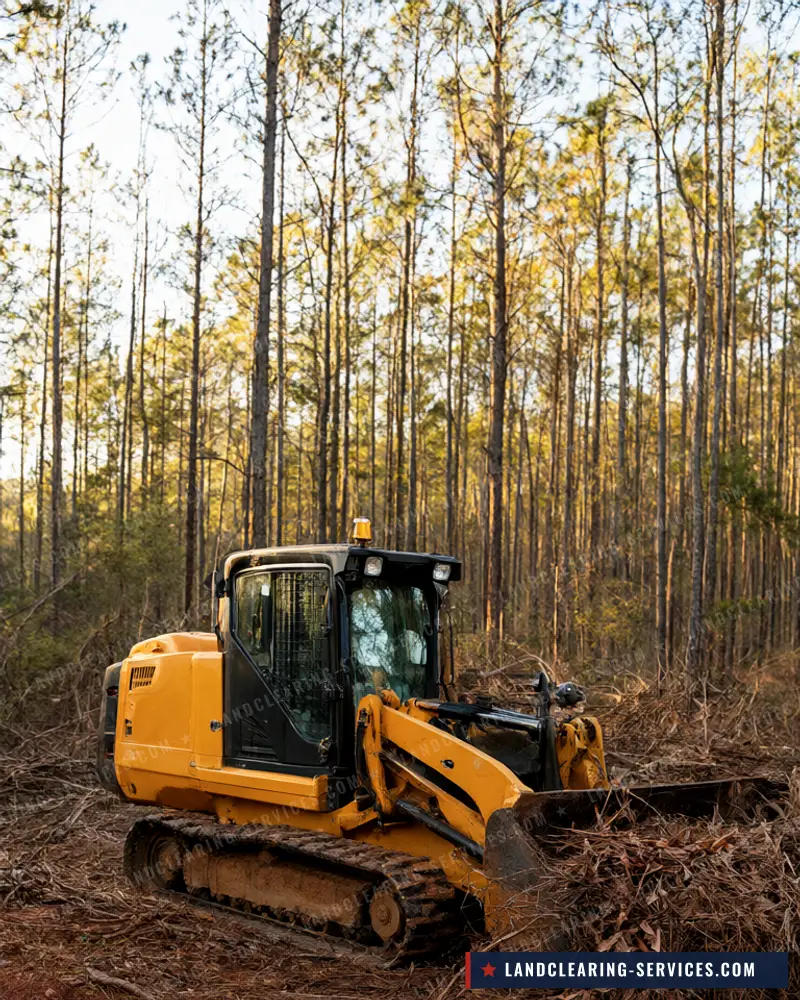
One forestry mulcher pass turns small trees, brush and trees, and heavy underbrush into fine mulch. We offer forestry mulching for light to medium thickets at $1,000 to $2,500 per acre. Dense growth runs $2,500 to $4,000 per acre.
Lot Clearing
A half-acre overgrown lot takes one day on a skid steer mulcher for $2,500 to $3,200. This is ideal for a property owner clearing land for new home construction.
Full Land Clearing Work and Grading
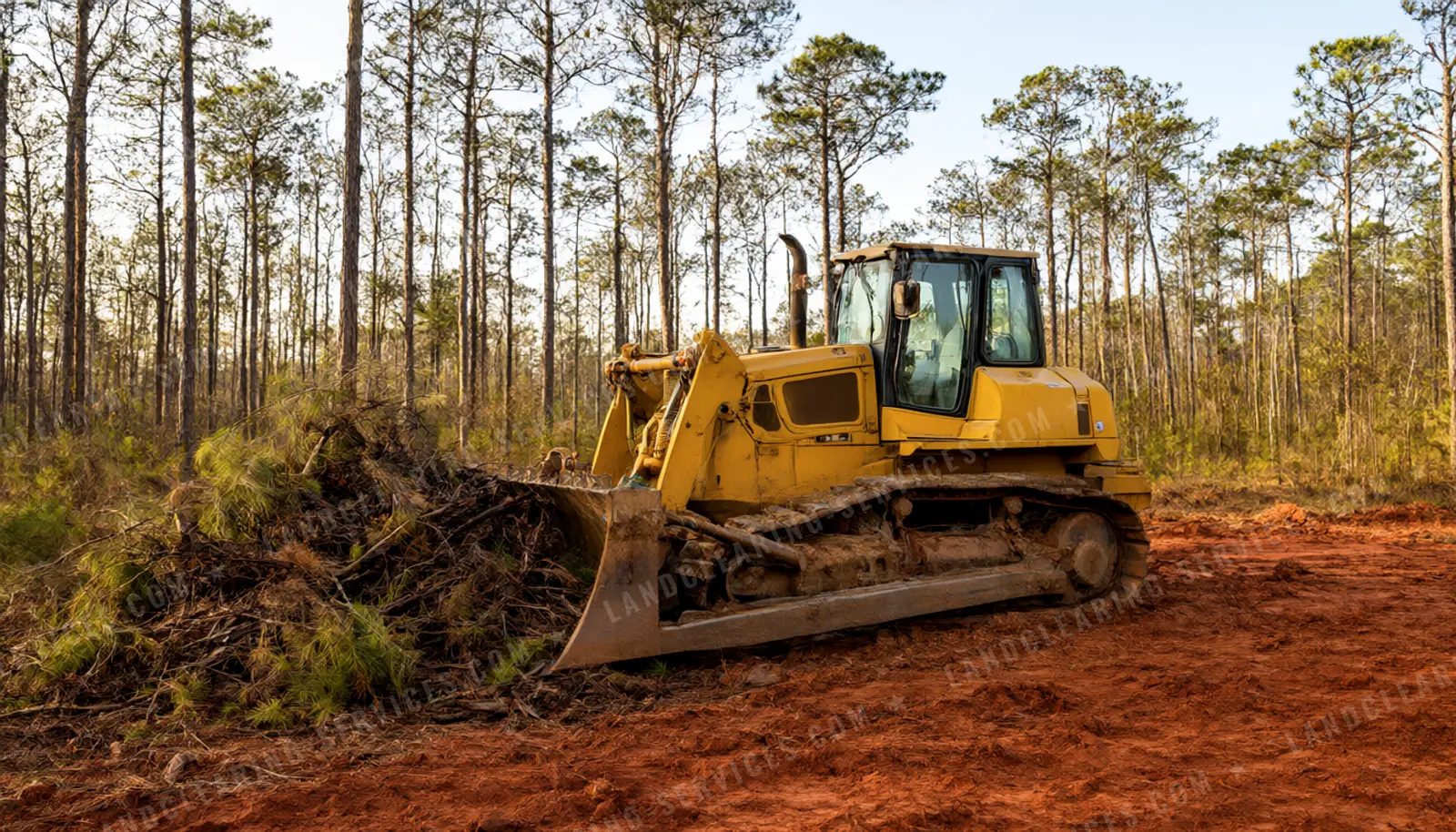
Clear to dirt with the excavator and dozer, root raking, and land grading. Full site prep services run $2,500 to $6,000 per acre depending on rock, tree size, and slope.
Stump Grinding and Debris Removal
We grind individual stumps at $3.50 to $5 per inch of diameter with a $150 to $200 minimum per stump. Haul-off debris removal runs $600 to $1,300 per load.
Brush Clearing and Undergrowth Control
Selective removal services for invasive thickets like Chinese privet, sweetgum, and honeysuckle, keeping mature trees intact.
We do not pour concrete, install septic tanks, or demolish structures, but our crews handle full land preparation up to the building line.

Land Clearing Across Alabama: North Alabama, Central, Wiregrass, and the Coast
Soil and undergrowth change across four main regions in this state, changing how fast a crew can clear your land. A clearing contractor who knows north Alabama soil might get slowed down by coastal mud without the right track setup.
contiguous states
- 01
North Alabama and the Tennessee Valley
Limestone glades and red clay around Huntsville and Madison. Cedar trees and heavy privet dominate the undergrowth. Ledge rock or limestone can add a day during deep excavation work.
- 02
Central Alabama and Birmingham
Rolling hills and iron-rich dirt around Birmingham and Shelby County. Heavy pine thickets and sweetgum need a dedicated forestry mulcher pass before dirt work starts.
- 03
Wiregrass and Black Belt
Heavy prairie clay that holds water after rain, extending south to agricultural ground. Pasture reclamation and fence line brush clearing are common here.
- 04
Baldwin County Coast and Gulf Region
Sandy Coastal Plain soil mixed with low spots that hold water during summer storms. Dense wax myrtle, yaupon, and palmetto require wide-track mulchers to maintain flotation.
Our local clearing work covers every region with equipment yards to keep transport costs predictable for every land owner.
What Alabama Property Owners Clear Most
Chinese privet does not care what county line it crosses. Loblolly pine understory filled with Chinese privet, sweetgum, kudzu, and honeysuckle makes up most of the brush clearing work we quote in central and northern counties. Toward the coast, wax myrtle and yaupon take over the lower canopy. Up north, cedar glades sitting on shallow limestone require careful teeth control on the rotor.
Chinese privet resprouts from root remnants unless cut flush and mulched heavily. Minnesota buckthorn and southern privet present the same clearing challenge with different root systems. On our jobs, a heavy forestry mulcher pass grinds this undergrowth flush to the ground, turning thick vegetation into soil-stabilizing mulch that suppresses weed seeds while preserving mature trees.
Land Clearing Cost in Alabama per Acre
A property cleared with light to medium privet undergrowth sits at the lower end of national clearing rates. Privet does not know where it is, it would do the same thing in Ohio. Every estimate we write breaks down machine day rates and expected acreage per day.
Skid Steer Mulcher
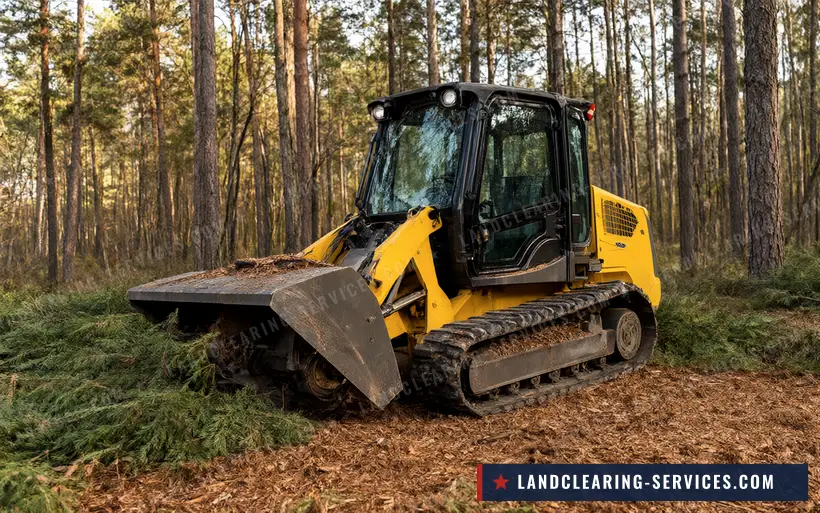
$2,500 to $3,200 per day. Includes transport for any job site inside 60 miles of the yard. Handles tree size up to 8 inches.
Dedicated 300-hp Forestry Mulcher
$3,800 to $4,500 per day plus transport. Takes down mature trees up to 12 or 14 inches in dense overgrowth.
Per Acre Rates
Forestry mulching and land clearing runs $1,000 to $2,500 per acre for typical pine undergrowth. Dense jungle thickets run $2,500 to $4,000 per acre. Full dirt clearing runs $2,500 to $6,000 per acre.
Excavator and Dozer Work
$150 to $200 per hour with an operator for land grading and stump removal. Minimum trip charge is $1,000 to $1,500.
On a tract in Cherokee County, Georgia, just across the state line with similar red clay and pine understory, we cleared 4 acres of privet and sweetgum in two days using a skid steer mulcher for $5,800. For complete pricing detail across different soil conditions, visit our state cost page at /land-clearing-cost/Alabama/. Call (888) 709-7985 to review your job site numbers with Marisol.
Land Clearing Cost Calculator for Alabama
Planning range from 2025–2026 national price data, adjusted to Alabama costs. Change any answer and the range updates.
Open the full land clearing cost calculatorBest Season to Clear Land in Alabama
October through May is the ideal window to clear your land in this state. Winter soil holds up well under tracked mulchers, leaves are down, and operators can clearly spot property markers, rock outcroppings, and ditch lines.
The wet season from June to September brings heavy summer storms that turn clay into slick mud and make ground that holds water difficult to travel over without rutting. Wet conditions add a day on low ground, especially along coastal river systems or Black Belt prairie soils. Mulchers float over wet ground better than dozers, keeping project timelines moving even when ground conditions slow down heavy excavation work.
Alabama Permits, Burn Rules, Wetlands, and Protected Trees
You do not need a state license or general state permit just to clear brush on private acreage, but specific local rules apply depending on your location and project scope.
- 01
Burn Permits
The state forestry commission regulates outdoor burning. If you plan to burn brush piles instead of mulching, you must obtain a burn permit from the state forestry agency on the day of the burn and adhere to local burn bans. Clearing storm damage debris by burning also requires checking local county advisories.
- 02
Wetland Protection
Pushing dirt or placing fill in low spots, creeks, or a designated wetland area triggers USACE Section 404 permit requirements under the Mobile District. Mulching above the soil line avoids dirt displacement in sensitive zones.
- 03
Municipal Tree Ordinances
Cities like Mobile, Huntsville, and select Birmingham suburbs enforce local ordinances regarding mature trees and canopy retention on residential lots. Check local municipal codes before removing large specimen trees.
- 04
Erosion Control and Invasive Rules
Standard erosion control practices prevent washouts on cleared slopes. State agricultural rules track invasive woody species like Multiflora rose (Rosa multiflora) under state Noxious Weeds regulations (Ala. Admin. Code ch. 80-10-14, Department of Agriculture and Industries). Proper mulching stops these thickets from spreading into pasture land intended for agricultural use, reducing fire fuel hazards along timber borders.
Cost-Share Programs: NRCS EQIP Brush Management
Landowners working to clear invasive species or reclaim overgrown pasture for timber or agricultural use can apply for financial assistance through the USDA. The Natural Resources Conservation Service (NRCS) offers the Environmental Quality Incentives Program (EQIP), which includes brush management under practice code 314.
This program helps offset the cost of controlling aggressive underbrush like Chinese privet or eastern red cedar on working acreage. You apply directly at the local USDA service center in your county. A conservation agent inspects your land, writes a land management plan specifying what vegetation stays and what gets cleared, and sets a reimbursement schedule. Once your application gets approved, our crews execute the clearing according to the NRCS technical standards.
Land Clearing Services by County and Growth Metro
According to the Census Building Permits Survey for 2025, AL recorded 15,402 single-family building permits. Land development for new homes requires prep services long before foundation crews arrive. Our crews handle commercial and residential acreage across the top growth counties.
- 01
Huntsville Metro (Madison and Limestone Counties)
Madison County recorded 2,866 single-family permits and Limestone County logged 447 permits. Heavy residential expansion into red clay farmland requires lot clearing and site preparation services.
- 02
Baldwin County Coast
The baldwin county coast generated 2,517 single-family permits in Baldwin county. Fast-growing coastal lots require clearing brush and pine overgrowth while managing low-lying sand and drainage.
- 03
Birmingham Metro (Jefferson and Shelby Counties)
Jefferson County saw 1,592 permits and Shelby County recorded 1,008 permits. Clearing land here involves working rolling terrain around birmingham, heavy timber, and tough sweetgum thickets.
- 04
Auburn-Opelika Metro (Lee County)
Lee County logged 1,551 single-family permits. Expanding acreage projects require full site prep, brush removal, and tree removal services.
Whether you need land clearing work in a growing subdivision or on rural acreage, our land-clearing services operate statewide inside a 60-mile radius from regional equipment yards.
Send the Form, Get a Range the Same Day, Walk the Land with the Crew
Getting your ground cleared follows three straightforward steps with written prices agreed on before work starts.
- 1
Send Details or Call
Call (888) 709-7985 or fill out our online form with your acreage, county, and a description of the vegetation. Marisol in our estimating office reviews your project and emails a budget range the same day.
- 2
On-Site Walk
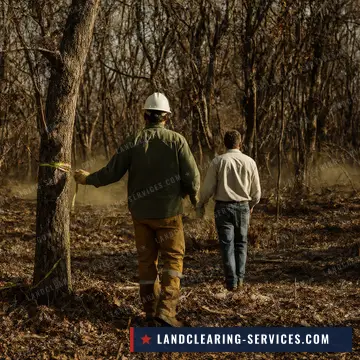
We schedule a free estimate on your job site with the crew lead nearest you. I've priced tracts across 11 states since 2019, and we walked it with you to check boundary lines, spot rock ledges, identify mature trees to keep, and mark wet low spots.
- 3
Written Agreement
You receive a clear, itemized quote based on machine day rates and acres per day. The estimate states extra day conditions for wet ground or rock in writing before any trailer moves.
Our insured crews arrive with heavy-duty mulchers and excavators ready to work. Call (888) 709-7985 today to book your on-site walkthrough.
Land Clearing FAQ
How much does land clearing cost per acre in Alabama?
Forestry mulching runs $1,000 to $2,500 per acre for typical pine understory and privet, while dense growth costs $2,500 to $4,000 per acre. Complete clearing to dirt with stump extraction ranges from $2,500 to $6,000 per acre depending on terrain, rock, and haul distance.
Do I need a permit to clear land on my own property in Alabama?
Private landowners generally do not need a state permit to clear trees and brush. However, you need an Alabama Forestry Commission burn permit if you plan to burn debris, a USACE Section 404 permit for work in protected wetlands, and municipal clearance in cities like Huntsville or Mobile for protected trees.
Can I burn brush piles after clearing my acreage?
Yes, if local fire authorities permit open burning and no burn ban is active. You must obtain an active burn permit from the Alabama Forestry Commission on the day of the burn. Many property owners choose forestry mulching instead to skip pile burning, eliminate smoke, and leave a clean mulch bed.
What is the best time of year to clear land in this state?
October through May offers the best ground conditions. Ground is firmer, weather is cooler, and reduced leaf canopy makes terrain easy to evaluate. Summer clearing from June to September is manageable, but heavy rains can saturate lower ground and add a wet-season day to ground-disturbing work.
How fast can a clearing crew get to my job site?
Marisol provides an initial budget range by email the same day you submit your land details.
How do I get a written estimate for my clearing project?
Call (888) 709-7985 or submit your project location and acreage details through our contact form. Our estimating office emails a target cost range the same day and sets up a free site consultation with the nearest crew lead.