Land Clearing Services in Utah: Utah juniper and pinyon Cleared on Lots and Acreage from Wasatch Front to Central Utah
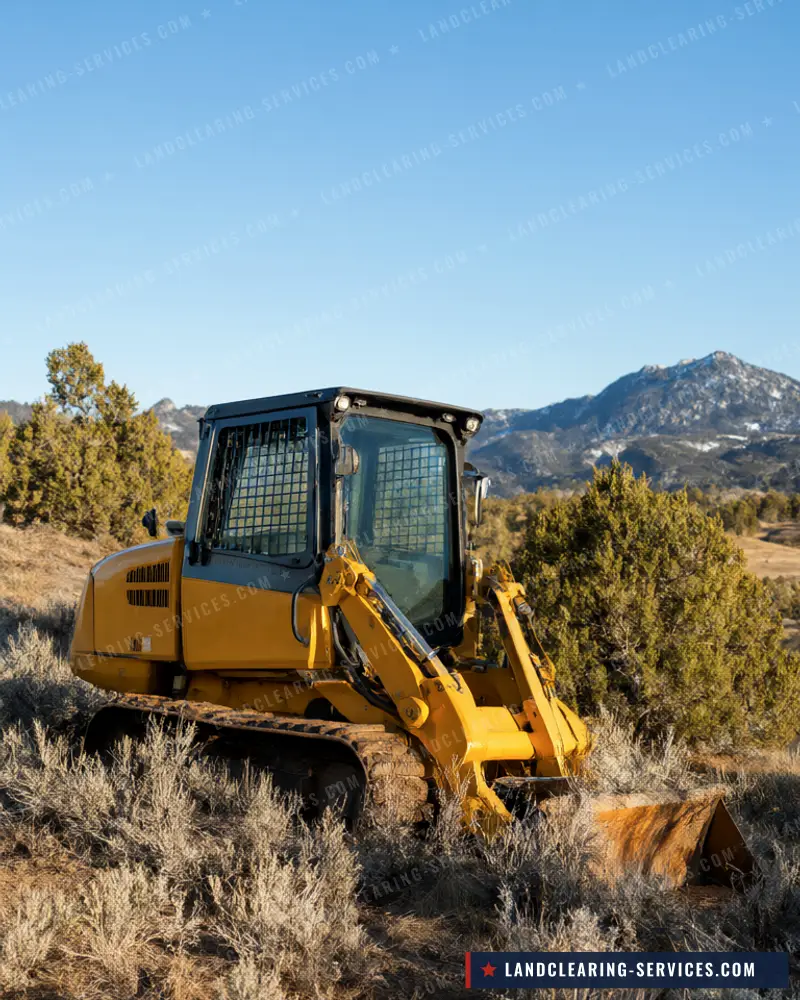
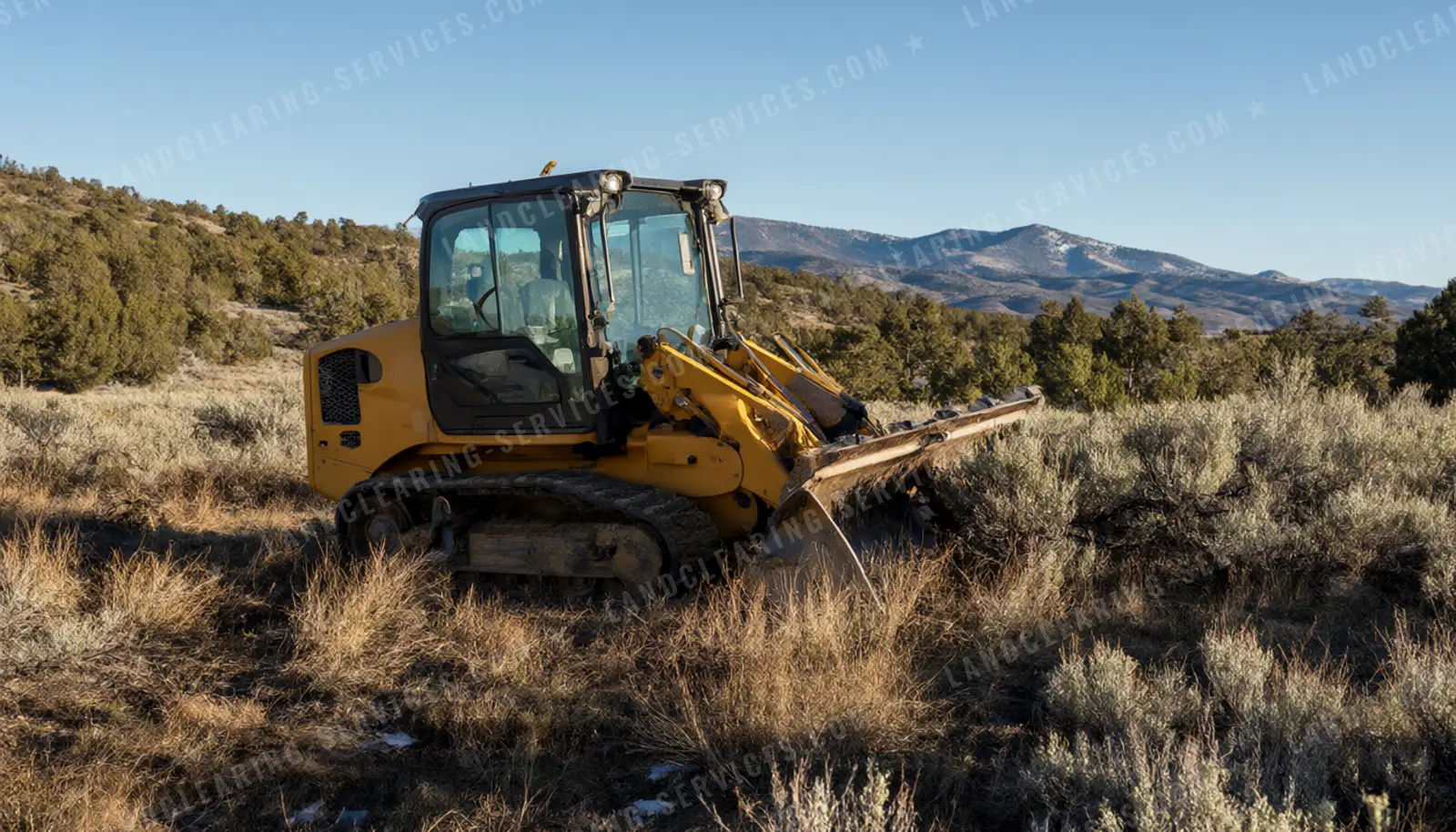
Land clearing in Utah comes down to three conditions: Utah juniper and pinyon on the high benches, ancient lake-bed clay across the valley bottoms, and cobble that tests every tooth on a rotor. Since 2019, our crews have provided land clearing service across this state using clear day-rate pricing. A standard skid steer mulcher runs $2,500 to $3,200 a day, with mobilization included inside 60 miles. Our crews handle your land clearing project with care to log usable timber. Whether you are clearing sagebrush for a home site or establishing defensible space along the Wasatch Front, we set the total price before equipment unloads. Call (888) 709-7985 or send our online form. Marisol emails a budget range the same day and schedules a free on-site consultation with the crew lead nearest your project.
- 48 contiguous
states - Insured
crews - Same-day
budget range
48 statesContiguous coverage
$2,500–3,200Skid steer mulcher, per day
60 milesTransport included
Same dayBudget range by email
Professional Land Clearing Services and Forestry Mulching in UT
Every acre of brush presents different ground conditions. We offer specialized forestry mulching services and tree services tailored to your parcel, balancing speed, soil protection, and total project scope.
Forestry mulching
A single machine processes standing brush into mulch that stays on-site to limit erosion.
Traditional land clearing
A heavy dozer or excavator pulls roots, grubbing the site to mineral dirt for foundation excavation or farming.
Lot clearing
A typical half-acre building parcel for property development takes one day on a skid steer attachment, priced at $2,500 to $3,200.
Brush clearing and vegetation removal
Selective mulching removes dense sagebrush, rabbitbrush, or Gambel oak while leaving mature native pine intact. It is an eco-friendly choice that minimizes soil disturbance on your landscape. Mulching provides an environmentally friendly way to manage thick vegetation.
Stump grinding
Standard grinding runs $3.50 to $5 per inch of diameter, with a $150 to $200 minimum charge. Large stump grinding services are billed at flat day rates to grind every remaining root.
Site preparation and grading
Heavy equipment handles pad creation, long driveway cuts, and utility trenching at $150 to $200 per hour with an experienced operator.

Land Clearing Across Utah: Wasatch Front, Southern Utah, and the Valleys
Terrain varies drastically across the state. A land clearing method that works on sand in St. George will tear up equipment on the rocky benches above Salt Lake. Our local operators adjust machine size and ground pressure for each region.
contiguous states
- 01
Wasatch Front (Salt Lake, Utah, Davis, and Weber counties)
Dense Gambel oak, scrub maple, and steep foothill slopes drive the schedule here. Foothill residential parcels frequently require hazardous brush removal and wildfire mitigation lines to meet local building codes.
- 02
Southern Utah (Washington and Iron counties)
Red sandstone, blow sand, and dense stands of Utah juniper dominate residential development projects around St. George and Hurricane.
- 03
Cache Valley and Northern Utah
Deep valley soils, agricultural fence lines, and thick Russian olive along ditches require heavy root raking and periodic winter clearing work.
- 04
Central Utah and the Wasatch Back
Decomposed granite, cobble, and high elevations mean a short summer work window.
Each crew operates inside a strict 60-mile service radius from their regional yard. Transport fees outside that radius are detailed clearly on your written quote so there are no extra charges at your property location.
Vegetation Management: Utah Juniper, Gambel Oak, and Invasive Species
The native vegetation in this state requires correct equipment choices. On high benches and south-facing slopes, Utah juniper and pinyon pine grow in tight clusters. A dedicated 300-hp mulcher shreds these resinous conifers without requiring haul trucks. Down on the foothill slopes, Gambel oak grows in thick interlocking colonies that resprout aggressively if you only mow the top canopy.
Along waterways like the Virgin and Sevier rivers, invasive species such as tamarisk (saltcedar) and Russian olive choke out native wildlife habitat and clog irrigation ditches for agriculture. The State of Utah Department of Agriculture and Food lists both on the official Utah Noxious Weed List alongside Scotch broom. On large open acreage or pasture, dense sagebrush and rabbitbrush can be cleared quickly using wide mulching head attachments. Selective trimming preserves desirable trees while grinding overgrow brush down to the root collar.
Land Clearing Cost in Utah per Acre and Day Rates
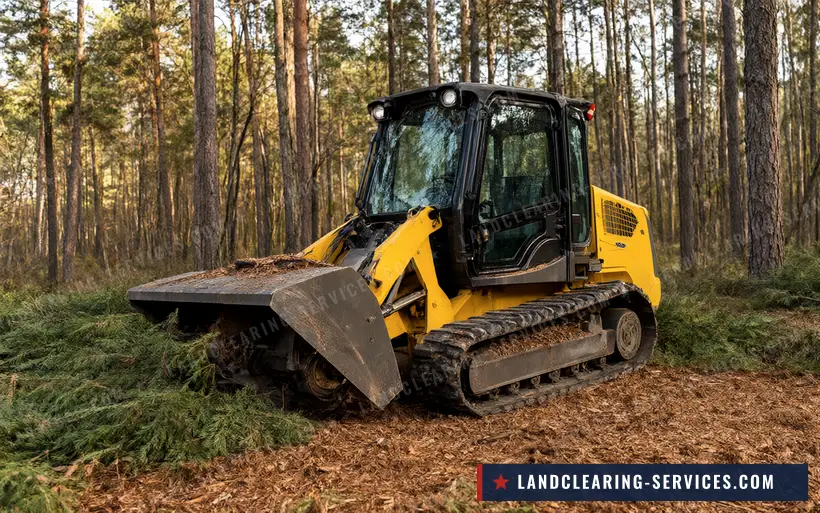
I've priced acreage clearing across 11 states over 20 years, and clear day-rate math always beats vague per-acre estimates. Skid steer mulchers cost $2,500 to $3,200 a day, while a dedicated 300-hp mulching rig runs $3,800 to $4,500 a day plus mobilization fees for heavy hauls.
Light to medium brush clearing (sagebrush or sparse juniper)
$1,000 to $2,500 per acre.
Dense cover (thick Gambel oak or heavy pinyon-juniper forest)
$2,500 to $4,000 per acre.
Complete clear to dirt (grubbing stumps, root raking, rough site grading): $2,500 to $6,000 per acre.
Haul-off service
$600 to $1,300 per dump truck load, with a $1,000 to $1,500 minimum trip fee if mulched material cannot remain on site in a clean pile.
On a job in Bend, Oregon, which features similar high-desert juniper, we cleared 2 acres of defensible space around a residence in 1.5 days for $4,600. Call (888) 709-7985 or visit our dedicated cost guide at /land-clearing-cost/Utah/ for detailed local pricing. Marisol will email your initial budget estimate the same day.
Land Clearing Cost Calculator for Utah
Planning range from 2025–2026 national price data, adjusted to Utah costs. Change any answer and the range updates.
Open the full land clearing cost calculatorBest Season for Utah Clearing Projects
Timing your clearing project depends heavily on your elevation and soil type. Ground conditions dictate whether heavy machines float or sink. Winter work from November to March at high elevations allows heavy tracks to clear brush over frozen dirt without disturbing the topsoil layer.
However, valley dirt work and foundation excavation must wait for the spring thaw. Once the snow melts, ancient lake-bed clay turns into sticky mud during April and May, adding equipment wash time and potential delay days to earth-moving schedules. The summer dry window from June through October is ideal for dirt work, but it overlaps directly with peak fire risk. During statewide fire closures, hot exhaust systems and metal teeth striking bench cobble present ignition risks, requiring fire suppression tools on site. We schedule selective tree removal and heavy forestry mulching and land clearing around these moisture cycles to keep your site preparation moving efficiently.
Utah Permits, Burn Rules, Wetlands, and Property Line Laws
Before bringing heavy machinery to your property for construction, several state statutes and local ordinances must be checked to avoid costly penalties or legal disputes.
- 01
Burn permits
The State Forester at the Utah Division of Forestry, Fire and State Lands (or an authorized deputy) regulates open burning. Under Utah Code 65A-8-211(3), setting fire to brush, fields, or debris piles during the closed fire season (June 1 through October 31) without a written permit is a class C misdemeanor. The State Forester holds authority to extend this closed season based on regional drought.
- 02
Defensible space codes
Counties such as Summit, Wasatch, and Washington enforce strict rules under the Utah Wildland-Urban Interface Code.
- 03
Streams and wetlands
Clearing near active waterways or marshy ground requires a Stream Alteration Permit from the Utah Division of Water Rights. Filling low spots or placing culverts triggers federal USACE Section 404 oversight under the Sacramento District.
- 04
Utility lines
Utah Code 54-8a-4 requires calling 811 at least 48 hours (and not more than 14 days) prior to beginning any excavation or stump removal project.
Cost-Share Programs: NRCS EQIP Brush Management in Utah
Agricultural operators and private woodland owners can offset land management expenses through federal conservation funding. The Natural Resources Conservation Service (NRCS) offers cost-share assistance for brush control under Environmental Quality Incentives Program (EQIP) practice code 314. This program helps restore grazing pasture, remove invasive Russian olive, reduce fuel loads, and improve wildlife habitat.
An assigned NRCS conservation planner inspects your acreage and drafts a custom land management plan specifying which invasive brush to eliminate, what native trees to retain, and how to manage post-clearing seedings. Approval timelines usually take several months, so applications should be submitted well before clearing machinery arrives. Our crews frequently execute these structured EQIP clearing plans, working strictly within the specified conservation guidelines and providing itemized receipts for program reimbursement.
Utah Land Clearing Companies by County and Metro Area
Our operations concentrate heavily around five major growth centers.
- 01
Utah County (Eagle Mountain, Saratoga Springs, Lehi)
Led the state with 5,324 single-family permits in 2025. Clearing heavy sagebrush and bench cobble for high-density master-planned subdivisions is the primary work here.
- 02
Salt Lake and Davis counties (Salt Lake County 2,576 permits, Davis County 841 permits): Highly developed urban corridors where lot clearing, steep foothill oak management, and infill property development require precise selective clearing attachments.
- 03
Washington County (St. George, Hurricane, Washington): Recorded 2,497 permits in 2025. Residential land clearing involves dense Utah juniper removal, red rock site leveling, and strict Firewise buffer creation in desert subdivisions.
- 04
Cache County (Logan and Hyrum)
Accounted for 850 permits in 2025.
Send the Form, Get a Range the Same Day, Walk the Land with the Utah Crew
Getting your parcel cleared involves a straightforward three-step process. First, call (888) 709-7985 or fill out our online request form with your county location, parcel size, and primary brush density. Next, she coordinates an on-site visit with the lead operator located nearest your project.
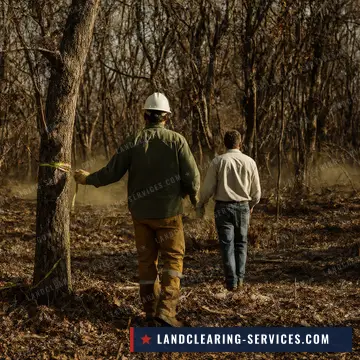
During the walk on your land, our operator reviews boundaries, flags protected timber, checks slope steepness, and identifies potential hazards like buried boulders or wet spots. Once approved, insured crews arrive on schedule with fully serviced forestry equipment. From small lot clearing projects to expansive agricultural land management, we deliver clean, site-ready results backed by explicit written agreements before equipment ever leaves the transport trailer.
Land Clearing FAQ
What is the average cost to clear land per acre in Utah?
Forestry mulching for light to medium brush costs $1,000 to $2,500 per acre, while dense pinyon-juniper or Gambel oak runs $2,500 to $4,000 per acre. Full clearing to bare dirt with stump extraction ranges from $2,500 to $6,000 per acre depending on cobble, slope, and hauling needs.
Do I need a permit to clear land in Utah?
Clearing private brush generally does not require a state permit, but open burning requires a permit from the State Forester (Utah Division of Forestry, Fire and State Lands) or a deputy designated by the state forester during the closed season (June 1 to October 31). Work near streams requires a Utah Division of Water Rights Stream Alteration Permit, and digging requires an 811 locate call.
Can I burn slash piles after land clearing?
Burning brush or timber piles is strictly controlled. During the closed fire season, burning without a written permit from the Utah Division of Forestry, Fire and State Lands is a class C misdemeanor under Utah Code 65A-8-211(3). Many landowners use forestry mulching instead to clear land, process trees into mulch, and bypass burning rules entirely.
What is the best time of year to clear land in Utah?
Winter is ideal for forestry mulching on high-elevation bench land because frozen ground protects topsoil while supporting heavy machines. Late spring through early fall is best for ground grading and foundation excavation, provided operators carry fire suppression gear during peak summer dry periods.
How fast can a clearing crew finish my project?
Marisol emails your initial cost breakdown the same day you submit your project details.
How do I get a land clearing quote?
Call (888) 709-7985 or submit your details through our online contact form. Include your parcel acreage, location, and plant density. Marisol emails a clear budget estimate the same day and books a free site walkthrough with your local crew lead.