Land Clearing Services in North Carolina: Loblolly pine understory Cleared on Lots and Acreage from Triangle to Western North Carolina
Land clearing in North Carolina starts with two facts: loblolly pine understory grows thick with sweetgum, and Piedmont red clay turns slick as grease after a downpour. I started on a dozer in Georgia red clay at 19, and the baseline math for land clearing services here has stayed true. A skid steer mulcher runs $2,500 to 3,200 a day, with transport included inside 60 miles of the crew's yard. Our crews handle lot clearing, site preparation, and brush clearing across central North Carolina, from the Triangle down to Brunswick County and out to the mountains. Send the form or call (888) 709-7985. Marisol emails a budget range the same day and books the free estimate on-site with the crew nearest you.
- 48 contiguous
states - Insured
crews - Same-day
budget range
48 statesContiguous coverage
$2,500–3,200Skid steer mulcher, per day
60 milesTransport included
Same dayBudget range by email
Full-Service Land Clearing Services across Central North Carolina
Clearing land and brush removal on a local property come in clear scopes. Our crews handle professional land clearing work across the region. We price every job by the day or the acre before equipment moves, whether for commercial and residential lots or farm ground. A full-service land clearing company also states what stays off the invoice.
Clear to dirt
root raking, grubbing, piling or hauling off debris, and rough land grading. Costs $2,500 to 6,000 per acre depending on stem density, slope, and rock.
Forestry mulching
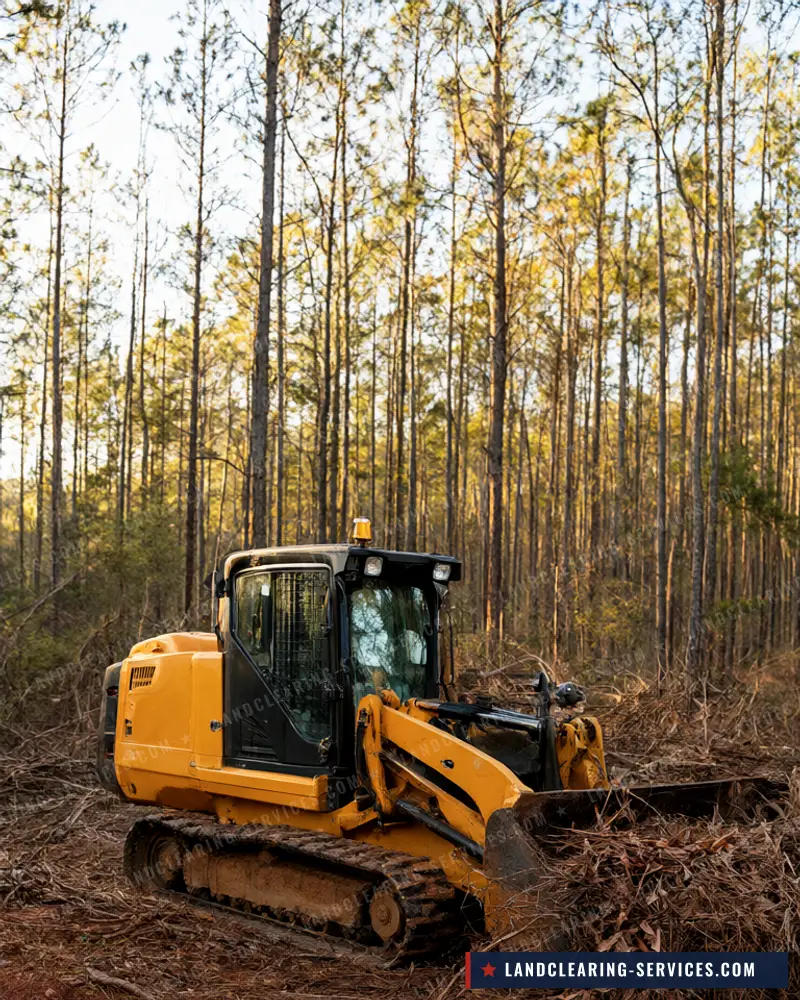
one forestry mulcher processes small trees and brush in a single pass. The mulch stays on site as ground cover. Costs $1,000 to 2,500 per acre for light to medium cover, or $2,500 to 4,000 for dense thickets.
Lot clearing
a half-acre residential overgrown lot averages one day on site for $2,500 to 3,200.
Brush clearing and undergrowth control
we knock back sweetgum, honeysuckle, and Chinese privet while saving your pine timber.
Stump grinding
stump removal runs $3.50 to 5 per inch of diameter, with a $150 to 200 trip minimum to grind each stump on smaller sites.
Tree removal services at scale
we clear brush and trees together across whole tracts. Individual tree care around houses is a tree service job.
Site preparation services
building pads, driveways, and ditch culverts. An excavator or dozer with operator runs $150 to 200 per hour.
We do not pour concrete, drill wells, install septic lines, or knock down houses. I know local contractors in central North Carolina who do. As an experienced clearing contractor, I clarify limits before walking the site.

Clearing Land Across Central Triangle, the Coast, and Western North Carolina
The state covers five distinct regions, and soil conditions dictate machine speed. Our land-clearing services adapt to each zone. Our crews cover all five.
contiguous states
- 01
The Triangle (Wake, Johnston, Durham, Chatham)
heavy red clay, fast-growing sweetgum under pine, and rapid housing development. Pads add a clay day after heavy rain.
- 02
Charlotte metro (Mecklenburg, Union, Cabarrus, Iredell)
stiff clay soil, oak and pine timber, and tight lot clearing work around growing subdivisions.
- 03
The Triad (Forsyth, Guilford, Davidson)
mixed rolling hills, sweetgum thickets, and old pasture reclamation projects.
- 04
Coastal Plain and Brunswick County
sandy soil, wax myrtle, yaupon, and a shallow water table that holds water. Summer rain can add a wet-season day on low ground.
- 05
Western North Carolina
mountain slopes, thin topsoil over ledge rock, rhododendron, and laurel hells. Steep ground often requires winch-assisted mulchers.
Every region operates as its own service hub. Equipment delivery is free inside a 60-mile radius of the crew's local yard.
What a Property Owner Clears Most in North Carolina
Loblolly pine understory with sweetgum, Chinese privet, kudzu, and honeysuckle makes up the bulk of our work in the Piedmont. Old fields grow up quick in red cedar, while coastal property features dense thickets of wax myrtle and yaupon. In the mountains, clearing land means navigating thick laurel, heavy overgrowth, and storm damage from downed timber after Helene.
Mulching services handle this underbrush efficiently. A dedicated forestry mulcher chews through thickets in one pass, protecting mature trees you want kept. Invasive species require targeted strategy. Chinese privet and sweetgum sprout back aggressively from remaining root systems unless cut low or treated, while red cedar dies cleanly at the ground line. Budget for follow-up land management on aggressive sprouters.
Per Acre Land Clearing Cost in Central North Carolina
Much of central North Carolina land sits at the light to medium end of national cost ranges. Soil moisture and tree size set the final price on every job site estimate.
Skid steer mulcher
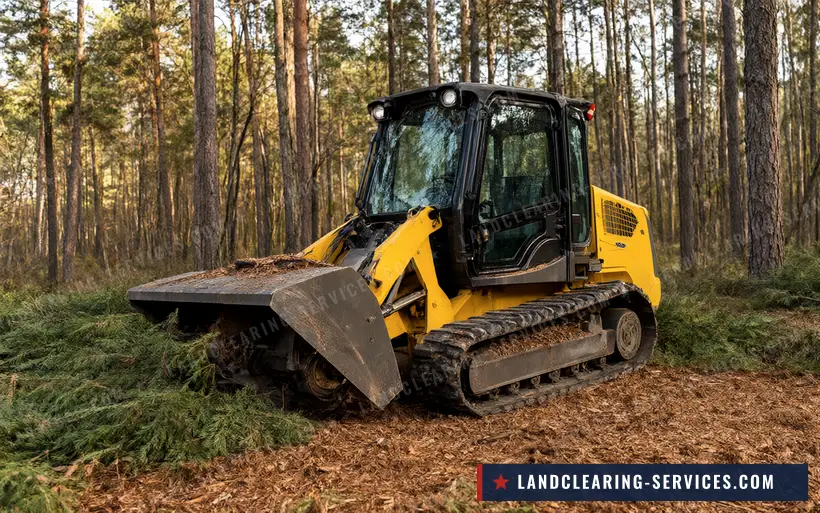
$2,500 to 3,200 per day, transport included inside 60 miles of our yard.
Dedicated 300-hp mulcher
$3,800 to 4,500 per day plus heavy transport fees for dense timber.
Forestry mulching and land clearing
$1,000 to 2,500 per acre for typical pine underbrush; $2,500 to 4,000 for thick brush and small trees.
Full excavation work to bare dirt with stump removal
$2,500 to 6,000 per acre. Steep slopes, rock, and long haul distances raise costs.
Dozer or heavy excavator
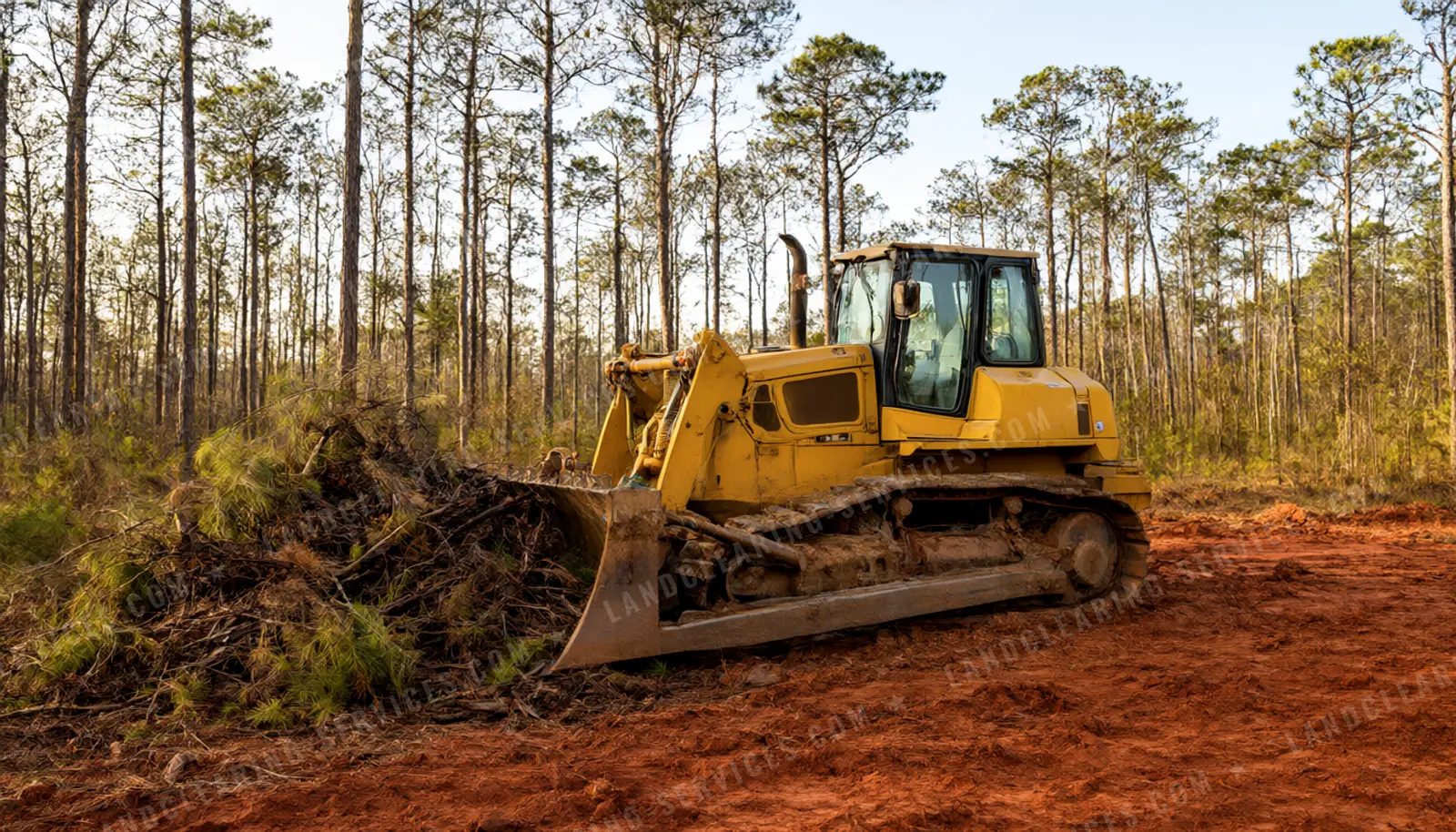
$150 to 200 per hour. Debris removal and haul-off runs $600 to 1,300 per truckload.
On a job in Cherokee County last fall, we cleared 4 acres of privet and sweetgum under pine timber. It took two days using a skid steer mulcher for $5,800, leaving every healthy pine standing. Another 1-acre winter job in Hudson Valley cleared dense multiflora rose on frozen ground for $3,100 in one day. For details, review our full state pricing guide on the cost page. Call (888) 709-7985 or send our online form, and Marisol emails your budget range the same day.
Land Clearing Cost Calculator for North Carolina
Planning range from 2025–2026 national price data, adjusted to North Carolina costs. Change any answer and the range updates.
Open the full land clearing cost calculatorBest Season to Clear Your Land in North Carolina
October to May offers the best clearing window across the state. Winter days keep equipment running smoothly over firm ground while leaves are off the underbrush. Ground conditions stay stable, letting mulchers clear brush efficiently before spring building starts.
Piedmont red clay holds water long after storms, making summer rain a factor. The wet season from June to September often adds a wet-ground day on low-lying coastal tracts or flat clay sites. A mulcher rides over damp soil easier than a heavy dozer, but deep mud stops heavy dirt work. If you need a North Carolina property cleared for early spring construction, request your initial site walk during winter months.
North Carolina Permits, Burn Rules, Wetlands, and Protected Trees
Clearing private land does not require a single master state permit, but specific regulations govern burning, water features, and ground disturbance. We list relevant rules on our quotes so nobody faces delays during site prep.
- 01
Burn permits
The N.C. Department of Agriculture and Consumer Services and N.C. Forest Service forest rangers enforce open burning laws under G.S. 106-942(c). In 21 high hazard counties, burning ground-clearing debris piled on over five contiguous acres requires a special permit. Fires must sit at least 500 feet from neighboring residences unless occupants consent, with ignition allowed only between 8:00 A.M. and 4:00 P.M. Mulching brush avoids piles, fire fuel risks, and smoke permits entirely.
- 02
Erosion control
The Sedimentation Pollution Control Act requires an approved plan for any ground disturbance of 1 acre or more, managed by local programs or the state.
- 03
Wetlands and water
Disturbance or fill in a wetland or stream triggers a USACE Section 404 permit through the Wilmington District, along with NC DEQ 401 water quality certification. The 20 coastal counties also enforce CAMA permits through the Division of Coastal Management.
- 04
Tree ordinances
Cities like Raleigh, Charlotte, Cary, and Apex enforce municipal tree protection regulations on residential and commercial lots.
- 05
Utility line safety
State law (G.S. 87-122) requires an 811 locate call no less than 3 full working days before digging, extending up to 20 working days near subaqueous facilities.
- 06
Property line laws
Under G.S. 1-539.1, cutting, injuring, or removing trees on another's land without consent triggers treble damages (triple the timber value), plus triple damages for setting timber on fire.
- 07
Invasive species lists
The N.C. Forest Service tracks invasive trees and shrubs like Tree of Heaven, Silktree/Mimosa, Callery Pear, Chinese Tallowtree, Fall Olive, and Multiflora Rose.
Our prep services comply with local tree conservation codes and wetland boundaries. Right of way clearing for utilities follows similar environmental standards on larger corridors.
Cost-Share Programs: NRCS EQIP Brush Management in North Carolina
The NRCS EQIP brush management program (practice code 314) provides financial cost-share assistance for clearing land dedicated to agricultural use, pastures, or timber production. Landowners apply directly through their local USDA service center.
An assigned conservation planner drafts a plan mapping out target species to clear, protected forest zones, and recommended reseeding mix. The program favors selective brush clearing using mulchers to keep native topsoil intact. Program approval requires processing time, so apply well before equipment arrives. I walk the tract with you to match our job scope directly to your approved NRCS plan specifications.
Land Clearing Companies by North Carolina County and Metro
The state logged 65,303 single-family home permits in 2025 according to the Census Building Permits Survey. Most construction sites require professional site preparation and brush removal before building starts. Our crews operate across primary metro corridors where developers and owners need land clearing:
- 01
Wake and Johnston counties (Raleigh, Fuquay-Varina, Clayton)
Wake recorded 8,392 single-family permits, and Johnston added 2,633. Heavy clay, loblolly understory, and dense lot prep demand high machine hours.
- 02
Brunswick and New Hanover counties (Leland, Wilmington)
Brunswick recorded 4,454 permits, and New Hanover had 1,208. High water tables and sandy soil require careful machine selection.
- 03
Charlotte metro (Mecklenburg, Union, Iredell)
Mecklenburg led with 3,747 permits, Union held 2,387, and Iredell logged 1,447. Mixed timber lots require combined tree clearing and root raking.
- 04
The Triad (Forsyth, Guilford, Davidson)
Forsyth recorded 2,863 permits, and Guilford logged 1,738. Pasture reclamation and residential lot clearing drive project volume.
- 05
Durham and Chatham counties
Durham recorded 2,790 permits, and Chatham added 517. Tight infill lots and wooded acreage require selective clearing.
We deliver consistent service across all surrounding counties. Hauling beyond a 60-mile yard radius is listed as a clear itemized line item on your formal estimate.
Send the Form, Get a Range the Same Day, Walk the Land with the Crew
Getting your acreage cleared takes three clear steps. Call (888) 709-7985 or fill out our online contact form with your total acreage, county location, and vegetation type. Marisol emails a clear budget range the same day from our estimating office and schedules an on-site visit with our local crew lead.
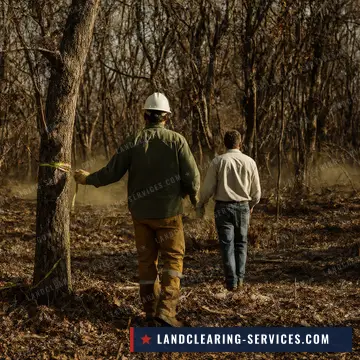
Our field lead walks the acreage alongside you. We locate property boundary markers, identify trees you want to save, check for soft ground, and flag potential rock outcroppings. Your written estimate outlines machine daily rates, estimated daily acreage production, and any terrain surcharge factors upfront. We bring insured crews, structured schedules, and clear communication to every job site. Large clearing jobs are handled with straightforward pricing: documented in writing before our trailer enters the site.
Land Clearing FAQ
How much does land clearing cost per acre in North Carolina?
Forestry mulching costs $1,000 to 2,500 per acre for typical underbrush, and $2,500 to 4,000 per acre for thick brush and small trees. Complete land clearing to dirt with stump removal ranges from $2,500 to 6,000 per acre depending on rock, terrain slope, and haul requirements.
Do I need a permit to clear my land here?
Clearing private brush generally requires no state master permit. However, burning debris requires an N.C. Forest Service permit under G.S. 106-942(c) from local forest rangers. Projects disturbing 1 acre or more must submit an erosion control plan under state law, and work near coastal streams or wetlands needs USACE Section 404 or CAMA permits.
Can I burn the cleared brush piles on my property?
Open burning requires an N.C. Forest Service permit from local forest rangers or online systems. In 21 high hazard counties, land clearing debris piles covering over five contiguous acres require a special permit. Fires must stay 500 feet away from neighboring houses, with ignition limited to 8:00 A.M. to 4:00 P.M.
What is the best season to schedule land clearing?
October through May provides optimal ground stability across the state. Winter months offer clear line-of-sight visibility with foliage down and firm footing on clay soils. The summer wet season from June through September can add delays on low coastal tracts or wet clay.
How quickly can a land clearing crew get to my job site?
Marisol sends your budget range by email the same day you contact us.
How do I get an accurate land clearing estimate?
Call (888) 709-7985 or submit our quick online form with your location, land area, and brush conditions. Marisol emails a preliminary budget estimate the same day and sets up your free estimate on-site walkthrough with a local crew leader. We offer forestry mulching and full excavation options to fit every parcel.