Land Clearing Services in Montana: Sagebrush and rabbitbrush Cleared on Lots and Acreage from Gallatin Valley to Helena
Montana land clearing starts with two physical facts: sagebrush and rabbitbrush cover the benches, while glacial gravel and cobble hide right under the native sod in the valleys. I ran clearing crews in 11 states over 20 years before launching Clearline Land Services in 2019. A skid steer mulcher runs $2,500 to $3,200 a day, transport included inside 60 miles of our yard. Our crews clear build sites, usable pasture, and fire breaks from Gallatin Valley to Helena. Call (888) 709-7985 or send the form. Marisol emails a budget range the same day and books the free on-site estimate with the crew nearest you.
- 48 contiguous
states - Insured
crews - Same-day
budget range
48 statesContiguous coverage
$2,500–3,200Skid steer mulcher, per day
60 milesTransport included
Same dayBudget range by email
Land Clearing Services in Montana
Site work here depends on whether you prepare your property for construction, reclaim pasture, or manage vegetation. Professional contractors should give clear choices before unloading a machine. Here is how our options break down across this state.
Traditional land clearing service to bare dirt
excavator grubbing, brush piling, or haul out, followed by grading for a pad or driveway. $2,500 to $6,000 an acre based on brush density, slope, and surface rock.
Forestry mulching services
a single heavy-duty machine shreds brush and unwanted saplings into a ground cover layer. $1,000 to $2,500 per acre for light sagebrush or juniper, and $2,500 to $4,000 for thick timber ladder fuels.
Lot clearing
a half-acre lot for property development takes one day on a skid steer mulcher attachment, priced at $2,500 to $3,200.
Brush clearing and vegetation removal
taking out sagebrush, rabbitbrush, and invasive woody brush while keeping healthy, mature trees.
Stump grinding services
$3.50 to $5 per inch of stem diameter, with a $150 to $200 minimum per site. Large sites with dozens of stumps are priced by the full machine day.
Selective tree removal
targeted trimming and clearing of dead timber or lower branches for fire mitigation, keeping the canopy intact.
Excavation and foundation excavation
pad shaping, driveway installation, ditching, and site preparation, running $150 to $200 an hour with an experienced operator.
Our crews provide professional land clearing services, but do not pour concrete, drill water wells, set septic tanks, or tear down houses. I know local tree services and utility contractors who do. Trusted clearing contractors state those boundaries upfront so your site preparation stays on schedule.

Land Clearing Across Montana: Flathead, Gallatin Valley, Missoula, Billings, and Helena
Each region of MT presents a different combination of ground conditions, slope, and native growth. A contractor who only works the prairie will miscalculate the day count on a steep timber tract in the mountains.
contiguous states
- 01
Gallatin Valley and Gallatin County
rapid house construction around Bozeman and Belgrade. Benches are covered in heavy sagebrush over glacial gravel and river cobble. Cobble adds a day to excavation and pad work.
- 02
Flathead and the Northwest
dense Douglas-fir, lodgepole pine, and larch thickets. Firewise clearing and hazardous fuel mitigation dominate every building parcel here.
- 03
Missoula and the Bitterroot
steep mountain slopes, dry evergreen draws, and heavy encroaching Rocky Mountain juniper. Knapweed and leafy spurge invade rapidly if the ground is stripped bare.
- 04
Billings and the Yellowstone Valley
open benches, heavy sagebrush, and invasive Russian olive along waterways in Yellowstone County. Work focuses on ranch pasture reclaim and perimeter fence clearing.
- 05
Helena and Great Falls
wind-blown benches, thin forest soil over rock, and limber pine slopes. Mulch minimizes erosion where high winds blow dry dirt away.
Every region functions as an independent service area for our crews. Transport is included inside 60 miles of the mobilization yard. Past that circle, exact transport costs are written on your quote line by line.
What Montana Landowners Clear Most
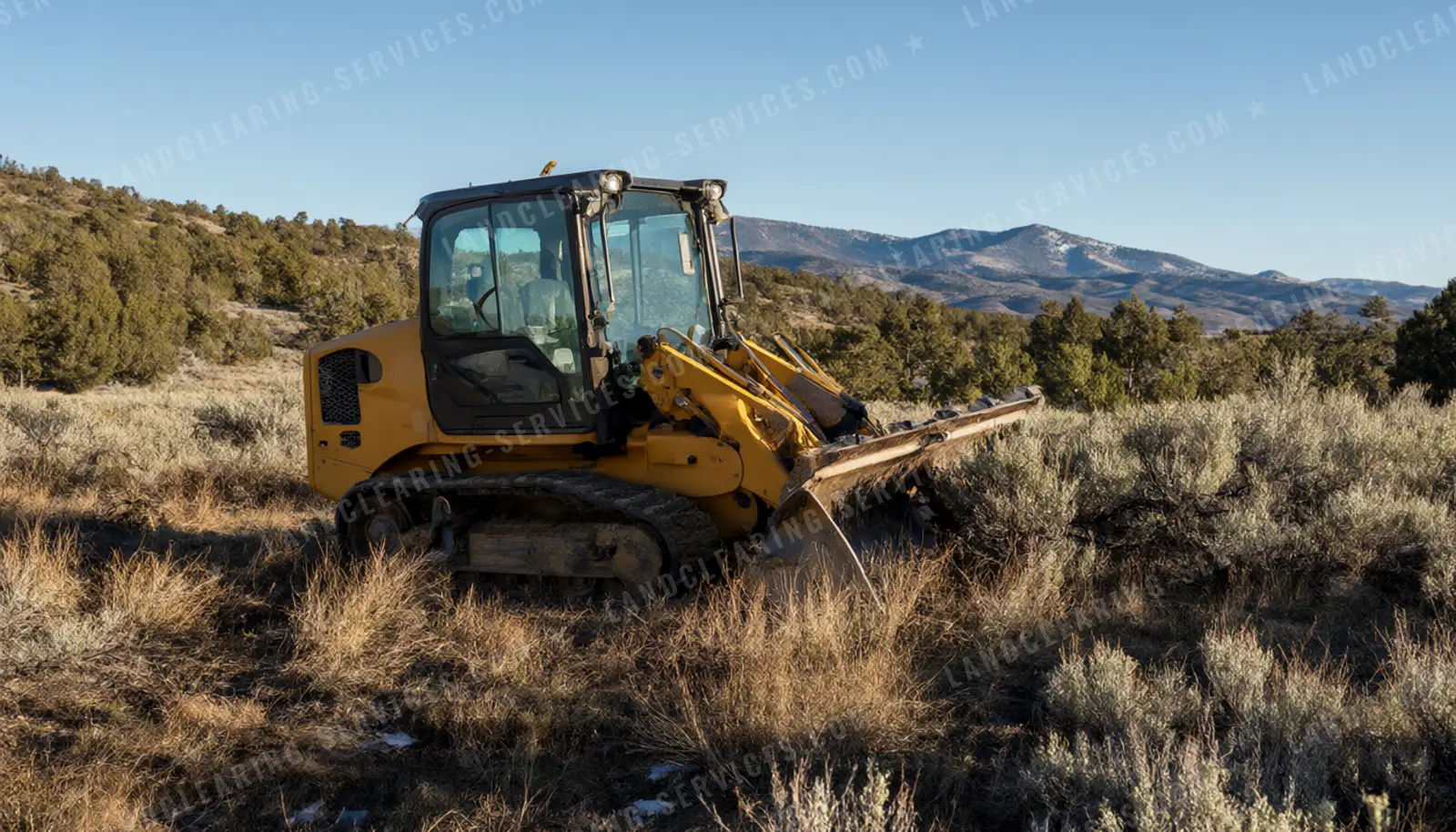
Sagebrush and rabbitbrush cover millions of acres on local benches. Sagebrush runs light on teeth, but root crowns must grind flush to prevent immediate re-growth. Sagebrush root systems do not resprout after a clean cut, but rabbitbrush comes back for the same reason I do, nobody told it to stop.
Along dry slopes, Rocky Mountain juniper and limber pine overgrow native grazing pasture. Further up the draws, Douglas-fir and lodgepole pine thickets create hazardous ladder fuels right next to rural homes. Along bottomlands, Russian olive and native willow choke out irrigation ditches. Disturbed ground invites invasive species like Scotch broom and Saltcedar. Local brush requires specific attachments, but our target stays identical: reduce fire risk, minimize soil disturbance, mow overgrowth, protect local wildlife, and restore healthy native habitat.
Land Clearing Cost in Montana per Acre
The total cost for a land clearing project in MT depends on brush density, ground slope, and whether the ground is frozen. Here is how we build every estimate for a landowner.
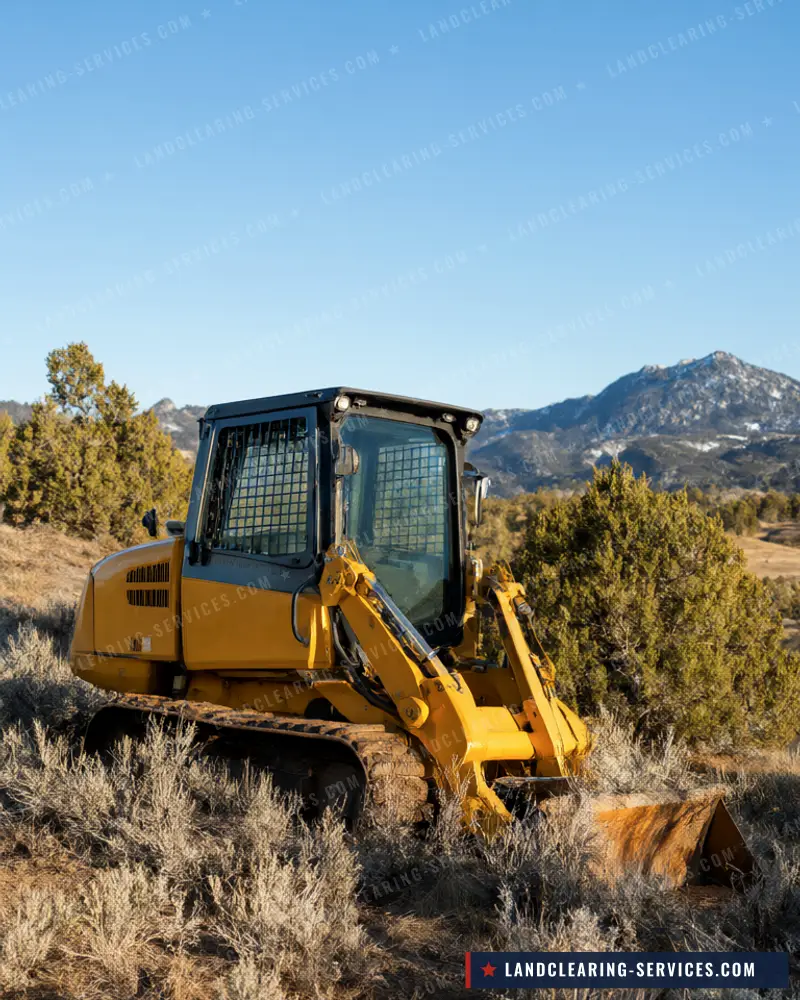
Skid steer with a mulcher attachment
$2,500 to $3,200 per day, including mobilization inside 60 miles of our yard.
Dedicated 300-hp mulching machine
$3,800 to $4,500 per day, plus heavy transport charges.
Forestry mulching cost per acre
$1,000 to $2,500 for light sagebrush and open juniper; $2,500 to $4,000 for dense timber ladder fuels or river bottoms.
Full excavation and clearing to bare dirt
$2,500 to $6,000 per acre. River cobble, steep mountain slopes, and off-site haul add to the top end.
Excavator or dozer hourly rate
$150 to $200 per hour with an operator included. Minimum mobilization trip: $1,000 to $1,500.
On an Oregon project, our team combined forestry mulching and land clearing to clear 2 acres of dense juniper and ladder fuels for wildfire mitigation around a home. It took 1.5 days on a skid steer mulcher and cost $4,600. On a larger 20-acre pasture reclaim job in Oklahoma, our crew spent 4 days on a dedicated 300-hp mulcher taking out invasive cedar for $18,500 plus transport. Day-rate math times the required acres per day gives you the price before work starts. Review our cost page for details. Call (888) 709-7985 or send the form to start your estimate.
Land Clearing Cost Calculator for Montana
Planning range from 2025–2026 national price data, adjusted to Montana costs. Change any answer and the range updates.
Open the full land clearing cost calculatorBest Season to Clear Land in Montana: November to April for Mulching
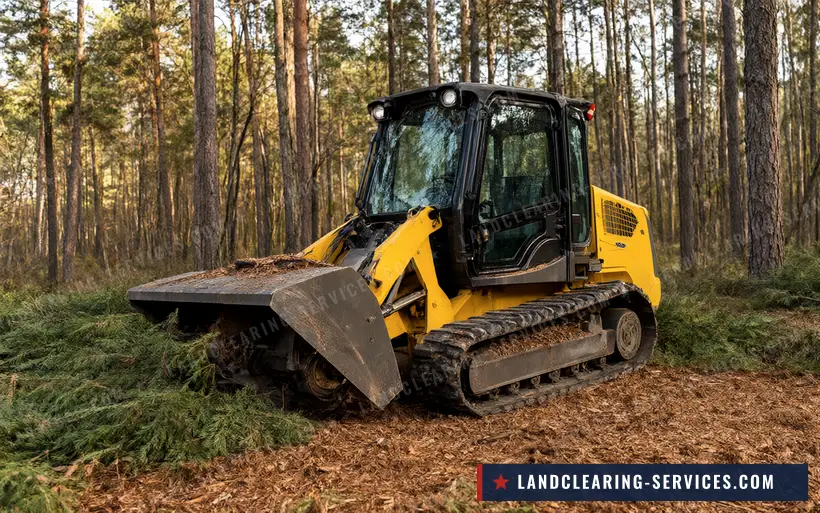
Timing a land clearing project in MT requires balancing frozen ground, winter snow depth, and summer fire bans. Frozen ground from November through April is actually the best road a mulcher ever drove on. A heavy tracked machine floats over frozen ground, leaving root structures bound tight without tearing up topsoil.
Dirt work and foundation excavation require unfrozen ground. Peak fire season from July through September brings heavy machinery under strict local restrictions or complete shut-downs during high fire danger days. If you plan to clear land for a spring build, booking winter mulching avoids summer dirt delays and keeps your site moving forward.
Montana Permits, Burn Rules, Wetlands and Protected Trees to Know Before Clearing
You do not need a state license or general permit just to clear brush on your own private land, but several state and local regulations affect how and when you execute a clearing project.
- 01
Burn permits and air quality
Outdoor burning is overseen by your local county fire control authority. The Montana DEQ enforces state air-quality burn restrictions under ARM 17.8.6. Open burning season runs from September 1 through November 30 based on DEQ county dispersion forecasts. Winter burning requires special case-by-case approval from DEQ, while spring and summer burning is regulated locally by each county.
- 02
Defensible space and WUI
Montana DNRC and county Firewise programs set guidelines for fire mitigation around homes in the Flathead, Bitterroot, and Gallatin WUI zones. Defensible-space clearing is typically priced per 100 feet of perimeter around structures.
- 03
Streams and wetlands
Any work along a natural stream channel requires a 310 permit from your local conservation district. Pushing dirt or log waste into a wetland triggers a USACE Section 404 permit.
- 04
Underground utilities
State law mandates an 811 call 2 business days before digging.
- 05
Boundary trees and timber trespass
Under MCA 70-16-107, cutting trees on a neighbor's lot carries treble damages if done willfully or maliciously. Actual damages apply if the cut was casual or inadvertent. Always flag the boundary line before a machine starts.
Knowing these environmental and local rules protects your investment. Choosing a land clearing method that minimizes soil disturbance is always the safest path near waterways or boundary lines.
Cost-Share Programs: NRCS EQIP Brush Management in Montana
The NRCS EQIP offers cost-share grants for working agriculture land under practice code 314 for brush management. This federal program helps ranchers and farmers clear encroaching sagebrush, juniper, and invasive woody plants from pasture and forest ground. It is designed for working agricultural land, not a standard residential home lot.
Landowners apply directly through their local USDA service center. An NRCS conservation planner evaluates your tract and creates a land management agreement outlining which species to clear and erosion controls to use. Approval takes time, so submit your application months before scheduling work. Our crews carry the insurance and equipment needed to execute an approved NRCS conservation plan exactly to specification.
Land Clearing Companies by Montana County and Metro
Montana registered 2,675 single-family building permits in 2025 according to the Census Building Permits Survey. Rapid growth in western counties means thousands of acres require vegetation management and site preparation for development projects before building starts. Here is where single-family residential construction is concentrated across top counties.
- 01
Gallatin County (Bozeman, Belgrade)
843 single-family permits in 2025. Benches require heavy sagebrush removal, cobble handling, and driveway excavation. Our mulching units run constantly here on construction projects.
- 02
Yellowstone County (Billings)
685 single-family permits. Prairie clearing, fence line work, and Russian olive control along valley bottoms.
- 03
Missoula County and Ravalli County
423 permits in Missoula and 38 in Ravalli. Mountain residential lots needing steep-slope mulching, Douglas-fir thinning, and Firewise defensible space creation.
- 04
Flathead County (Kalispell, Whitefish)
196 single-family permits. Dense forest parcel work, stump grinding, landscape shaping, and ladder fuel removal around timber builds.
- 05
Cascade County (Great Falls)
153 single-family permits. Wind-exposed bench clearing, pasture management, and pad grading.
County and town pages will launch in the next phase of our site rollout. In the meantime, our crews service all surrounding areas inside a 60-mile radius of their regional equipment yards based on exact property location.
Send the Form, Get a Range the Same Day, Walk the Land with the Montana Crew
Getting your tract cleared requires three steps. Call (888) 709-7985 or fill out our online form with your county location, acreage, and brush description. Marisol in our estimating office emails you a firm budget range the same day and arranges an on-site evaluation with the crew nearest you.
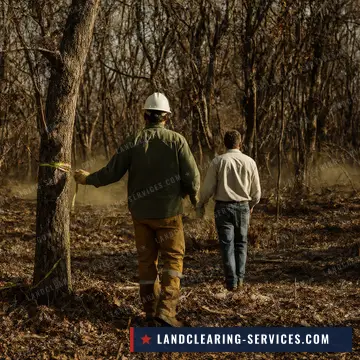
We establish boundary markers, identify high-value trees to preserve, measure slope, and inspect ground conditions for river cobble or mud. The written estimate you receive breaks down the daily machine rate, estimated acres cleared per day, and any clear extra-day conditions for rock or frozen ground before the trailer moves. You get insured crews, fixed start dates, and an estimator who answers the phone directly from active job sites. Send the form today to lock in your clearing window for the season.
Land Clearing FAQ
What is the average land clearing cost per acre in MT?
Forestry mulching runs $1,000 to $2,500 an acre for light sagebrush or open juniper, and $2,500 to $4,000 for dense mountain timber or ladder fuels. Clearing down to bare dirt with full stump removal costs $2,500 to $6,000 an acre depending on slope, surface cobble, and haul requirements.
Do I need a permit to clear land in MT?
You do not need a state land clearing permit for general brush removal on private land. However, burning debris requires a local county fire control permit and compliance with Montana DEQ air quality rules. Working near streams requires a Montana 310 permit, while filling wetlands triggers USACE Section 404 oversight.
Can I burn brush piles after land clearing?
Open burning is permitted from September 1 to November 30 under DEQ air dispersion forecasts and county guidelines. Winter burning requires specific DEQ approval. Spring and summer burning is controlled strictly by local county fire authorities. Most landowners choose eco-friendly forestry mulching instead to bypass pile burning entirely.
What is the best time of year to clear land in MT?
Winter from November through April is ideal for environmentally friendly forestry mulching because frozen ground allows heavy equipment to float without causing rutting. Summer and fall are best for dirt work, pad grading, and foundation excavation, though hot summer months bring seasonal fire restrictions.
How fast can a land clearing crew get to my parcel?
Marisol emails your initial budget range the same day you submit your project details. On-site estimates are scheduled within a week if your parcel is within 60 miles of a yard.
How do I get an exact quote for my clearing project?
Call (888) 709-7985 or submit our online request with your parcel location and acreage. Marisol emails a budget range the same day and schedules a free field visit with your local crew leader to confirm boundaries, slopes, and total job timing in writing.