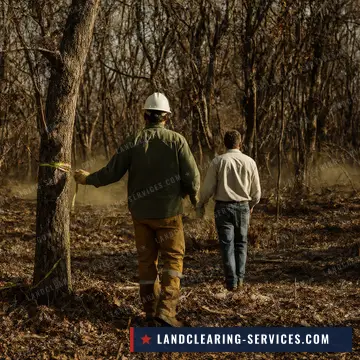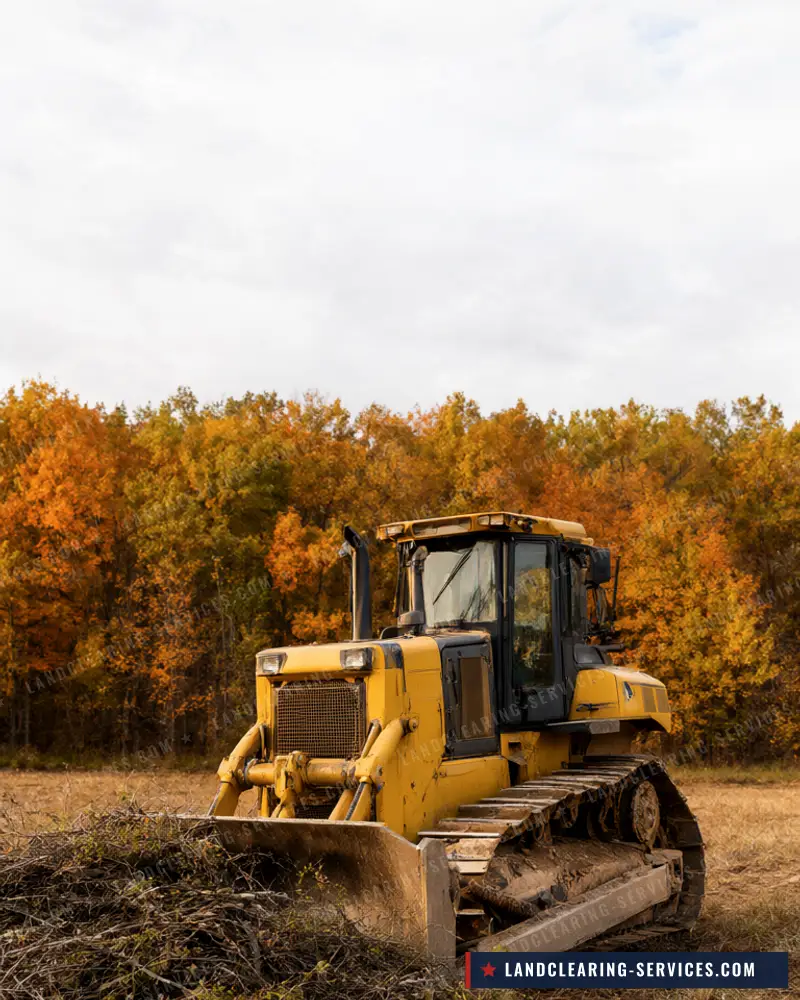
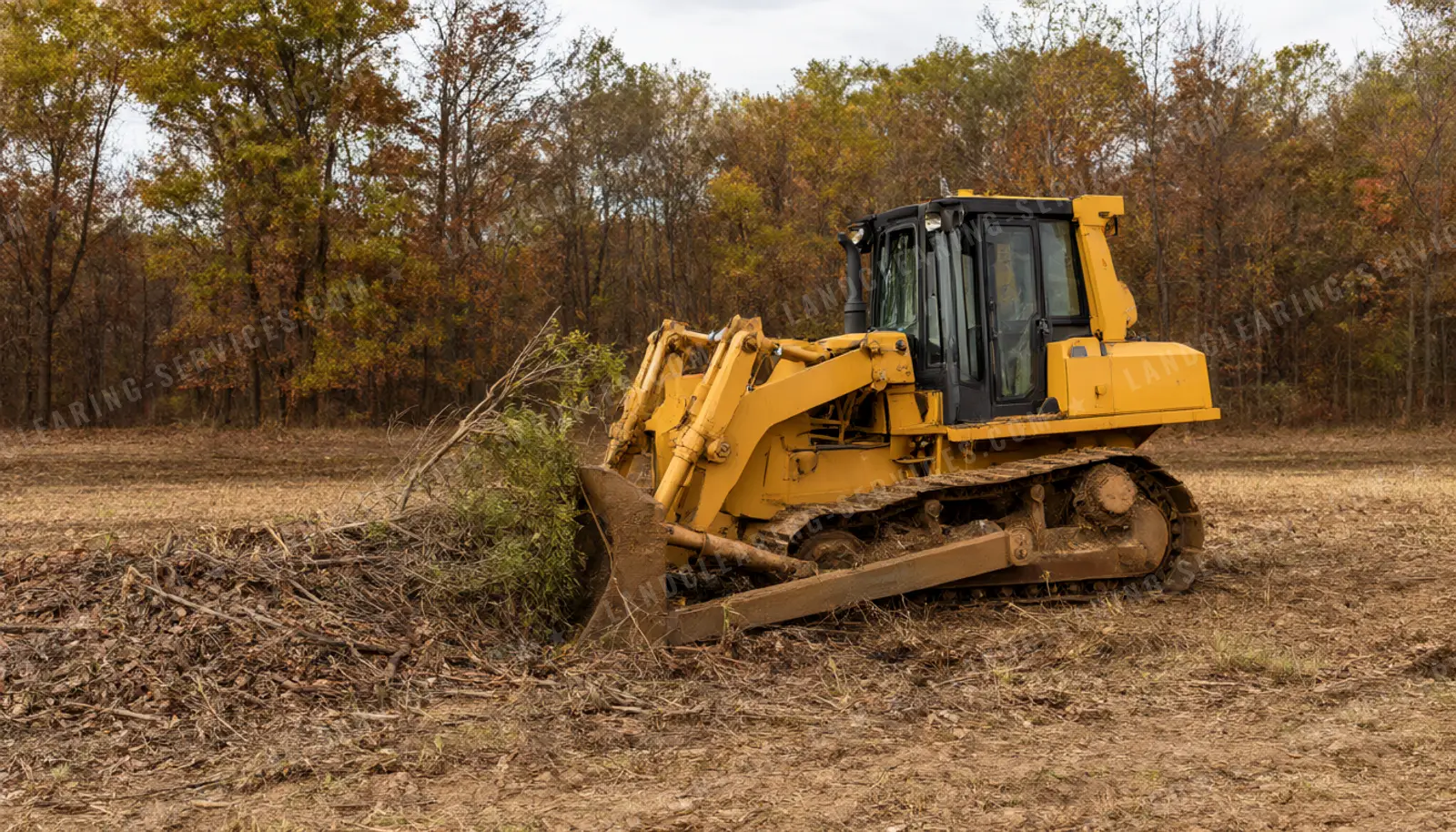
Land Clearing Services in Iowa: Eastern red cedar Cleared on Lots and Acreage from Des Moines Metro to Western Iowa Loess Hills
Land clearing in Iowa starts with two realities: eastern red cedar takes over an overgrown property, and deep prairie loam turns to thick mud during the spring thaw. I started on a dozer in Georgia red clay at 19, and after 20 years pricing site work across 11 states, I know how ground conditions dictate production. A skid steer mulcher runs $2,500 to $3,200 a day, transport included inside 60 miles of the crew's yard. Our crews handle lot clearing and acreage projects from the Des Moines Metro to the western bluffs. Call (888) 709-7985 or submit the form. Marisol emails a budget range the same day and books the field estimate with the local crew.
- 48 contiguous
states - Insured
crews - Same-day
budget range
48 statesContiguous coverage
$2,500–3,200Skid steer mulcher, per day
60 milesTransport included
Same dayBudget range by email
Professional Land Clearing Services in Iowa
Ground prep services across this state require matching the right equipment to the soil and vegetation. Our professional land-clearing company offers fixed day rates and per-acre pricing for landowners, builders, and utility companies needing expert ground prep.
Forestry mulching and lot prep
equipment uses a single machine to grind trees and brush into ground cover. Light to medium cover runs $1,000 to $2,500 an acre. Dense cover runs $2,500 to $4,000 an acre.
Lot clearing
residential land clearing for new home construction on a half-acre lot averages one day, costing $2,500 to $3,200.
Brush clearing
selective removal of invasive brush and overgrown fence lines while preserving hardwood timber. When land is cleared, native grasses return. Traditional land clearing methods push dirt into piles, but forestry mulchers grind brush on location.
Tree removal and stump grinding
we perform large-scale tree removal for lot prep near Des Moines west side. We remove trees and sapling stems safely. Individual stump grinding runs $3.50 to $5 per inch of diameter, with a $150 to $200 minimum per stump.
Clear to dirt work
complete grubbing, root raking, topsoil grading, and final prep for commercial projects or agricultural conversion runs $2,500 to $6,000 an acre.
Trail cutting
opening trails through wooded acreage for recreation, hunting, or fence construction.
We do not pour concrete, install septic systems, or drill water wells. Our crews focus on expert land clearing in this state to get your site ready for development or agriculture.

Land Clearing Services Across Iowa Regions
Terrain here varies by region, and soil mechanics dictate how fast a machine can clear vegetation without tearing up the ground. Clearing contractors who know the terrain adjust their plans based on the dirt under the tracks.
contiguous states
- 01
Des Moines Metro and Des Moines West Side
deep prairie loam around Dallas, Polk, and Warren counties. Residential lot clearing and site prep dominate here. Spring rain can make flat sites slick, adding field time for heavy equipment. We handle lot clearing in Des Moines west side for residential subdivisions.
- 02
Eastern Region and Iowa City
rolling hills and timber edges near Cedar Rapids, Davenport, and Johnson County. Landowners clear invasive brush like honeysuckle and buckthorn to restore timber stands and manage county land boundaries.
- 03
Northeast Driftless Hills
steep ridges, thin soils, and exposed limestone. Equipment operators must work carefully along contours to prevent erosion when clearing trees and brush with equipment designed for steep slopes.
- 04
Western Loess Hills
windblown silt bluffs along Council Bluffs that cut like butter when dry but wash away like sugar during heavy rains. Forestry mulching preserves soil stability here by keeping roots intact.
Each region is inside our active service area. Transport is included inside 60 miles of the yard serving your county.
What Iowa Landowners Clear Most: Cedar, Honeysuckle, and Buckthorn
Eastern red cedar is the primary species taking over pasture land across the state. Cedar seeds drop in grass rows, and within five seasons, open pasture becomes thick brush. Bush honeysuckle, multiflora rose, and buckthorn choke the timber edges, while box elder and willow clog ditches and fence lines. Reed canary grass dominates low, wet ground.
Cedar does not resprout from the root once cut below the lowest green branch. However, invasive species like buckthorn and multiflora rose require aggressive clearing to prevent regrowth. Minnesota buckthorn and local buckthorn are the same job with identical stubborn root systems. When our land clearing experts grind brush and small trees, they leave a protective mulch layer that suppresses weed sprouts, protects the soil, and gives usable land back to native grasses to help property owners achieve land restoration.
Land Clearing Cost in Iowa Based on Acreage and Density
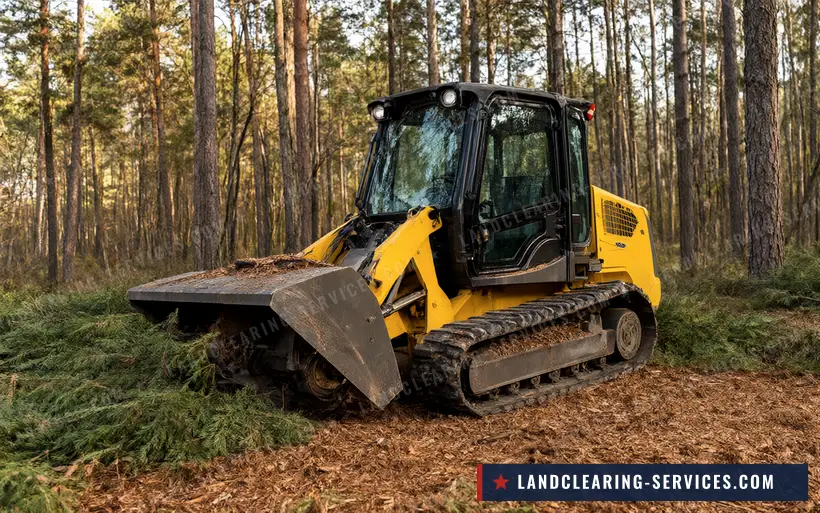
Vegetation removal cost is calculated using equipment day rates and production logs. A skid steer mulcher runs $2,500 to $3,200 a day. A dedicated 300-hp mulcher costs $3,800 to $4,500 a day plus transport for heavy timber. Forestry mulching services average $1,000 to $2,500 per acre for cedar pasture reclaim, which runs light to medium compared to dense Southern hardwoods.
Full clearing to bare dirt with a dozer or excavator runs $150 to $200 an hour, while hauling or burning options carry distinct fees. Haul-off costs $600 to $1,300 per load with a $1,000 to $1,500 minimum trip fee. Last winter, on a job in Logan County, Oklahoma, we completed a 20-acre eastern red cedar pasture reclaim using a dedicated 300-hp mulcher for $18,500 plus transport over 4 days. On a smaller tract in the Hudson Valley, New York, clearing 1 acre of dense brush, buckthorn, and multiflora rose on frozen ground took 1 day and cost $3,100. Call (888) 709-7985 or send our form to review pricing for your acreage. Detailed regional cost breakdowns are on our cost page.
Land Clearing Cost Calculator for Iowa
Planning range from 2025–2026 national price data, adjusted to Iowa costs. Change any answer and the range updates.
Open the full land clearing cost calculatorBest Season to Clear Land in Iowa: Winter Frozen Ground
Crews use forestry mulching during winter in this state. From December to March, frozen ground acts as a solid roadbed for heavy forestry mulchers. The machines travel over low spots without rutting the topsoil, and leafless trees make selective tree clearing straightforward.
Full grubbing, root raking, and dirt work must wait for the spring thaw. The mud season from March to April softens prairie loam, adding a day to heavy dozer operations on flat acreage. Executing brush control during the winter freeze keeps project timelines intact and prevents severe soil compaction on agricultural ground.
Iowa Permits, Burn Rules, Wetlands, and Tree Regulations
Before equipment moves onto your property, several state and local regulations must be verified to keep your job compliant.
- 01
Burn Regulations
Open burning of landscape waste from lot clearing, grubbing, and construction operations is governed by the Iowa Department of Natural Resources under Environmental Protection Commission rule 567 IAC 23.2. Burning of landscape waste is allowed only if located at least one-fourth mile from any building inhabited by anyone other than the landowner or tenant doing the burning. This exemption is unavailable inside city limits such as Des Moines and Cedar Rapids. Using forestry mulching avoids open burning permits entirely while wood mulch covers the dirt.
- 02
Wetlands and DNR Rules
The US Army Corps of Engineers Rock Island District enforces Section 404 permits for placing fill in wetlands or streams, alongside Iowa DNR floodplain requirements. Agricultural properties must also comply with NRCS Swampbuster rules before disturbing wet areas.
- 03
Tree Ordinances and Trespass
Suburbs near Des Moines west side and Iowa City enforce municipal tree preservation guidelines. Under Iowa Code 658.4, cutting a neighbor's tree without permission carries treble damages for willful injury to trees. Iowa Code 317.1A lists buckthorn and multiflora rose as primary and secondary noxious weeds requiring control.
- 04
Utility Clearance
State law under Iowa Code 480.4 mandates calling 811 at least 48 hours before any digging or root grubbing takes place.
We offer forestry mulching and land clearing in des moines west side to clear your land legally while staying environmentally responsible. We review these site conditions during the initial walkthrough.
Cost-Share Programs: NRCS EQIP Brush Management in Iowa
Private landowners managing pasture, timber, or land and wildlife habitat can apply for financial assistance through the NRCS EQIP program. Practice code 314 covers brush management to mow down brush and eliminate invasive species like eastern red cedar, buckthorn, and autumn olive.
Applications are submitted through your local USDA service center. A conservation agent writes a plan detailing which trees and brush to remove while protecting native soil and habitat. Once approved, our crews execute the clearing according to NRCS specifications. Approval takes several months, so landowners should start the application process early.
Iowa Growth Metros and Building Permit Activity
According to the 2025 Census Building Permits Survey, this state recorded 7,326 single-family building permits. Residential growth across the region continues to turn overgrow conditions or pasture into home sites. Our crews provide land clearing near major housing corridors across eastern Iowa where construction activity is highest.
- 01
Des Moines West Side (Polk and Dallas Counties)
Polk County logged 2,306 permits, and Dallas County recorded 665 permits. Expansion in Ankeny, West Des Moines, and Waukee requires site preparation, lot clearing, and invasive brush removal.
- 02
Iowa City and Cedar Rapids (Linn and Johnson Counties)
Johnson County reached 513 permits, while Linn County recorded 418 permits. Clearing for residential acreage and commercial projects regularly involves buckthorn and cedar management along river bluffs.
- 03
Warren County Corridor
Warren County posted 355 permits. Rural lot development south of the metro involves clearing overgrowth on fence lines and cedar thickets on former pasture land.
Whether you need clearing for a single house lot or a multi-acre subdivision, our crews work within 60 miles of our regional yards.
Send the Form, Get a Range the Same Day, Walk the Land with the Crew
Getting your Iowa land back involves a straightforward three-step process. Call (888) 709-7985 or submit our online form with your acreage, location, and the brush type you need removed. Marisol emails a budget range the same day from our office and schedules a field consultation with the crew nearest you.
Our crew leader meets you on site to walk the boundary, locate low spots, identify timber to preserve, and inspect access routes for a driveway. You receive a final written bid outlining the daily rate, expected acres per day, cleanup terms, and extra days required for wet ground or steep slopes. Our insured crews deliver reliable service so you can clear trees responsibly without unexpected fees on the invoice.
Frequently Asked Questions About Land Clearing Services in Iowa
How much does land clearing cost per acre here?
Professional forestry mulching costs $1,000 to $2,500 per acre for light to medium cedar and brush, and $2,500 to $4,000 per acre for dense brush. Complete clearing to dirt with stump grubbing costs $2,500 to $6,000 per acre, depending on slope, haul distance, and soil moisture.
Do I need a permit for site prep in Iowa?
Tree and brush clearing on private land generally does not require a state permit. However, open burning of lot prep waste is regulated by the Iowa DNR under rule 567 IAC 23.2 and prohibited within one-fourth mile of neighboring inhabited buildings or within major city limits. Professional forestry mulching preserves soil and avoids burn permits.
Can I burn the brush piles after clearing?
Open burning is strictly restricted near populated areas and prohibited in cities like Des Moines and Cedar Rapids. Debris burning must meet DNR setback distances from neighboring structures. Most clearing experts recommend forestry mulching to grind brush and fallen trees into mulch, eliminating piles, smoke, and permit requirements entirely.
What is the best time of year for lot prep in Iowa?
Winter from December to March is ideal for forestry mulching services because frozen ground supports heavy equipment without compacting topsoil or rutting wet areas. Complete dirt work and stump grubbing should be scheduled after the spring thaw, avoiding the peak mud season in March and April.
How fast can a crew get to my site?
Marisol emails a budget range the same day you submit your project details.
How do I get an accurate land clearing estimate?
Call (888) 709-7985 or send us your project details using the online form. Marisol provides a prompt budget range by email and arranges a free on-site estimate with our local crew lead near Des Moines west side to deliver a binding written bid before equipment unloads.