Forestry Mulching Services: Brush, Cedar, Pine Understory and Small Trees Mulched in One Pass
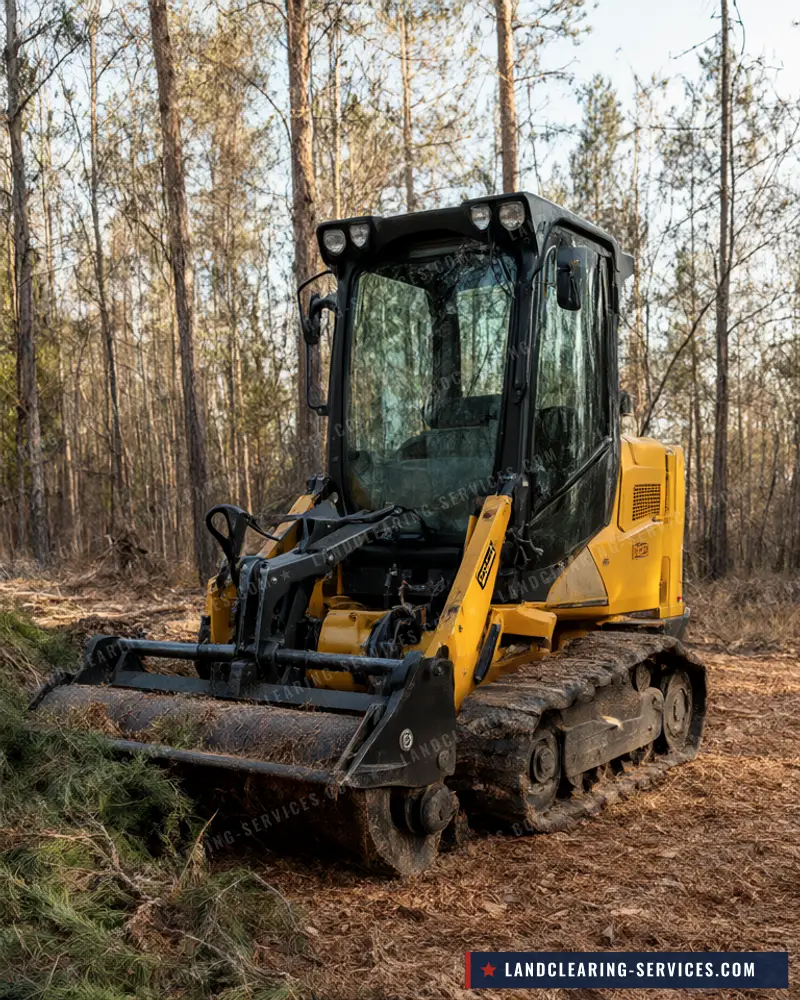
Forestry mulching turns thick underbrush, eastern red cedar, pines and small standing trees into protective mulch in a single pass. Our crew grinds limbs into thick mulch on your site. I started on a dozer in Georgia red clay at 19, and running clearing crews across 11 states showed me that processing vegetation on site is usually the fastest way to clear land management projects. A skid steer unit costs $2,500 to 3,200 a day with transport included inside 60 miles of the crew's yard, while a dedicated 300-hp unit runs $3,800 to 4,500 a day. Our crews operate and spread fresh mulch across all 48 contiguous states. This shredded cover stays on your ground to protect it. Call (888) 709-7985 or send the form. Marisol emails a budget range the same day and books the on-site estimate with the crew nearest you.
- 48 contiguous
states - Insured
crews - Same-day
budget range
48 statesContiguous coverage
$2,500–3,200Skid steer mulcher, per day
60 milesTransport included
Same dayBudget range by email
What Is Forestry Mulching and How It Works
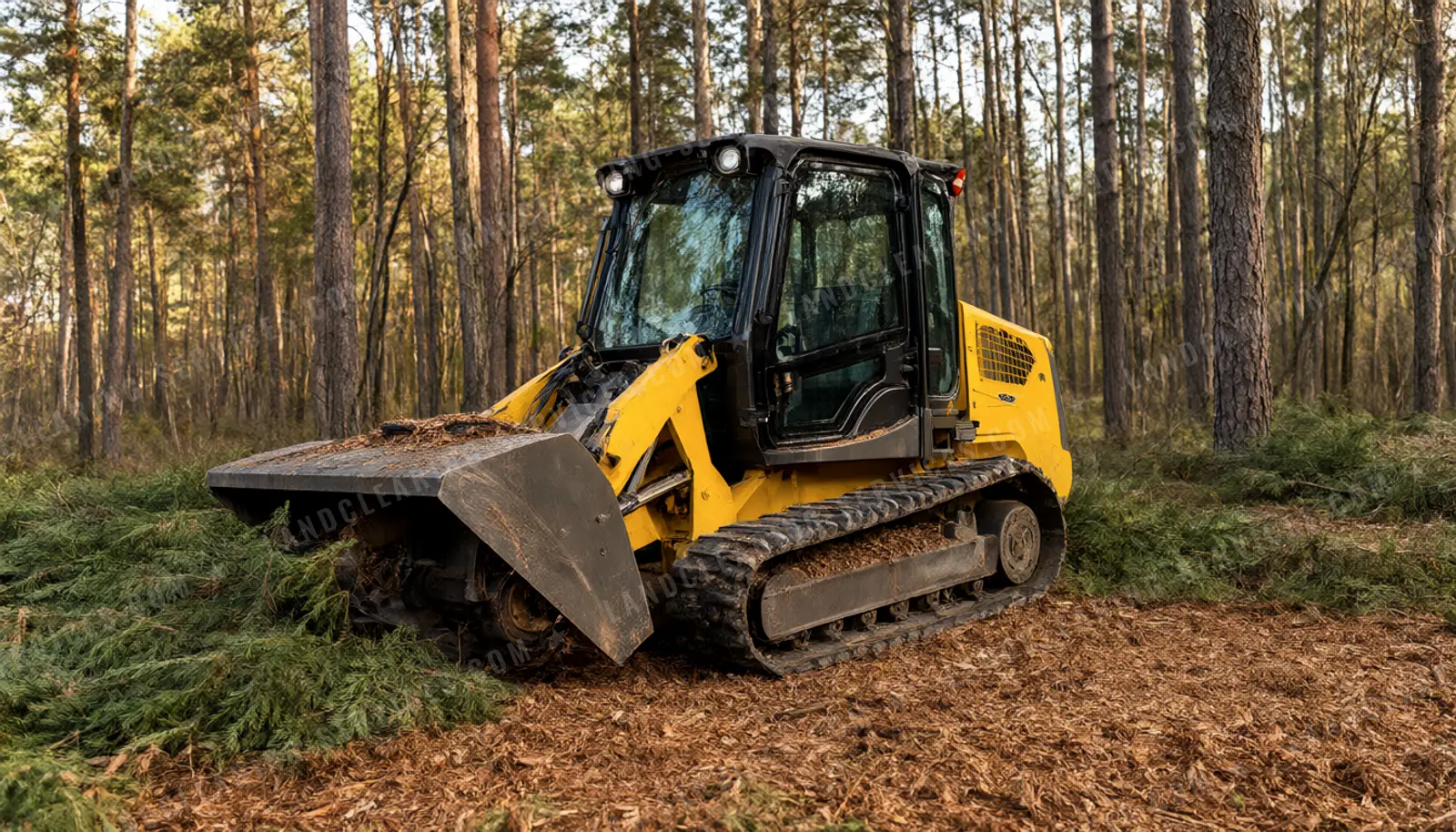
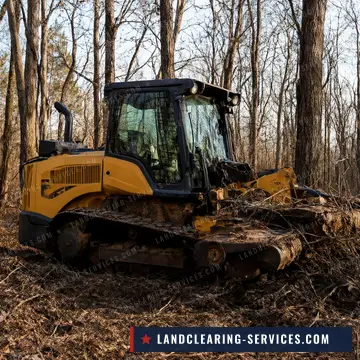
Forestry mulching uses heavy forestry mulching equipment with a high-rpm mulching head attached to shred underbrush, saplings and trees where they stand. Unlike traditional clearing that relies on push-and-pile tactics, professional forestry mulching grinds vegetation in a single pass into organic wood mulch cover. A track unit or tractor mounted head handles smaller stems, while high-horsepower units crush standing trees up to 12 or 14 inches.
The steel carbide teeth on the mulching attachment shear through thick limbs and trunks, casting the shredded fallen trees and debris evenly across the terrain. That process leaves behind a clean mulch bed that protects soil and shreds overgrown vegetation. This method eliminates heavy hauling fees because no wood mulch debris leaves the tract. The ground stays intact, ground conditions remain firm, and site prep for future road access paths or fence lines can happen immediately.
Forestry Mulching vs Bulldozing and Burning: Advantages and Limits
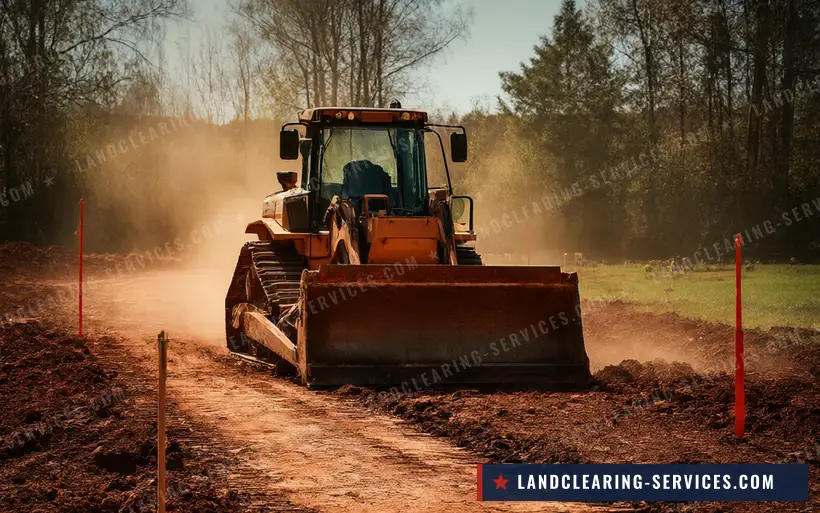
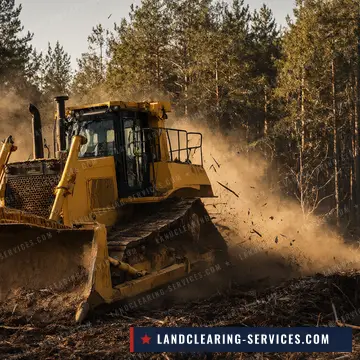
Traditional land clearing uses heavy dozers to uproot trees and push dirt into large burn piles. That traditional clearing approach often requires a state forestry burn permit, creates high trucking expenses, and strips nutrient-rich topsoil away from the site. Forestry mulching leaves root systems in place, prevents slope wash, and puts nutrients back into the soil as the wood material on the ground decomposes over time.
The benefits of forestry mulching include avoiding landfill fees and eliminating open burning completely. Forestry mulching is a land clearing option that mulching reduces soil disturbance compared to traditional land clearing methods. On our jobs, we often recommend land mulching when a landowner wants to protect valuable pasture or retain specimen shade trees. A dozer still wins when site preparation requires deep excavation, complete stump removal, or major dirt leveling for slab foundations.
- No burn permits needed from local fire marshals or state forestry agencies.
- Topsoil stays in place to improve soil structure and prevent wind erosion.
- Eliminates heavy trucking loads to haul debris away to local waste sites.
- Dozer work is still required for house pad digging and deep utility trenches.
Land Mulching for Underbrush, Cedar, Pines and Saplings
Different regions present different invasive plants that require grinding into mulch cover. The species on your tract dictate equipment size, production speed, and total forestry mulching costs. On a job in Cherokee County, Georgia, we cleared dense privet and sweetgum under pine stands, while an Oklahoma project required chewing through invasive eastern red cedar. Every state has a plant it is embarrassed about, but high-powered equipment can grind all types of forestry brush.
- 01
Southeast
Chinese privet, sweetgum saplings, kudzu, and dense loblolly pine understory.
- 02
Texas and Oklahoma
Eastern red cedar pasture reclaim, mesquite thickets, and huisache.
- 03
Upper Midwest and Northeast
Buckthorn, multiflora rose, autumn olive, and invasive honeysuckle.
- 04
West and Mountain states
Juniper, chaparral, manzanita, sagebrush, and pinyon pine.
- 05
Coastal Northwest
Himalayan blackberry, wild rose, alder thickets, and Scotch broom.
- 06
Deep South and Florida
Palmetto clusters, tallow trees, and dense wax myrtle.
Standing trees are processed effortlessly by standard forestry mulchers. Standard mulchers handle standing stems from 6 to 8 inches easily. When our crews encounter dense timber above 12 inches, we log or fell those stems first before running the machine grinds pass over the tops.
Residential Forestry Mulching: Lots, Backyards and Trail Clearing
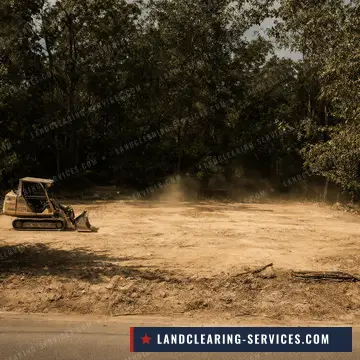
Homeowners choose residential brush clearing to open up backyard space, define property boundaries, or clear overgrown land for long driveways. A standard half-acre lot clearing project takes one day and costs $2,500 to 3,200 using a track unit. The finished site yields a smooth, walkable layer of organic wood mulch cover that looks manicured right away.
We routinely clear land for recreational walking trails, access routes, and fence lines without disturbing surrounding timber. Because a compact mulching machine mounted on skid steers fits between mature trees, selective clearings can spare desirable hardwoods while removing tangled brush. Landowners gain immediate access paths across the lot without leaving deep tractor ruts or raw soil exposed to rain.
Acreage and Pasture Reclamation with a Forestry Mulcher
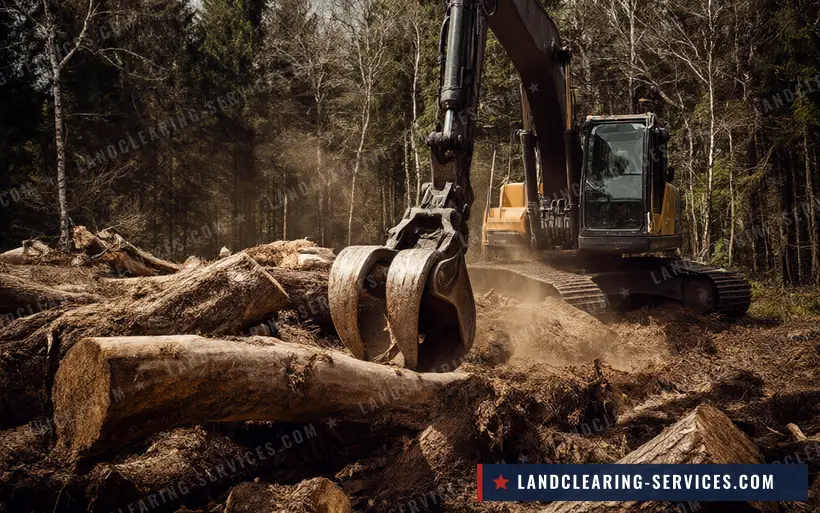
Reclaiming overgrown land on large acreage requires higher daily production rates. Cedar, mesquite, and invasive species constantly overgrow productive pastures, reducing usable grazing areas for agricultural operations. Mulching returns those acres to production without leaving deep dozer scars or rock piles that damage farm implements later.
I've priced pasture restoration and mulch projects from 5 to 500 acres since 2019. On a tract in Logan County, Oklahoma, one of our crews cleared 20 acres of dense eastern red cedar using a dedicated 300-hp mulcher. The job took 4 days and cost $18,500 plus transport fees. In Georgia, a 4-acre privet clearing job ran 2 days on a heavy skid steer mulcher for $5,800. Large acreage projects benefit from high-capacity equipment that processes dense vegetation down to ground level rapidly.
Forestry Mulching Cost: Per Acre, Per Day and Project Minimums
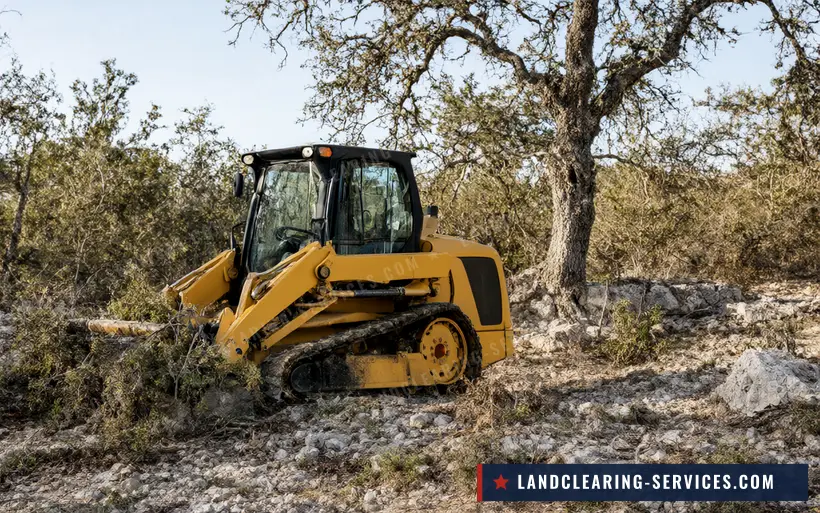
Forestry mulching cost factors depend on tree size, acreage density, and terrain slope. Light to medium underbrush runs $1,000 to 2,500 for each acre, while dense thickets with saplings run $2,500 to 4,000 for each acre. Daily production rates for spreading mulch determine the total price for larger tracts.
| Equipment Type | Daily Rate Range | Standard Production |
|---|---|---|
| Skid Steer / Tractor Mulcher | $2,500 - $3,200 / day | 1 to 3 acres / day |
| Dedicated 300-HP Mulcher | $3,800 - $4,500 / day | 3 to 6 acres / day |
| Excavator Mulching Head | $2,500 - $3,200 / day | 1.5 to 3 acres / day |
Transport is included inside 60 miles of the crew's yard. Small residential jobs carry a minimum trip charge of $1,000 to 1,500. On rocky ground, steep slopes, or wet terrain, ground conditions may add a day to the estimate. Call (888) 709-7985 or send the form. Marisol emails a budget range the same day and confirms availability with our crew nearest you.
Forestry mulching Cost Calculator
Planning range from 2025–2026 national price data. Change any answer and the range updates.
Open the full land clearing cost calculatorTree Mulching Service: What Size Trees Can Be Mulched
Equipment capacity sets clear boundaries on what size trees can be processed efficiently. Compact units including skid steers mounted with drum heads chew through trees up to 8 inches in diameter. Dedicated high-horsepower machinery crushed standing trees into mulch up to 12 or 14 inches without stopping. Trying to grind larger trunks slows production speed and drives up the per-acre price unnecessarily.
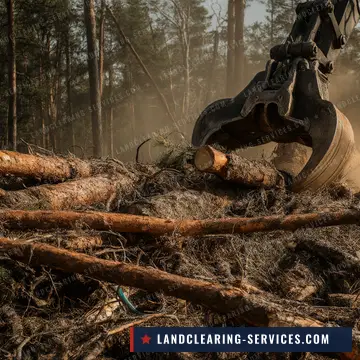
When a tract features heavy hardwood trees over 14 inches, our operators drop those trees with a chainsaw pass first. We log out any valuable sawtimber or firewood, then shred the fallen limbs, debris, and tops into fresh mulch left behind on site. If you need complete stump extraction for building footings, we follow up with an excavator or a dedicated stump grinder, as grinding stumps flush with the dirt is standard for mulchers, but root removal requires bucket teeth.
What to Do After Forestry Mulching: Mulch Depth, Seeding and Management
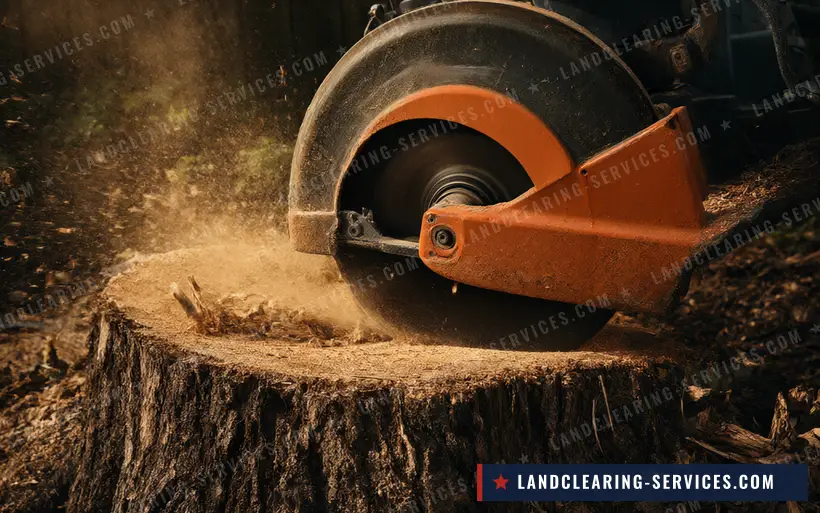
Once clearing leaves a smooth protective layer of mulch across your land, forest mulching benefits the land and ongoing management preserves the results. This layer of organic material smothers weed seeds, retains soil moisture, and protects the ground against slope erosion. You can walk or drive light utility vehicles over the ground immediately after the machine finishes.
If you plan to establish grass pasture, broadcast grass seed directly over thin mulch layers or harrow the soil lightly. Invasive plants like Chinese privet, sweetgum, and mesquite can resprout from live root systems. A thin mulch mat helps native plant growth after clearing.
Forestry Mulching for Defensible Space and Fire Breaks
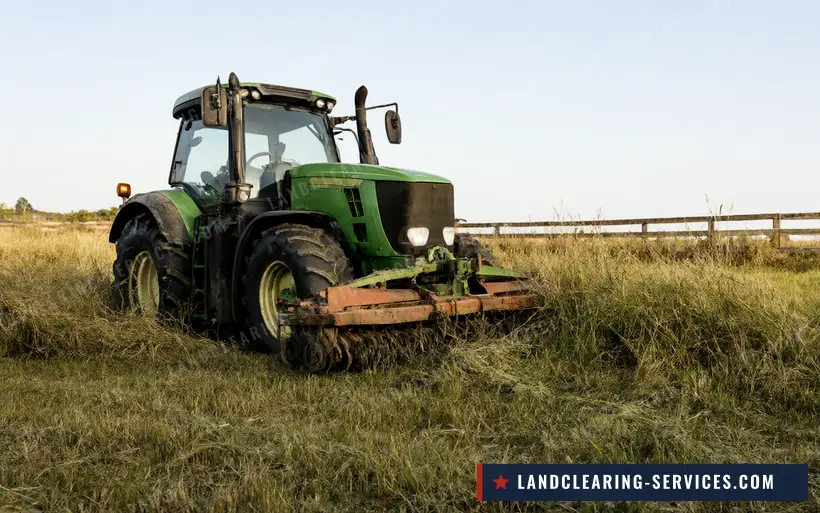
In western states like California, Colorado, Oregon, Washington, Montana, and Idaho, mulching is a primary tool for wildfire prevention and management. Creating defensible space around structures reduces dangerous fuel loads, clearing thick ladder fuels while preserving mature shade trees. Clearing brush and dead timber creates effective fire breaks that slow advancing ground fires.
Wildfire defensible space clearing near residential homes clears overgrown vegetation and is priced per 100 feet of perimeter in fire-prone regions. On a job in Bend, Oregon, last winter, walked it with the owner and cleared a 2-acre wildfire buffer around a home surrounded by dense bitterbrush and thick juniper. The job took 1.5 days and cost $4,600. Using mulchers to clear dry ladder fuels gives local fire departments a safe zone to defend structural properties.

Forestry Mulching Companies by State
Clearline Land Services operates specialized clearing crews across all 48 contiguous states. Our local crews transport equipment directly to your job site inside a 60-mile radius of their regional yards. Landowners can review local permit standards, soil conditions, and state price factors on our individual state pages.
states
Southeast10 states
West and Mountain Region10 states
Northeast and Mid-Atlantic9 states
Each state page links directly to city and county service hubs. Transport fees beyond 60 miles are calculated upfront and listed clearly on your estimate before work begins.
Forestry Mulching FAQ
What is forestry mulching?
Forestry mulching uses a single machine with a high-speed mulching head to cut, grind, and shred trees and vegetation into fresh wood mulch on site. It eliminates burning, hauling, and topsoil damage while improving wildlife habitat.
What does forestry mulching cost per acre?
Forestry mulching costs $1,000 to 2,500 an acre for light underbrush, and $2,500 to 4,000 an acre for dense brush and trees up to 8 inches. Daily equipment rates range from $2,500 to 4,500.
Is forestry mulching worth the cost?
Yes. Forestry mulching replaces multiple clearing steps, felling, dragging, burning, and hauling, with one pass. It preserves soil health, prevents erosion, and eliminates landfill tipping fees, making total project costs lower than traditional dozer land clearing.
How does a forestry mulcher work?
A steel rotor with carbide teeth spins rapidly inside a mulching head mounted on a skid steer, excavator, or dedicated tractor carrier. The teeth grind standing brush, logs, and trees down to ground level.
What are the downsides of forestry mulching?
Mulching leaves root systems intact beneath the surface, meaning stump sprouts can return if not chemically treated. Mulching may leave thick wood chips that slow grass germination if not spread evenly, and it does not level dirt for structural foundations.
Can grass grow after land has been forestry mulched?
Yes. Grass seed can be sown directly into a thin mulch layer.
How do I schedule a forestry mulching service?
Call (888) 709-7985 or submit our online form. Marisol emails a written budget range the same day and coordinates a free on-site estimate with our nearest crew inside 60 miles of your property.
 Land clearing
 Lot clearing
 Brush clearing
 Tree clearing
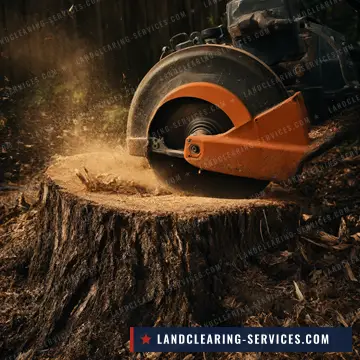 Stump grinding
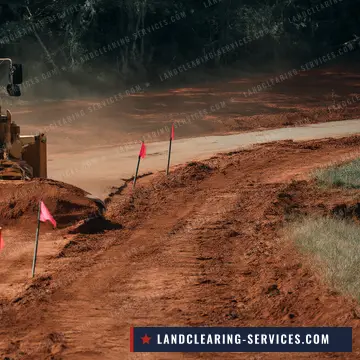 Site prep & dirt work
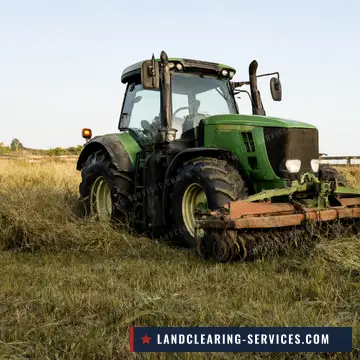 Bush hogging
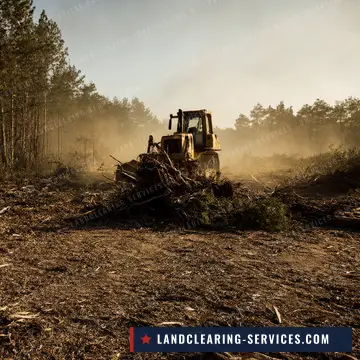 Mulching vs. bulldozing