Land Clearing Services in Minnesota: Common buckthorn everywhere Cleared on Lots and Acreage from Twin Cities Metro to Northern Minnesota
Tree and brush removal in this state begins with common buckthorn everywhere and heavy clay or glacial till underfoot. I started on a dozer in Georgia red clay at 19, and after 20 years running crews across 11 states, I know numbers come first. A skid steer mulcher costs $2,500 to $3,200 a day, with transport included inside 60 miles of the crew's yard. Our crews clear your land efficiently from Hennepin County to the North Shore. Call (888) 709-7985 or send the form. Marisol emails a budget range the same day and books the estimate with the crew nearest you.
- 48 contiguous
states - Insured
crews - Same-day
budget range
48 statesContiguous coverage
$2,500–3,200Skid steer mulcher, per day
60 milesTransport included
Same dayBudget range by email
Land Clearing Services and Forestry Mulching Options in Minnesota
Professional brush removal services here require equipment designed for soil and brush density. Every job is priced by the day or the acre before the trailer moves. Here is how our forestry mulching and land-clearing service options break down for property owners across the state: We offer expert land clearing for projects of every size. Our local crews excel at forestry mulching and land clearing.
Forestry mulching
one machine grinds brush, sapling stems, and small trees into a mulch layer. Light to medium brush costs $1,000 to $2,500 an acre; dense overgrowth runs $2,500 to $4,000 an acre.
Lot clearing
standard residential lot clearing for a half-acre building site takes one day and costs $2,500 to $3,200.
Full clearing to bare dirt
includes root grubbing, piling or hauling, and dirt prep for $2,500 to $6,000 per acre depending on stumps and slope.
Stump grinding
we grind individual stumps at $3.50 to $5 per inch of diameter, with a $150 to $200 minimum per stump.
Brush clearing and trail cutting
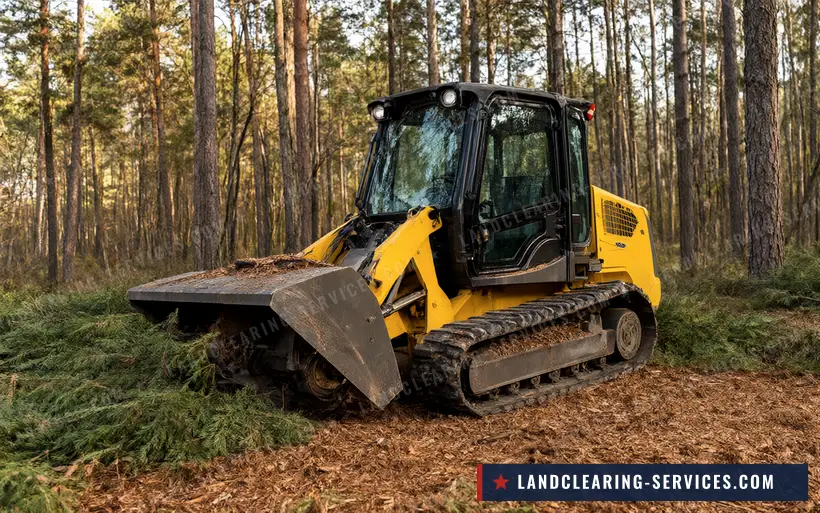
cutting trails through wooded parcels, fence lines, and residential access using compact track forestry mulchers.
Excavation work
dozer or excavator work for driveways, house pads, and culverts at $150 to $200 per hour with an operator.
We do not pour concrete, drill wells, install septic systems, or demolish buildings. Clearline Land Services is a team of land clearing experts that help property owners restore overgrown property, prepare sites for new home construction, or clear right-of-way for utility companies. You can use forestry mulching to handle dense brush without traditional clearing methods that strip topsoil.

Land Clearing Across Minnesota: Twin Cities Metro, Central Lakes, and Rural Regions
Local land varies by region, and soil dictates machine choices. Clearing brush here requires an estimator who understands how local dirt impacts equipment travel speeds.
contiguous states
- 01
Twin Cities Metro
Hennepin, Dakota, Washington, and Wright counties. Clay and heavy glacial till dominate. Commercial projects and residential building lots in the Twin Cities metro are choked with buckthorn and box elder.
- 02
Central Lakes
around St. Cloud, Brainerd, and Sherburne County. Sandy soils, gravel, and mixed pine with northern hardwoods. Ideal ground for fall and winter forestry mulching services.
- 03
Southern Minnesota
Rochester, Mankato, and the driftless bluffs in the southeast. Loess soils on steep slopes with red cedar, prickly ash, and honeysuckle overgrowth on pasture ground.
- 04
Northern Minnesota
Duluth, Bemidji, and the lake country. Peat, muck, and heavy rock. Dense stands of aspen, birch, tag alder, and willow that often require frozen ground access.
Each territory is serviced by our regional equipment operators. Transport is included within 60 miles of the yard, and extra mileage is listed on the proposal.
Common Buckthorn Everywhere and Native Growth Minnesota Landowners Clear
Invasive species dominate most clearing requests across this state. Common buckthorn everywhere is the primary woody plant we manage, alongside tatarian honeysuckle and autumn olive. Buckthorn here and Oklahoma cedar present the same land restoration challenge with entirely different root systems. Buckthorn forms thickets that block sunlight and destroy native forest understories.
In low bottoms and disturbed ground, fast-growing box elder, cottonwood, and willow rapidly overgrow private landowner fence lines and pastures. Our crews mow thick brush so leftover wood turns into mulch for easy cleanup. Aspen and birch regrowth dominate northern acreage, while tag alder thickets cover damp lowlands. Cutting buckthorn and honeysuckle creates persistent stump sprouts. When our forestry mulchers clear vegetation, the shredding process reduces trees and brush to a mulch layer that slows weed germination. Because buckthorn seeds persist in the soil for years, property owners should budget for follow-up spot treatment after the land is cleared. Mulch layer protection keeps native soil stable while you reclaim usable land back for land and wildlife management.

Land Clearing Cost in Minnesota per Acre
Every estimate we write is calculated using clear day-rate math based on acreage and brush density. Minnesota land clearing cost figures follow national baseline rates, modified by local soil and ground conditions. Check our guide for acreage rates in this state.
Skid steer mulcher
$2,500 to $3,200 per day, including transport inside 60 miles.
Dedicated 300-hp mulcher
$3,800 to $4,500 per day plus transport for heavy timber and large stems.
Forestry mulching cost
$1,000 to $2,500 per acre for light to medium invasive brush; $2,500 to $4,000 per acre for thick hardwoods and dense buckthorn.
Clear to dirt with stump extraction and rough grading
$2,500 to $6,000 per acre. Hauling or burning debris and working on steep bluff slopes drive the upper end.
Haul-off charges
$600 to $1,300 per load with a $1,000 to $1,500 minimum trip fee.
Every state has a plant it is embarrassed about, and buckthorn is the reason my phone rings in Minneapolis. On a job in the Hudson Valley last winter, we cleared one acre of dense buckthorn and multiflora rose on frozen ground in one day for $3,100 using a skid steer mulcher. On larger rural projects, such as a 20-acre pasture reclamation in Logan County, Oklahoma, using our 300-hp mulcher, costs ran $18,500 plus transport. On our jobs, we price the rock and mud up front. Call (888) 709-7985 or submit the form for a fast estimate.
Land Clearing Cost Calculator for Minnesota
Planning range from 2025–2026 national price data, adjusted to Minnesota costs. Change any answer and the range updates.
Open the full land clearing cost calculatorBest Season to Clear Your Land in Minnesota: Frozen Ground November to April
Winter is the premier season to remove trees and clear brush in Minnesota. Frozen ground from November to April provides a firm surface for heavy machinery. Forestry mulchers glide over frozen peat, muck, and wet clay without rutting the dirt or tearing up topsoil. Working on frozen ground protects the soil structure and allows access to low areas that are unpassable during summer months.
Traditional land clearing methods that require grubbing roots and excavating dirt must wait for the spring thaw. Mulching standing trees and brush during winter keeps projects moving forward without spring delays. Landowners planning custom home builds or driveway installation for summer should schedule winter clearing to prepare the lot before building permits are issued.
Minnesota Regulations, DNR Burn Rules, Wetlands, and Property Line Laws
Before equipment unloads, local rules and municipal codes must be addressed.
- 01
Burn permits
Open burning requires an electronic permit from the Minnesota Department of Natural Resources (DNR) through a local forestry officer or fire warden, or a county general permit in low-wildfire risk areas. Professional forestry mulching preserves organic soil matter and avoids hauling or burning debris entirely.
- 02
Wetland protection
The Wetland Conservation Act is administered by local government units such as cities, counties, or watershed districts, with DNR oversight on public waters. Wetland fill or dredging triggers a USACE Section 404 permit through the St. Paul District. We flag wetland borders and operate high-flotation machinery outside protected limits.
- 03
Tree preservation ordinances
Metro suburbs across Hennepin and Dakota counties enforce tree preservation limits based on stem caliper. Selective tree removal and clearing for residential pads must comply with municipal rules.
- 04
Utility locates
Minnesota law (Minn. Stat. 216D.04, subd. 1) requires calling 811 at least 48 hours before digging, excluding weekends and holidays, and no more than 14 calendar days prior to excavation.
- 05
Property lines and timber trespass
Under Minn. Stat. 561.04, cutting a neighbor's trees results in treble damages. We verify survey monuments before starting work.
- 06
Invasive species management
The Minnesota Department of Agriculture lists Common buckthorn, Autumn olive, Black locust, and Amur honeysuckle on the Restricted and Prohibited Noxious Weed lists to restrict spread.
Cost-Share Programs: NRCS EQIP Brush Management in Minnesota
The program is open to private landowners on working farm and forest ground. Landowners managing pasture, timberland, or wildlife habitat can apply for financial assistance through the USDA Natural Resources Conservation Service (NRCS). The Environmental Quality Incentives Program (EQIP) provides cost-share funding for brush management under practice code 314. This federal program helps fund the control of invasive species like buckthorn, honeysuckle, and red cedar.
To participate, apply at the local USDA service center in your county. A conservation planner develops a plan detailing targeted invasive brush control, native plant preservation, and erosion management goals. Funding approval takes several months, so applications should be filed well ahead of planned work. Once approved, our crews execute the mechanical clearing according to the exact NRCS plan guidelines.
Land Clearing Companies in Minnesota Growth Metros and Counties
Data from the Census Building Permits Survey for 2025 shows Minnesota issued 12,886 single-family home building permits. Development pressure drives demand for an expert company across active growth corridors. Our crews provide services across population centers near Hennepin and surrounding areas:
- 01
Hennepin and Wright counties (Maple Grove, Otsego, Buffalo)
Hennepin County logged 1,523 single-family permits and Wright County recorded 1,072 permits. Infill lot clearing and residential subdivision acreage prep dominate land clearing in Hennepin development zones.
- 02
Dakota and Scott counties (Lakeville, Prior Lake)
Dakota County led south metro growth with 1,378 permits, alongside Scott County's 570 permits. Work focuses on pasture reclamation, overgrown fence lines, and site preparation for custom home builds.
- 03
Washington County (Woodbury, Hugo)
Recorded 1,225 single-family permits. Suburban lot clearing requires navigating municipal tree preservation ordinances and dense buckthorn understory.
- 04
Rochester and Olmsted County
Olmsted County registered 326 permits. Clearing demands center on bluffland tree clearing, brush management, and farm pasture expansion.
- 05
St. Cloud and Sherburne/Stearns counties: Sherburne County tallied 299 permits and Stearns County logged 371 permits. Mix of commercial projects, residential land clearing, and clearing for agricultural expansion.
County land pages are coming in our next project phase. Regardless of location, our fixed day rates and transport terms apply equally across every county in the state.
Send the Form, Get a Range the Same Day, Walk the Land with the Minnesota Crew
Getting professional land clearing follows a simple process. Step one is requesting a price. Call (888) 709-7985 or send the online form with your location, acreage size, and description of the trees and brush. Marisol in our office emails a budget range the same day and arranges an on-site consultation with the crew nearest you.
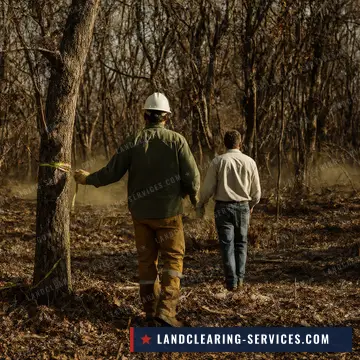
Our local crew leader meets you on the parcel to walked it line by line. We verify bounds, mark wetland buffers, evaluate soil conditions, and inspect the density of the brush. Our insured crews execute the job safely and responsibly. I've priced thousands of acres since 2019, and our policy remains firm: clear written quotes before any machine leaves the trailer. We handle land clearing near Hennepin and across the state in an environmentally responsible way, using equipment to grind brush and fallen trees into mulch.
Frequently Asked Questions About Land Clearing in Minnesota
How much does land clearing cost per acre in Minnesota?
Forestry mulching for light to medium invasive brush costs $1,000 to $2,500 per acre, while dense buckthorn and hardwoods cost $2,500 to $4,000 per acre. Complete clearing to bare soil with stump removal ranges from $2,500 to $6,000 per acre. Single half-acre residential lots cost $2,500 to $3,200.
Do I need a permit to clear land in Minnesota?
You do not need a state permit simply to cut brush on your own land. However, open burning requires a Minnesota Department of Natural Resources burn permit from a forest officer or fire warden. Clearing near lakes, streams, or wetlands requires local Wetland Conservation Act approval and potentially a USACE Section 404 permit.
Can I burn brush and tree piles after clearing?
Burning tree debris requires an electronic DNR burn permit or county general permit during approved burning windows. Many metro municipalities prohibit open burning entirely. Landowners frequently use forestry mulching instead because it grinds woody material directly into a mulch layer, eliminating brush piles, smoke, and burning permits.
What is the best time of year to clear my land in Minnesota?
Winter from November to April is the optimal season. Frozen ground allows heavy mulchers to travel over wet soils, peat, and muck without rutting or compacting the ground.
How fast can a land clearing crew get to my project?
Marisol emails a budget range the same day you submit your project details.
How do I get an accurate land clearing estimate?
Call (888) 709-7985 or fill out our online request form. Provide your project address, total acreage, and brush conditions. Marisol sends a cost range the same day and coordinates an on-site walk with our regional equipment lead to deliver a binding daily rate estimate.