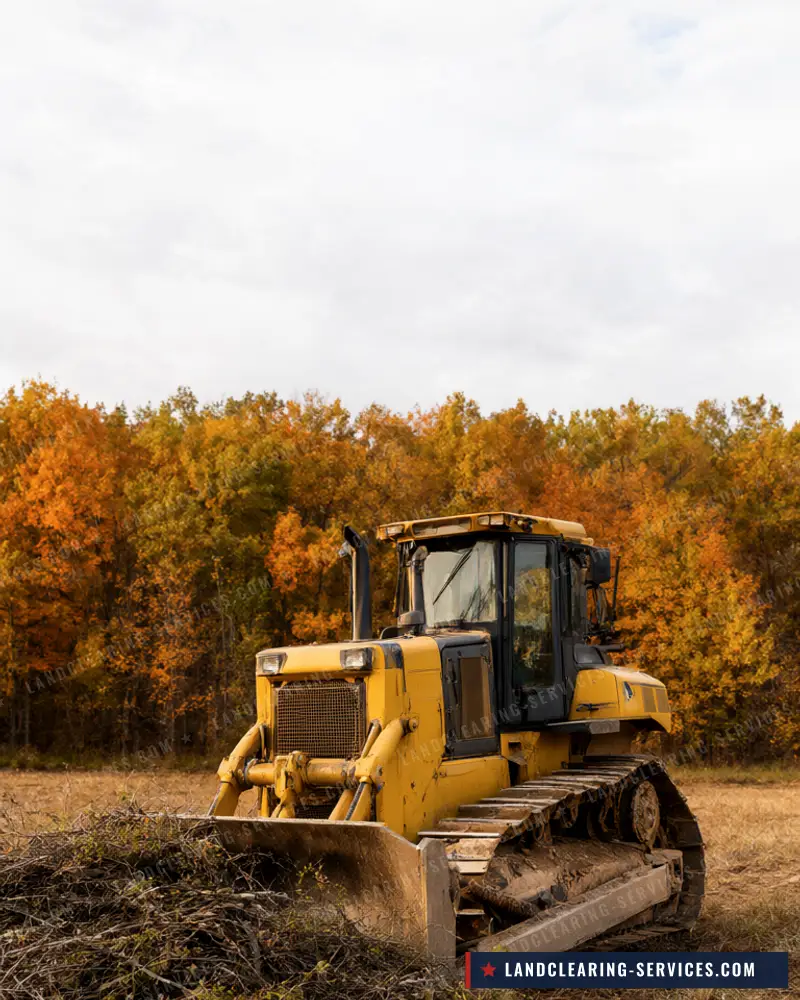
Land Clearing Services in New Hampshire: Japanese barberry Cleared on Lots and Acreage from Seacoast to White Mountains
Preparing land in New Hampshire begins with two facts: Japanese barberry, buckthorn and bittersweet cover the understory, and glacial till hides granite ledge under six inches of soil. I have run equipment since 2019 under our outfit and spent 20 years pricing site work across 11 states. A skid steer mulcher runs $2,500 to $3,200 a day, transport included inside 60 miles of the crew's yard. Our crews clear lots, residential acreage and building pads from the Seacoast to the White Mountains. Japanese barberry does not care if it grew in Concord or Ohio, but heavy equipment designed for rock handles local ledge. Call (888) 709-7985 or send the online form. Marisol in our office emails a budget range the same day and books the on-site estimate with the crew nearest you.
- 48 contiguous
states - Insured
crews - Same-day
budget range
48 statesContiguous coverage
$2,500–3,200Skid steer mulcher, per day
60 milesTransport included
Same dayBudget range by email
Professional Land Clearing Services in New Hampshire
Our site options handle residential clearing, private acreage and commercial sites across the state. Every landowner receives clear pricing before work begins. Property owners and utility companies need fixed numbers before work begins, so we price every project by the day or the acre.
Clear to dirt
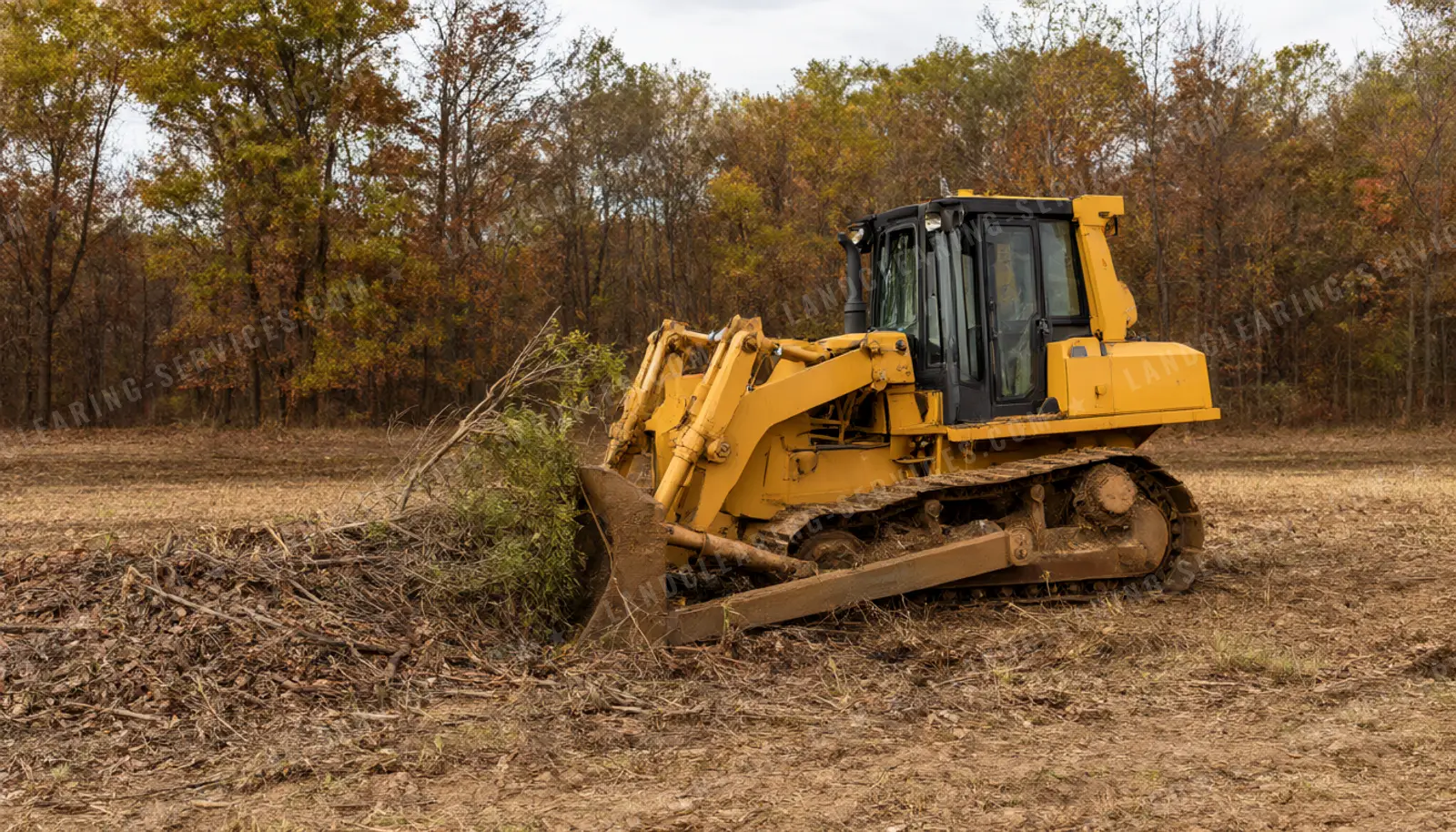
excavators and dozers grub stumps, pile debris, and handle rough grading without extra hauling or burning. $2,500 to $6,000 per acre based on density, slope and rock. Some owners still request traditional land clearing methods to grub stumps and haul debris.
Professional forestry mulching
heavy equipment uses high-speed cutter heads to grind brush, small trees and invasive vegetation into a fine mulch layer in a single pass. $1,000 to $2,500 per acre for light to medium growth.
Lot clearing
preparing a half-acre lot for new home construction takes one day, running $2,500 to $3,200.
Brush clearing
clearing for residential building strips thick brambles, invasive brush, gray birch and sapling thickets while keeping mature trees intact.
Removing stumps after selective harvest costs $150 to $200 per hour with an operator or a set project rate.
Tree removal and clearing
we remove trees and dense brush together across entire building footprints rather than taking individual yard stems.
Ground excavation
building driveways, grading house pads and setting drainage culverts costs $150 to $200 per hour with an operator.
We do not pour concrete, drill wells, install septic systems or demolish standing homes. I know local operators across the 48 contiguous states who handle those trades. A reliable site service gives you straight scope limits before taking a deposit.

Land Clearing in New Hampshire Regions: Seacoast, Merrimack Valley and the North
Granite State ground changes quickly as you travel north from the coast. Land clearing experts adjust machine choices based on regional soil and vegetation profiles.
contiguous states
- 01
Seacoast and Rockingham County
sandy loam outwash gives way to rocky ground around Portsmouth and Exeter. Japanese barberry and Oriental bittersweet choke pine stands. Expert land clearing in Rockingham County serves steady home development. We help property owners manage thick vegetation along fence lines.
- 02
Merrimack Valley
Manchester, Nashua and Concord sit on river outwash, gravel and dense glacial till. Subdivisions and commercial projects require site preparation that accounts for hidden boulders.
- 03
Lakes Region
Belknap County and Carroll County feature steep hills, shallow dirt and heavy granite ledge. Shoreland protection rules limit clearing near water, making selective trail cutting and thin cuts mandatory.
- 04
White Mountains and Grafton County
dense fir and spruce regeneration, alder bottomlands and steep terrain dominate. Winter frozen-ground clearing keeps heavy forestry mulchers floating over soft soil.
Every region functions as a active service area. Equipment transport is included inside 60 miles of the crew's yard, with any additional mileage noted explicitly on the written estimate.
Clearing Invasive Species, Trees and Brush Across the State
Invasive species choke timberlands and overgrown property lines across southern and central areas. Japanese barberry, buckthorn and Oriental bittersweet form dense overgrowth under white pine and oak canopy. Up north, alder and gray birch overgrow abandoned pastures, while blackberry cane moves in after logging cuts. Minnesota buckthorn and New Hampshire barberry present the same clearing challenge, but local granite ledge ruins ground teeth faster if an operator drags the head.
Owners preparing for residential build sites or pasture reclamation often prefer mulching because forestry mulching preserves topsoil. Forestry mulchers grind brush, fallen trees and small saplings into a protective mulch layer that prevents erosion and suppresses weed regrowth. Hardwoods like oak and maple require sharp carbide teeth. Soft pine and spruce chew up quickly when our crews mow heavy thickets. When our company handles invasive species, leaving mulch gives you usable land for pastures, yards or wildlife.
Land Clearing Cost in New Hampshire Based on Acreage and Rock
New Hampshire land-clearing prices sit squarely within standard national ranges, with ground conditions and rock drive final day counts. On our jobs, we break down every invoice into day rates and expected acreage output.
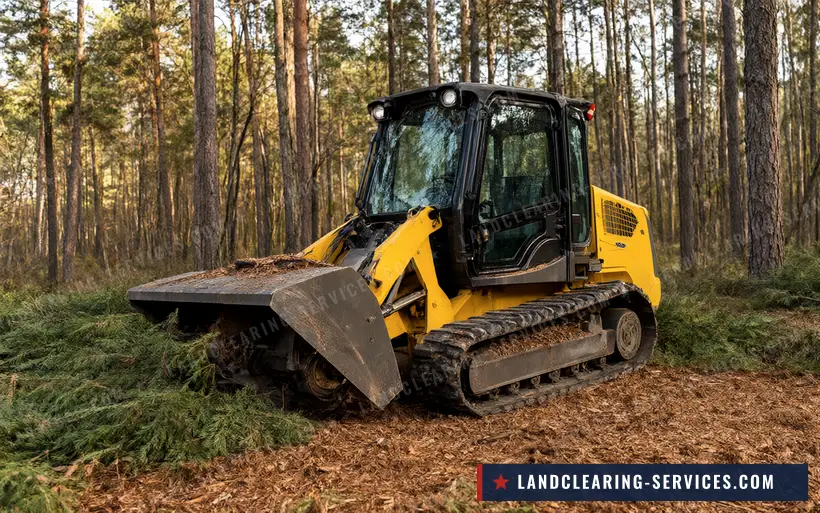
Skid steer mulcher
$2,500 to $3,200 per day, with transport included within 60 miles of the crew's yard. Handles stems up to 8 inches in diameter.
Dedicated 300-hp mulcher
$3,800 to $4,500 per day plus transport. Grinds material up to 14 inches in diameter.
Light to medium forestry mulching
$1,000 to $2,500 per acre for barberry, buckthorn and thin pine understory.
Dense growth mulching
$2,500 to $4,000 per acre for heavy thickets and large hardwood sapling stands.
Full site removal to dirt
$2,500 to $6,000 per acre, where stump extraction, slope and haul distance set the high end.
Dozer or excavator with operator
$150 to $200 per hour. Debris haul-off costs $600 to $1,300 per load, with a $1,000 to $1,500 minimum trip fee.
On a tract in Hudson Valley, New York last winter, a project similar to Southern New Hampshire ground, we cleared 1 acre of dense multiflora rose and buckthorn over frozen soil in one day using a skid steer mulcher for $3,100. Shallow granite ledge and steep slopes add machine time to pad grading and stump pulling. You can review detailed state breakdowns on our cost page. Call (888) 709-7985 or submit the form, and Marisol will email your budget range today.
Land Clearing Cost Calculator for New Hampshire
Planning range from 2025–2026 national price data, adjusted to New Hampshire costs. Change any answer and the range updates.
Open the full land clearing cost calculatorBest Season to Clear Ground: Winter Frozen Ground Advantages
November through April offers ideal ground conditions for heavy mulching equipment. Frozen ground acts as a firm road that protects the soil while heavy track machines process brush and wood.
Dirt work, stump extraction and driveway grading wait for spring thaw. Mud season in April and May soft-locks dozers trying to clear vegetation on low ground. Clearing during winter months keeps projects moving ahead of spring schedules, allowing you to prepare county land efficiently once the land is cleared.

Permits, Wetland Rules, Tree Rules and Local Regulations
Clearing new home construction sites requires navigating local regulations and state environmental rules before machines unload. I put compliance checks on the estimate so work proceeds smoothly.
- 01
Burn rules
outdoor burning requires a written burn permit from the local Town forest fire warden through the NH Division of Forests and Lands. Written permits are mandatory year-round unless the ground is completely covered with snow.
- 02
Wetland permits
the NHDES Wetlands Bureau enforces strict regulations. Projects within 250 feet of public waters fall under the Shoreland Water Quality Protection Act. Site disturbances over 100,000 square feet trigger an Alteration of Terrain permit.
- 03
USACE Section 404
federal permits from the U.S. Army Corps of Engineers New England District apply to any fill placed in wetlands or streams.
- 04
Local tree limits
individual towns enforce local cutting limits, steep slope ordinances and shoreland buffers that restrict complete timber removal.
- 05
Utility safety
state law (RSA 374:51) mandates an 811 call before digging. Notification must happen 72 hours prior to excavation, excluding weekends and legal holidays, and no more than 30 days before work starts.
- 06
Property lines
timber trespass laws (RSA 227-J:8) charge 3 to 10 times the market value for trees cut negligently across property boundaries without permission.
- 07
Invasive species
state rules (Prohibited Invasive Species List, Agr 3800 under the NH Department of Agriculture, Markets and Food) regulate woody plants including Norway maple, Tree of Heaven, Japanese barberry, Oriental bittersweet, Autumn olive and Burning bush.
Environmentally responsible contractors check boundaries, mark wetland buffers and verify utilities before dropping the first cutter head.
Cost-Share Programs: NRCS EQIP Brush Management in New Hampshire
Private landowners seeking land restoration or pasture maintenance can apply for federal cost-share assistance. The NRCS EQIP brush management program (practice code 314) helps offset costs for controlling invasive species like Japanese barberry, buckthorn and autumn olive on agricultural acreage or managed forestland.
Funding applications go through your regional USDA service center. A district conservation planner evaluates the site, maps invasive stands and establishes a management schedule. Approved plans emphasize selective forestry mulching that preserves high-value timber while opening ground for land and wildlife enhancement so you take your land back. Because approval cycles take several months, owners should submit applications well before scheduled clearing dates. Our crews execute conservation plans according to exact NRCS technical specifications.
New Hampshire Land Clearing Services by County and Metro
New Hampshire issued 3,279 single-family building permits in 2025 according to the Census Building Permits Survey. Residential growth remains focused across southern counties where owners require professional land services before foundation work starts. We deploy equipment across major growth areas.
- 01
Rockingham County
1,073 single-family permits in 2025. Seacoast communities, Derry and Londonderry demand extensive lot clearing for residential land clearing developments amid thick barberry and rocky till.
- 02
Hillsborough County
380 single-family permits in 2025. Manchester and Nashua infill lots require brush clearing, tree removal and precision site prep near established neighborhoods.
- 03
Lakes Region (Carroll and Belknap Counties)
345 permits in Carroll and 332 in Belknap County during 2025. Waterfront property owners use forestry mulching services for selective view cuts and driveway clearing under strict shoreland guidelines.
- 04
Grafton County
277 single-family permits in 2025. Upper Valley acreage projects focus on field reclamation, trail cutting and clearing dense softwood regrowth. Crews can also clear trails through wooded tracts responsibly.
Whether you need land clearing near Rockingham County or Grafton County, our equipment handles local terrain. City and town landing pages will follow in phase two. Transport remains free within 60 miles of our nearest yard.
Send the Form, Get a Range Same Day, Walk the Ground with the Crew
Getting ready to clear your land involves three simple steps. First, submit our online form or call (888) 709-7985 with your project details, location and acreage. Marisol in our estimating office emails a tailored budget range the same day. Next, we schedule a free in-person consultation with the crew lead nearest your project, operating within 60 miles of our local yard.
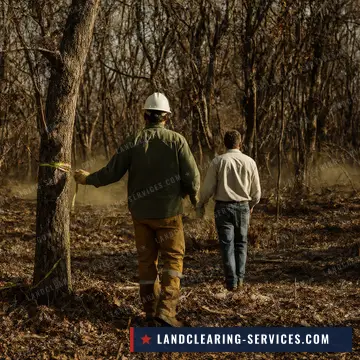
During the walkthrough, we inspect property corners, identify invasive thickets, spot granite ledge and map out wetland boundaries. We provide a detailed written contract outlining daily machine rates, expected acreage output per day and potential extra days for severe rock or heavy mud. We deploy insured crews and heavy equipment to complete work safely and efficiently. Call (888) 709-7985 or fill out the form today to secure your estimate.
Frequently Asked Questions About Land Clearing in New Hampshire
How much does land clearing cost per acre in New Hampshire?
Forestry mulching costs $1,000 to $2,500 per acre for light brush and $2,500 to $4,000 for dense invasive thickets. Full excavation to bare dirt with stump extraction ranges from $2,500 to $6,000 per acre. Shallow granite ledge and steep slopes can add extra machine days to pad sites.
Do I need a permit to clear ground in New Hampshire?
Standard forestry mulching and land clearing on private land does not require a state permit. However, burning debris requires a written permit from your local Town forest fire warden through the NH Division of Forests and Lands. Clearing within 250 feet of water bodies requires NHDES shoreland approval.
Can I burn debris piles after land clearing?
Yes, but you must obtain a written fire permit from the local Town forest fire warden, unless snow completely covers the ground. Many local land owners opt for forestry mulching instead, which grinds material into a mulch layer and offers cleanup without burning permits, smoke issues or pile management.
What is the best time of year to clear land in New Hampshire?
November through April is the best window for forestry mulching because frozen ground protects topsoil while supporting heavy track equipment. Full excavation, grading and stump pulling work best during summer and fall when ground conditions are dry. Spring mud season adds machine time on low ground.
How fast can a land clearing crew start work on my site?
Marisol emails your initial budget range the same day you contact us. We schedule free on-site walkthroughs within a week for properties inside 60 miles of a yard.
How do I get an accurate land clearing estimate?
Call (888) 709-7985 or submit the online form with your site location, estimated acreage and vegetation density. Marisol emails a budget estimate the same day and sets up a free walkthrough with your nearest crew to confirm day rates and daily acreage targets in writing.
 Pricing guideLand clearing cost in New Hampshire