Land Clearing Services in Georgia: Chinese privet and sweetgum Cleared on Lots and Acreage from Metro Atlanta to South Georgia Wiregrass
Land clearing in this state starts with two facts: Chinese privet and sweetgum underbrush grow under every pine, and red clay turns to grease after rain. I started on a dozer in Georgia red clay at 19, and the baseline number that sets the price has not changed. A skid steer mulcher runs $2,500 to $3,200 a day, with transport included inside 60 miles of the crew's yard. Our crews handle residential and commercial acreage projects across central regions and rural corridors alike. Send the form or call (888) 709-7985. Marisol emails a budget range the same day and books your free estimate on-site with the crew nearest you.
- 48 contiguous
states - Insured
crews - Same-day
budget range
48 statesContiguous coverage
$2,500–3,200Skid steer mulcher, per day
60 milesTransport included
Same dayBudget range by email
Land Clearing Services in Georgia
Land clearing in Georgia starts with privet and red clay. When you clear your land for a house pad or pasture, our full-service land clearing company matches the right machinery to the dirt. Clearing contractors handle overgrowth, timber slash, and small trees without destroying your topsoil. Here is how we break down our land clearing work in this state.
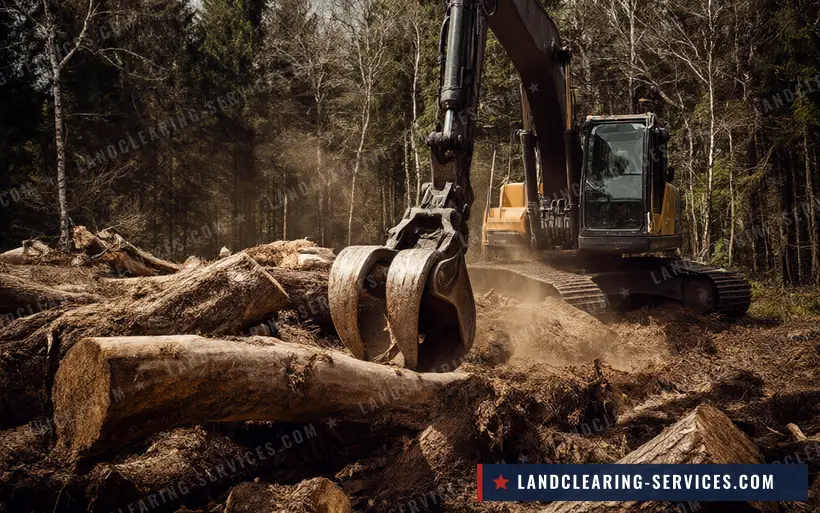
Forestry mulching
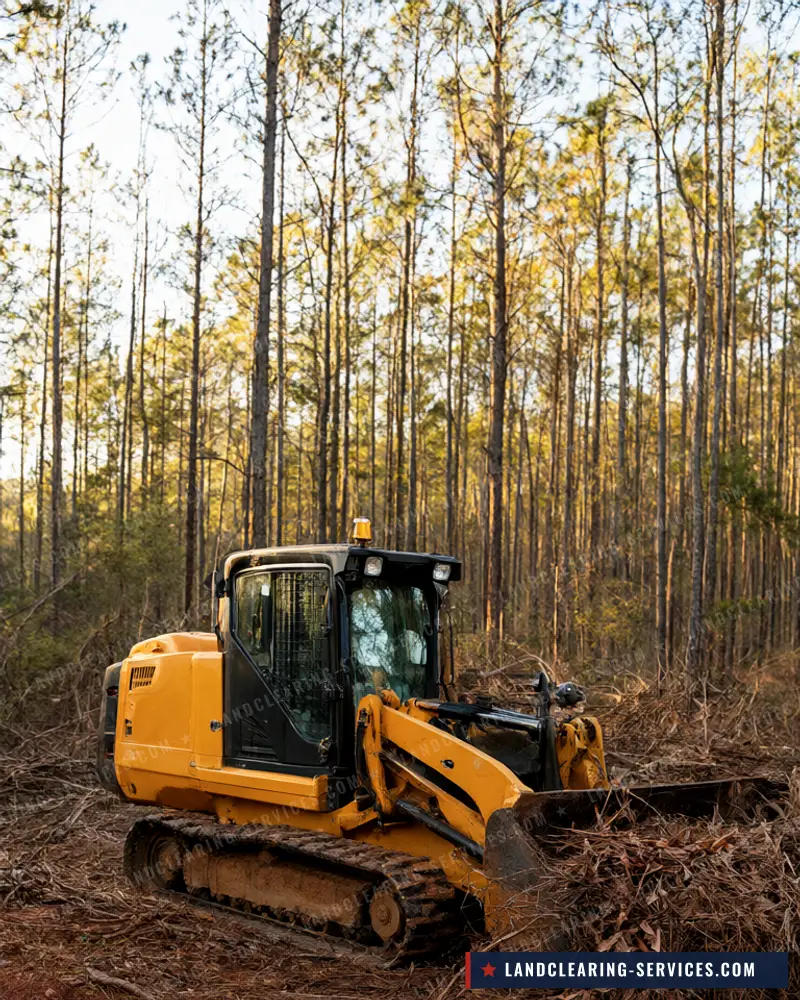
one pass turns brush and trees into organic mulch, leaving soil intact. Light to medium brush clearing runs $1,000 to $2,500 per acre. Heavy cover runs $2,500 to $4,000 per acre.
Clear to dirt
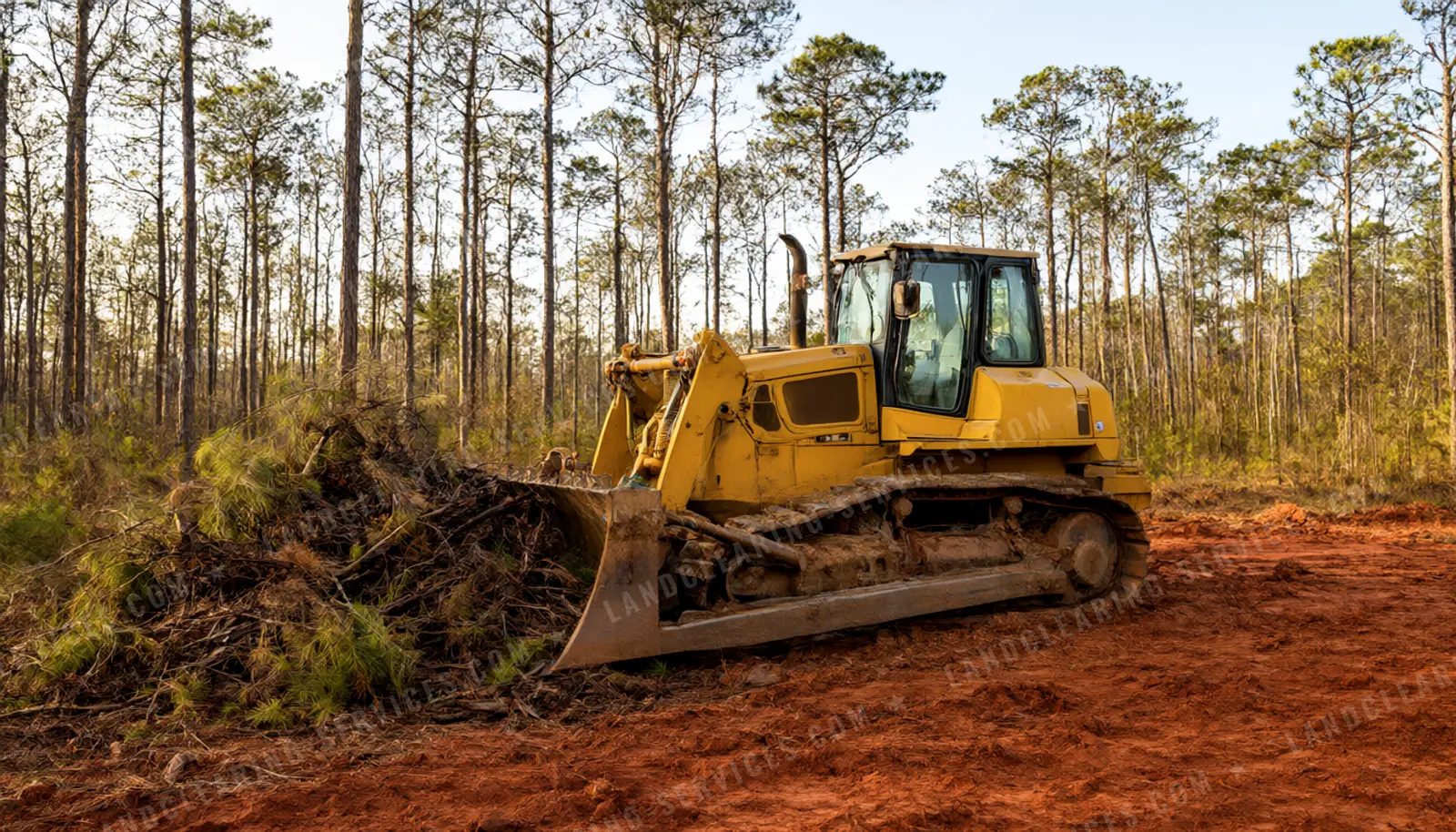
complete tree removal services, grubbing roots, site prep, and land grading. Full clearing runs $2,500 to $6,000 per acre depending on rock, slope, and debris removal haul distances.
Lot clearing
a typical half-acre overgrown lot takes one day on a skid steer mulcher, priced at $2,500 to $3,200.
Brush clearing and brush removal
targeted undergrowth removal services to eliminate privet, kudzu, and honeysuckle while preserving mature trees.
Stump grinding
$3.50 to $5 per inch of diameter to grind stumps, with a $150 to $200 minimum trip charge per stump.
Site preparation services
building pad excavation work, driveway cuts, and grading services using an excavator or dozer at $150 to $200 per hour with operator.
We do not pour concrete, drill wells, install septic systems, or demolish houses. I know local specialists who do. A reputable clearing contractor sets those boundaries before any equipment unloads on your job site.

Land Clearing Across Georgia: Metro Atlanta, Middle Georgia, the Coast and the Wiregrass
This area contains four distinct dirt profiles, and each one changes the day count on a job site. A site preparation contractor who cleared land in one county often misprices the ground two hours away. Our crews cover four primary operational zones.
contiguous states
- 01
North metro atlanta and the Piedmont
dense red clay over granite ledge near the surface around Stone Mountain. Pads here often add a rock day. Metro Atlanta growth demands careful erosion control around established neighborhoods.
- 02
Middle Georgia and central districts around Macon and Warner Robins
the fall line transition zone where clay turns to sand. Pasture reclamation, kudzu banks, and pine plantation clearing dominate these jobs.
- 03
Coastal Savannah and Brunswick
sandy loam, heavy wax myrtle, and palmetto underbrush. A high water table means ground holds water, adding a wet day during summer months.
- 04
South Georgia Wiregrass around Valdosta and Albany
flat Coastal Plain sand, agricultural land management, and pine thinning along fence lines.
Each region operates inside a 60-mile transport radius of our local crew yard. If you need land clearing on acreage outside that radius, transport fees are itemized clearly on your free estimate upfront.
What Georgia Property Owners Clear Most
Chinese privet and sweetgum under loblolly pine lead most of our estimates here. Chinese privet occupies unmanaged timber acres north of the fall line, while kudzu covers ravines and fence lines. Toward Coastal Savannah, wax myrtle, palmetto, and honeysuckle dominate the underbrush.
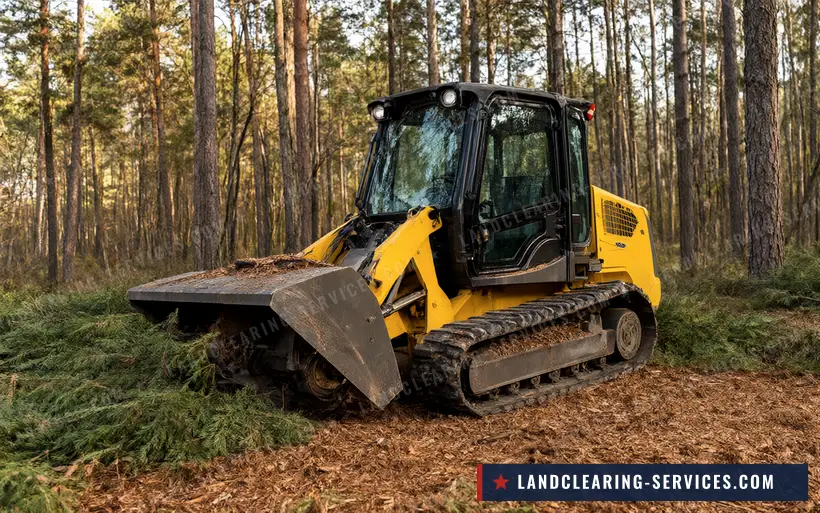
When a property owner needs brush clearing, we evaluate how plants respond to cutting. Privet and sweetgum sprout aggressively from stumps unless ground is mulched deeply or grubbed out. Loblolly pine does not resprout from the stump. Minnesota buckthorn and local privet present the exact same job profile with different root systems. Red clay taught me to read a weather forecast at 19, and it taught me that budget planning must respect resprouting species and tree size. We use a heavy forestry mulcher to shred brush and small trees into a ground cover mat that suppresses fire fuel and soil loss.

Land Clearing Cost in Georgia per Acre
The cost per acre here generally sits at the light-to-medium baseline of national rates. The overall clearing cost depends on plant density, soil conditions, tree size, and land grading needs. Here is the direct math we write on every estimate.
Skid steer forestry mulcher
$2,500 to $3,200 per day, transport included within 60 miles of the crew yard.
Dedicated 300-hp mulcher
$3,800 to $4,500 per day plus transport for heavy timber or dense mature trees.
Forestry mulching and land clearing
$1,000 to $2,500 per acre for light understory; $2,500 to $4,000 per acre for thick brush.
Clear to dirt with complete stump removal and site prep
$2,500 to $6,000 per acre.
Haul-off debris removal
$600 to $1,300 per truckload; minimum equipment trip charge $1,000 to $1,500.
On a job in Cherokee County last fall, we cleared 4 acres of privet and sweetgum under pine. I've priced thousands of acres since 2019 using this exact day-rate formula. Review our full state cost guide at our local cost page. Having your property cleared is simple when you know the daily rate. To get a written quote, call (888) 709-7985 or submit the online form. Marisol will email your custom budget range the same day.
Land Clearing Cost Calculator for Georgia
Planning range from 2025–2026 national price data, adjusted to Georgia costs. Change any answer and the range updates.
Open the full land clearing cost calculatorBest Season to Clear Your Land in Georgia
Georgia land is easiest to work from October to May. October through May is the optimal window to clear your land. Red clay supports equipment well during dry cold months, but summer rains turn clay into heavy grease that bogs down machinery. A track mulcher floats over damp ground, but a heavy dozer will tear deep ruts into soft clay that remain until spring.
The summer wet season from June to September frequently adds a wet day on low-lying Coastal Plain tracts. Winter provides maximum visibility because leaves drop, making boundaries easy to check and undergrowth simple to process without storm damage risks. If you plan site preparation services for a spring construction build, schedule your estimate during early winter before schedules fill.
Georgia Permits, Burn Rules, Wetlands and Protected Trees
While local landowners generally do not need a state license to clear private acreage, local regulations govern specific activities. Knowing these rules beforehand prevents project delays.
- 01
Burn Permits
The state Forestry Commission oversees outdoor burn authorization. Under state EPD rule 391-3-1-.02(5), land clearing burning (activity 11) or using an air curtain destructor (activity 13) requires an official permit. Note that 54 counties enforce an EPD Summer Open Burning Ban from May 1 through September 30. Using a forestry mulcher eliminates pile burning entirely.
- 02
Wetland Regulations
The USACE Savannah District enforces Section 404 permits before anyone places fill dirt or disturbs designated wetland areas and stream channels.
- 03
Local Tree Ordinances
Municipalities across North Metro Atlanta, including Cherokee, Forsyth, Atlanta, Sandy Springs, Alpharetta, and Roswell, enforce strict specimen tree ordinances based on trunk diameter. Selective clearing protects high-value mature trees.
- 04
Erosion Control
Disturbing more than one acre of land triggers requirements under the Georgia Erosion and Sedimentation Act.
- 05
Utility Clearance
State 811 rules require contacting utility locators at least two business days (and not more than eight days) before excavation work under O.C.G.A. 25-9-3.
- 06
Timber Boundary Laws
Cutting a neighbor's trees without consent carries severe penalties under O.C.G.A. 51-12-50, including treble the fair market value of timber taken plus potential attorney fees.
On our jobs, we verify wetland markers and property boundaries before any mulchers or excavators unload.
Cost-Share Programs: NRCS EQIP Brush Management for Georgia Property
The USDA Natural Resources Conservation Service offers financial assistance through the Environmental Quality Incentives Program. The NRCS EQIP brush management framework, practice code 314, helps agricultural producers control invasive plants like privet and regain usable land for pastured animals or forestry production.
Landowners apply directly at their county USDA service center. A conservation planner evaluates the tract, documents the invasive density, and establishes an approved land management plan. The program reimburses a portion of the project cost once work meets NRCS specifications. This program applies strictly to agricultural use and timber production land, not residential build lots. Approval takes time, so file your application well before equipment arrives on site.
Land Clearing Companies by County and Metro
According to the 2025 Census Building Permits Survey, this state recorded 44,351 single-family home permits, ranking fifth nationwide. Rapid commercial and residential development requires professional prep services across every major metro corridor. Our crews operate across four major population centers.
- North Metro Atlanta (Cherokee 1,491; Forsyth 1,409; Hall 1,892; Jackson 1,816 permits): Heavy clay, granite outcroppings, and dense privet understory. We offer forestry mulching and land-clearing services continuously across this expanding zone.
- Gwinnett and East Side (Gwinnett County 2,950; Walton County 549 permits): Infill lot prep and overgrown kudzu removal. Smaller lots frequently require haul-off debris removal.
- Savannah and Coastal Region (Chatham 2,666; Bryan 348; Effingham 212 permits): High water tables, dense wax myrtle, and coastal pine ground requiring low-ground-pressure machinery.
- South Metro Atlanta (Henry 1,666; Paulding 1,290; Coweta 751 permits): Mixed pine plantation timber, residential house pads, and long driveway corridors.
Whether you manage agricultural land in Hall County or need lot clearing in Gwinnett, our written pricing model remains identical across all service areas.
Send the Form, Get a Range the Same Day, Walk the Land with the Crew
Getting your acreage cleared follows three straightforward steps. First, send the online form or call (888) 709-7985 with your county location, total acreage, and current vegetation cover. Marisol in our estimating office emails a realistic budget range the same day and schedules an on-site visit with the crew nearest you within 60 miles.
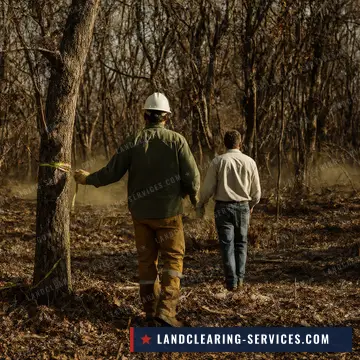
Next, we walk the boundaries together. On a tract in Hall County last winter, we walked it with the owner to mark property corners, flag buffer zones around creek beds, and select mature oak trees to save. Finally, you receive a detailed written proposal outlining daily rates, estimated acres per day, and explicit rock or wet-ground contingency rules before trailer equipment moves. Our fully insured operators deliver transparent service from start to finish.
Land Clearing FAQ
How much does land clearing cost per acre here?
Forestry mulching ranges from $1,000 to $2,500 per acre for light underbrush and $2,500 to $4,000 per acre for thick vegetation. Full clearing to dirt with root grubbing runs $2,500 to $6,000 per acre. Wet seasonal clay or granite outcroppings can add a day to overall schedules.
Do I need a permit to clear land here?
You do not need a state permit simply to cut brush on private acreage. However, outdoor debris burning requires a Georgia Forestry Commission permit, and 54 counties enforce a summer burn ban from May 1 to September 30. Work near streams or wetlands may require USACE Section 404 review, and tree ordinances apply in Metro Atlanta cities.
Can I burn the piles after clearing land?
Hand-piled brush can be burned with standard Georgia Forestry Commission authorization during open burn season. Commercial debris burning requires an air curtain destructor permit. Many property owners select forestry mulching instead to skip air quality restrictions, burn bans, and smoke hazards completely.
What is the best time of year to clear land here?
October through May offers the best soil conditions. Heavy machinery operates smoothly on dry or frozen winter dirt, whereas summer rain turns red clay soft and grease-like. Clearing during winter also improves visibility through thick underbrush before spring growth returns, avoiding storm damage hazards.
How fast can a land clearing crew get to my job site?
Marisol sends your preliminary budget range by email the same day you call or request an online quote.
How do I get a land clearing quote for my property?
Call (888) 709-7985 or fill out our online site request form. Provide your project location, approximate acreage, and primary clearing goals. Marisol emails your estimated cost breakdown the same day and pairs you with our local crew estimator for an accurate on-site evaluation.