Land Clearing Services in Virginia: Loblolly pine understory Cleared on Lots and Acreage from Richmond Metro to Southside
Work here starts with loblolly pine understory in the Tidewater and red clay across the Piedmont. I started on a dozer in Georgia red clay at 19, and the basic price that drives a clearing job here is straightforward. A skid steer mulcher costs $2,500 to $3,200 a day, with transport included inside 60 miles of our crew's yard. Our crews clear lots, acreage, and build sites from the Richmond Metro to the Blue Ridge. Call (888) 709-7985 or send the form. Marisol emails a budget range the same day and books the on-site estimate with the crew nearest you.
- 48 contiguous
states - Insured
crews - Same-day
budget range
48 statesContiguous coverage
$2,500–3,200Skid steer mulcher, per day
60 milesTransport included
Same dayBudget range by email
Land Clearing Services and Forestry Mulching in Virginia
When you need forestry mulching and land clearing, we match equipment to vegetation and slope. We offer forestry mulching using fixed day rates or per-acre pricing. Our land clearing experts select the right head for your thickest brush. Our land-clearing services handle residential land clearing and commercial projects across county land.
Clear to dirt
We grub roots, push stumps, pile or haul debris, and handle rough site prep for driveway construction and build pads. Expect $2,500 to $6,000 per acre depending on hauling or burning choices, slope, and rock.
Forestry mulching
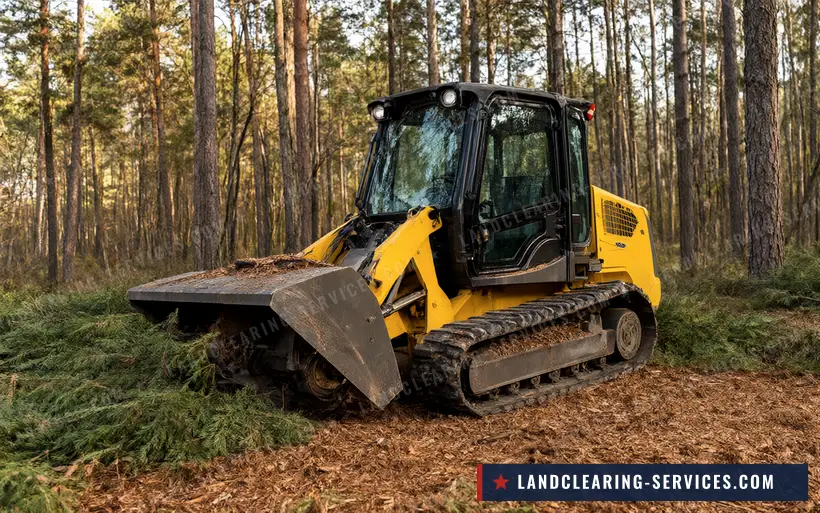
A single operator uses a machine built to shred dense brush, sweetgum saplings, and small trees in one pass. The machine spreads fresh organic mulch over your ground. Forestry mulching preserves topsoil, leaves a protective mulch layer, and costs $1,000 to $2,500 per acre for light to medium brush, or $2,500 to $4,000 for thick timber understory. Use forestry mulching when you want environmentally responsible results.
Lot clearing
Clearing for residential build sites on a half-acre lot takes one day and costs $2,500 to $3,200.
Brush clearing and trail cutting
We grind brush, clear overgrown fence lines, mow thick growth, and clear trails through wooded acreage to give you usable land back.
Stump grinding
We grind stumps below grade at $3.50 to $5 per inch of diameter, with a $150 to $200 minimum per stump.
Selective tree removal
We remove trees and brush together on a clearing scale. Traditional land clearing methods or specialized forestry mulchers clean up fallen trees and invasive brush fast to help property owners manage growth.
Site prep and excavation
Earthmoving, pad shaping, and ditch work run $150 to $200 per hour with an operator.
We do not pour concrete, drill wells, set septic systems, or demolish structures. I know trusted operators across all 48 contiguous states who do. Expert land clearing teams explain those boundaries before taking a deposit.

Land Clearing Across the State: Richmond Metro to Northern Counties and the Blue Ridge
Terrain here changes drastically from Coastal Plain sand to Blue Ridge granite. Each region alters machine selection, daily production logs, and how fast a crew can clear your land.
contiguous states
- 01
Richmond Metro
Red clay, dense loblolly pine understory, sweetgum, and Chinese privet dominate Chesterfield, Henrico, and Hanover counties. Land clearing in Chesterfield and surrounding areas requires handling slick clay after rain.
- 02
Northern counties
In northern Virginia, Loudoun, Prince William, and Fauquier feature heavy residential growth, strict rules, and overgrowth on old pasture.
- 03
Shenandoah Valley and Blue Ridge
Limestone karst, steep slopes, and surface rock challenge machine teeth.
- 04
Southside and Southwest areas
Dense pine plantations, mixed hardwoods, and multiflora rose line fence lines across large rural acreage.
Each region acts as an active service area for our crews. Transport costs remain standard within a 60-mile radius of the crew yard.
Vegetation and Invasive Brush Virginia Landowners Clear Most
Loblolly pine understory with sweetgum, Chinese privet, and Japanese honeysuckle dominates acreage across the Tidewater and Piedmont. On old agricultural fields, autumn olive and multiflora rose spread aggressively, while kudzu and tree of heaven overgrow disturbed shoulders.
Virginia sweetgum and Minnesota buckthorn present the same structural challenge: both resprout from root systems if cut without grinding low. Professional forestry mulching chews invasive species, sapling trunks, and wood debris into a flat layer of mulch. That organic cover blocks weed seeds, protects the soil from washouts, and supports land and wildlife management. Cedar and pine do not resprout from a low stump cut, but sweetgum, privet, and invasive brush require a second pass or targeted treatment to stop regrowth. Private landowners use these methods to manage overgrown property effectively.

Land Clearing Cost in Virginia per Acre
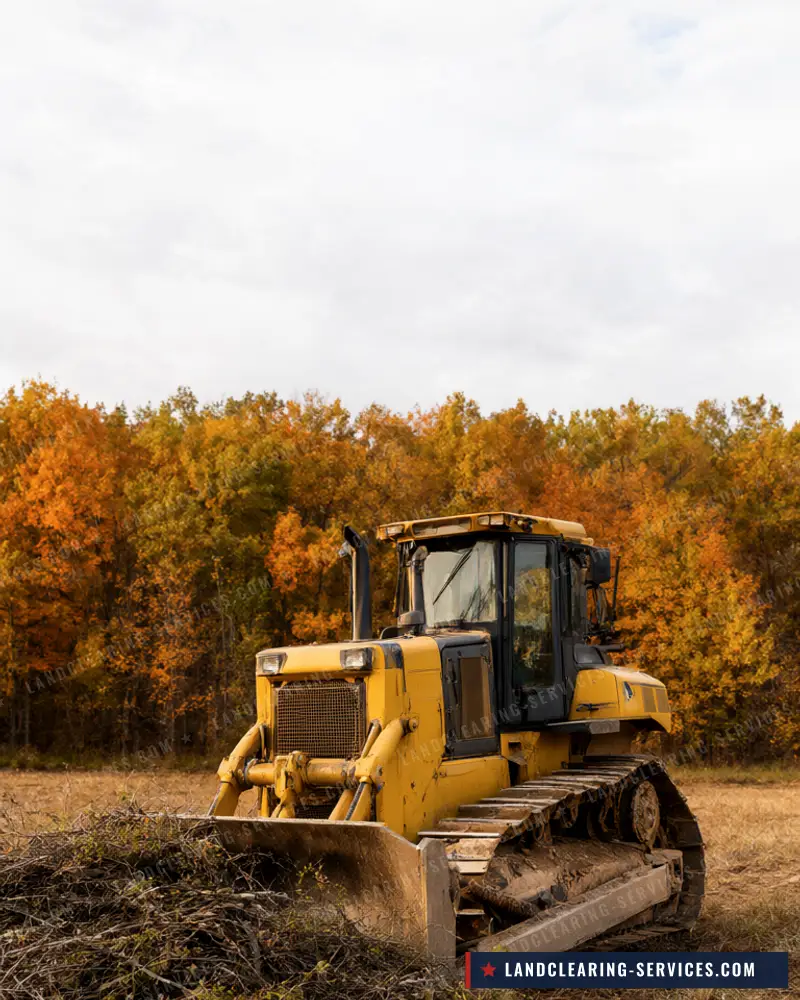
Light to medium loblolly pine and sweetgum understory keeps costs near the lower end of national site ranges based on acreage. I price land clearing in Virginia using simple day rates based on real field output.
Skid steer mulcher
$2,500 to $3,200 per day, transport included inside 60 miles.
300-hp dedicated mulcher
$3,800 to $4,500 per day plus transport for dense timber.
Forestry mulching services
$1,000 to $2,500 per acre for light underbrush; $2,500 to $4,000 for dense woods.
Complete clearing to bare dirt with root extraction
$2,500 to $6,000 per acre based on haul requirements, rock, and slope.
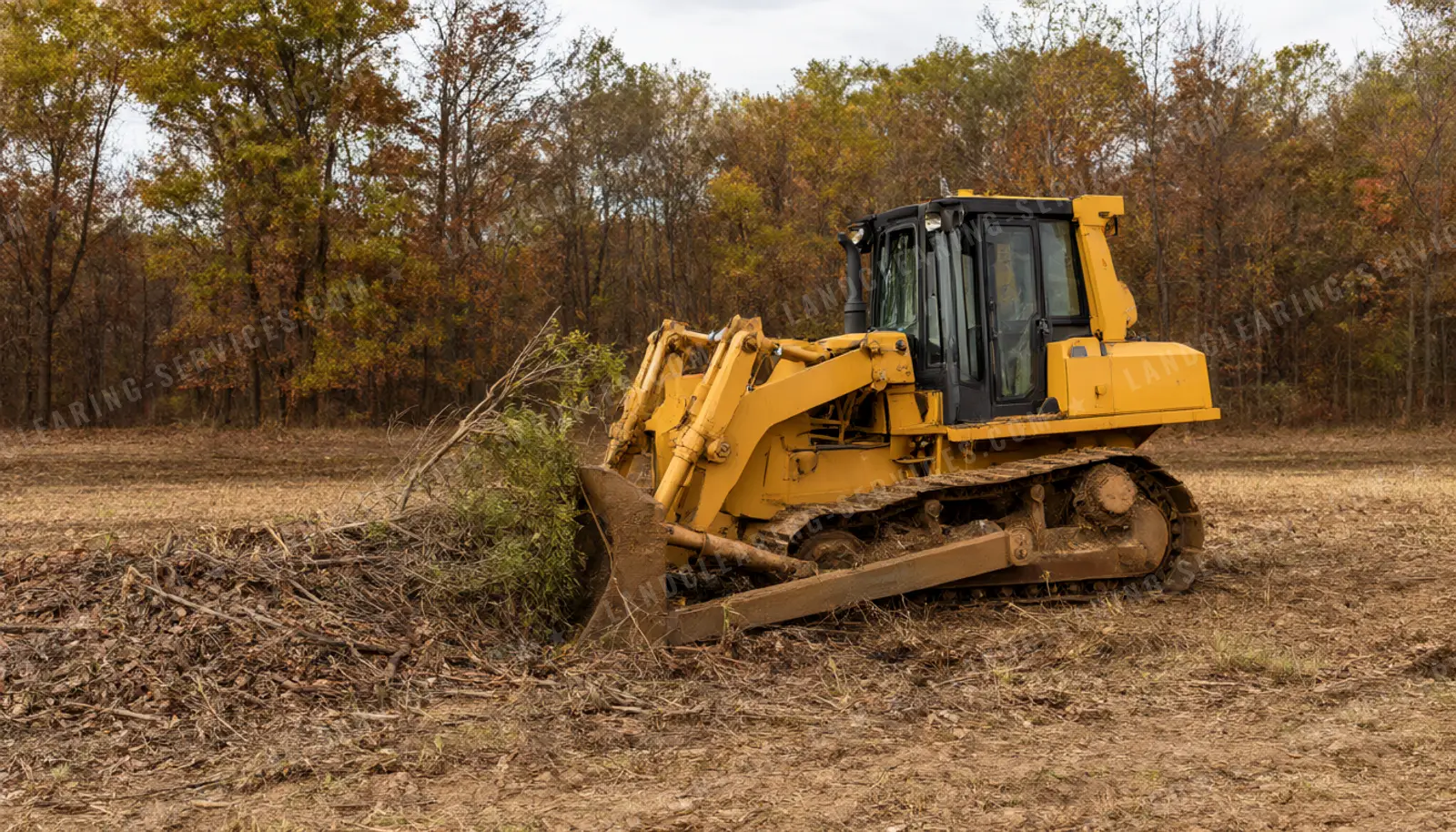
Dozer or excavator with operator
$150 to $200 per hour. Minimum equipment move fee: $1,000 to $1,500.
On a tract in Cherokee County, GA, we cleared 4 acres of dense privet and sweetgum under pine for $5,800 over two days using a skid steer mulcher. On a job in Hudson Valley, NY, we cleared 1 acre of multiflora rose on frozen ground for $3,100 in a single day. Similar density on local acreage yields similar day-rate production. Call us to discuss equipment designed for your exact acreage. Call (888) 709-7985 to discuss your project, and Marisol will send a clear estimate range today.
Land Clearing Cost Calculator for Virginia
Planning range from 2025–2026 national price data, adjusted to Virginia costs. Change any answer and the range updates.
Open the full land clearing cost calculatorBest Season to Clear Land in Virginia
Late summer and fall offer the most efficient window to clear vegetation in Virginia. Ground conditions are firm, leaves begin to drop, and equipment moves fast through Piedmont red clay and Coastal Plain sand.
Frozen ground from December to February is usually brief west of the fall line. Unlike heavy dozers that rut wet ground, forestry mulchers float easily over cold soil to grind brush and small trees without tearing up dirt. Wet winter and spring conditions add a mud day on Piedmont clay, while a high winter water table in the Tidewater slows earthmoving work. Clearing before spring green-up allows landowners to prepare sites before new home construction starts.
Virginia Permits, Burn Rules, Wetlands, and Tree Ordinances
Navigating work here requires knowing state forestry regulations and local rules before starting. I review these parameters on site so property owners avoid unexpected project pauses.
- 01
Burn rules
The Virginia Department of Forestry enforces the 4:00 p.m. burning law from February 15 through April 30. Open burning within 300 feet of woodland, brushland, or dry grass is restricted to hours between 4:00 p.m. and midnight. Under State Air Pollution Control Board regulation 9VAC5-130-40, open burning or using incinerators for clearing debris is prohibited from May 1 through September 30 in designated VOC emissions control areas. Using a mulcher eliminates open burning penalties and avoids smoke complaints.
- 02
Chesapeake Bay Protection Act
Tidewater localities enforce a 100-foot Resource Protection Area buffer along water bodies. Clearing inside this zone requires specialized land management approvals and selective clearing methods.
- 03
Erosion and stormwater
Disturbing 10,000 square feet or more of land (2,500 square feet in Chesapeake Bay Act areas) triggers Virginia Erosion and Stormwater Management rules, requiring silt fencing and sediment traps.
- 04
Wetlands
The Virginia Department of Environmental Quality (DEQ) and the U.S. Army Corps of Engineers Norfolk District require a Virginia Water Protection permit and Section 404 permit before pushing fill dirt into wetlands or streams.
- 05
Tree ordinances
Municipalities like Loudoun, Fairfax, Prince William, and Chesterfield maintain tree conservation ordinances that protect mature canopy trees during clearing for residential projects.
- 06
Utility locates
Virginia law requires an 811 call before digging. Utility companies and local operators must mark underground lines by 7:00 a.m. on the third working day after your locate request (Va. Code 56-265.17). Excavation begins only after all utility operators respond.
- 07
Code 55.1-2836.
- 08
Mulching these plants controls spreading seed heads responsibly.
Red clay taught me to read a weather forecast at 19, and understanding local clearing rules keeps your job moving smoothly.
Cost-Share Programs: NRCS EQIP Brush Management in Virginia
Agricultural operators and timber owners can offset clearing expenses through the Natural Resources Conservation Service (NRCS) Environmental Quality Incentives Program (EQIP). Under practice code 314 for brush management, this federal cost-share program helps land restoration efforts return overgrown pasture back to active use.
A landowner can submit applications at their county USDA service center. A conservation planner evaluates the acreage and writes a plan that targets invasive brush, red cedar, or dense sweetgum growth. Funding approval takes several months, so property owners should apply well before contractor mobilization. Our crews execute selective clearing plans to match NRCS guidelines, grinding brush while leaving high-value timber untouched.
Virginia Land Clearing Companies by Metro Area and County
Local building authorities authorized 20,458 single-family permits in 2025 across the state. Residential growth across high-volume counties requires professional clearing prior to grading and utility construction. Our company serves five major residential expansion corridors:
- 01
Chesterfield and Hanover
Chesterfield County led the state with 1,576 single-family permits in 2025, while Hanover County logged 279 permits. Clearing here involves heavy Piedmont red clay, loblolly pine understory, and lot development near Chesterfield.
- 02
Loudoun and Prince William
Loudoun registered 641 permits and Prince William recorded 726 permits. Projects require strict adherence to local tree ordinances, silt fencing standards, and selective clearing near subdivisions in Loudoun and surrounding areas.
- 03
Frederick County and Winchester
With 707 permits, Frederick County features limestone karst and rocky pasture land requiring specialized equipment to grind brush and handle field stones.
- 04
Hampton Roads
Chesapeake recorded 551 permits, Suffolk logged 514, and James City County posted 209 permits.
- 05
Stafford and Spotsylvania
Spotsylvania registered 681 permits while Stafford logged 419 permits. Suburban infill requires efficient lot clearing, tree removal, and site preparation.
Whether you need professional land clearing near Chesterfield or across rural counties, our team brings commercial equipment directly to your site. Transportation fees remain transparent for all surrounding areas.

Send the Form, Get a Range the Same Day, Walk the Land with the Crew
Getting your land cleared involves three simple steps. Call (888) 709-7985 or fill out our form with your county, total acreage, and brush density. Marisol emails a preliminary budget range the same day and arranges an on-site visit with the crew lead nearest your property.
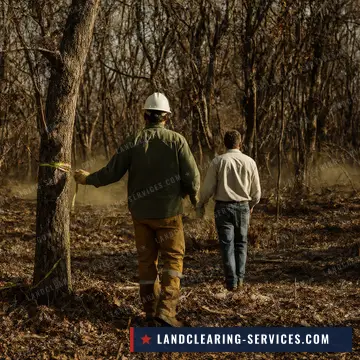
We walked it with property owners across 11 states over 20 years, and the step-by-step process does not change. During the free consultation, we walk the boundaries, locate wetland flags, check access for lowboy trailers, and note surface rock or extreme slopes. You receive a final written bid outlining day rates, expected acres per day, and any clear wet-weather or rock clauses before work starts. Once your land is cleared, our crew manages final cleanup. Call us today to start.
Frequently Asked Questions About Land Clearing Services in Virginia
How much does land clearing cost per acre in Virginia?
Forestry mulching runs $1,000 to $2,500 per acre for light understory and $2,500 to $4,000 for dense brush and sweetgum. Clearing to bare dirt with roots pulled costs $2,500 to $6,000 per acre. Steep Blue Ridge slopes, heavy surface rock, or long haul distances increase total costs.
Do I need a permit to clear acreage in Virginia?
Clearing brush on your own acreage generally requires no state permit. However, disturbing 10,000 square feet or more triggers Virginia Erosion and Stormwater Management regulations. Work near wetlands requires DEQ and U.S. Army Corps of Engineers permits, while burning debris must comply with Virginia Department of Forestry rules.
Can I burn the cleared brush piles on my land?
Open burning is permitted outside restricted periods, provided you comply with local rules. The Virginia Department of Forestry enforces a 4:00 p.m. burning law from February 15 to April 30 near woods or dry grass. Summer VOC regulations prohibit open burning from May 1 through September 30 in covered counties.
What is the best time of year to clear Virginia land?
Late summer and fall offer ideal clearing conditions across Virginia due to dry soil. Winter is also excellent for forestry mulching because equipment floats over frozen or firm ground, allowing operators to shred brush cleanly without tearing up subsoil or disturbing root systems unnecessarily.
How fast can a clearing crew finish my project?
A half-acre residential build lot takes one day on a skid steer mulcher. Marisol provides a project timeline estimate alongside your same-day budget range.
How do I get an exact land clearing quote?
Call (888) 709-7985 or submit the site request form with your county name and acreage. Marisol emails an initial price range the same day and coordinates an on-site walk with our local crew lead to evaluate terrain and confirm written day rates.