Land Clearing Services in Arkansas: Eastern red cedar and hardwood sprouts Cleared on Lots and Acreage from Northwest Arkansas to Delta
Land clearing services in this state start with two hard facts: eastern red cedar takes over an unmanaged Ozark pasture in three years, and chert rock in Northwest Arkansas eats cutter teeth for breakfast. I started on a dozer in Georgia red clay at 19, and the basic day rate that sets the price here has not changed. A skid steer mulcher runs $2,500 to 3,200 a day, transport included inside 60 miles of the crew's yard. Our crews clear lots, acreage and pads from Northwest Arkansas down through Little Rock to the Delta. Call (888) 709-7985 or send the form. Marisol emails a budget range the same day and books the free estimate on-site with the crew nearest you.
- 48 contiguous
states - Insured
crews - Same-day
budget range
48 statesContiguous coverage
$2,500–3,200Skid steer mulcher, per day
60 milesTransport included
Same dayBudget range by email
Land Clearing Services and Mulching Services in Arkansas
To clear land here requires matching equipment to the ground. Every clearing project gets priced by the day or the acre before the machine unloads. Here is how professional land-clearing services organize the work across the state.
Forestry mulching
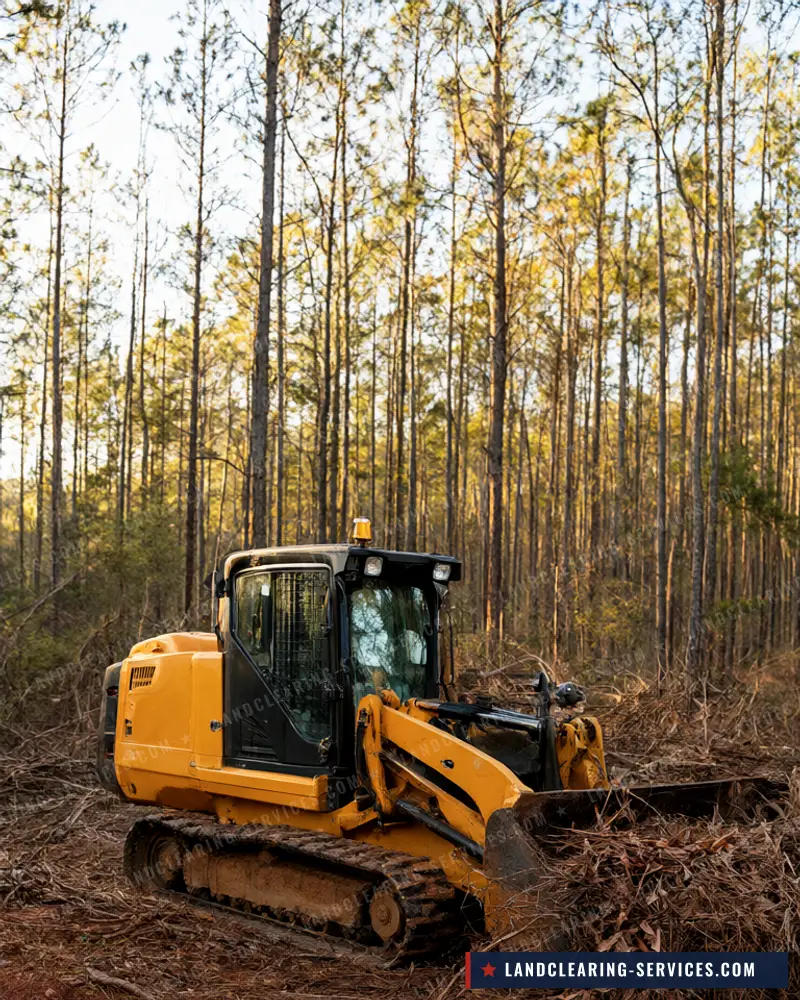
one machine, one operator, turning vegetation into mulch as a clean ground cover to clear your land and clear brush. $1,000 to 2,500 an acre for light to medium growth; $2,500 to 4,000 for dense cover.
Clear to dirt
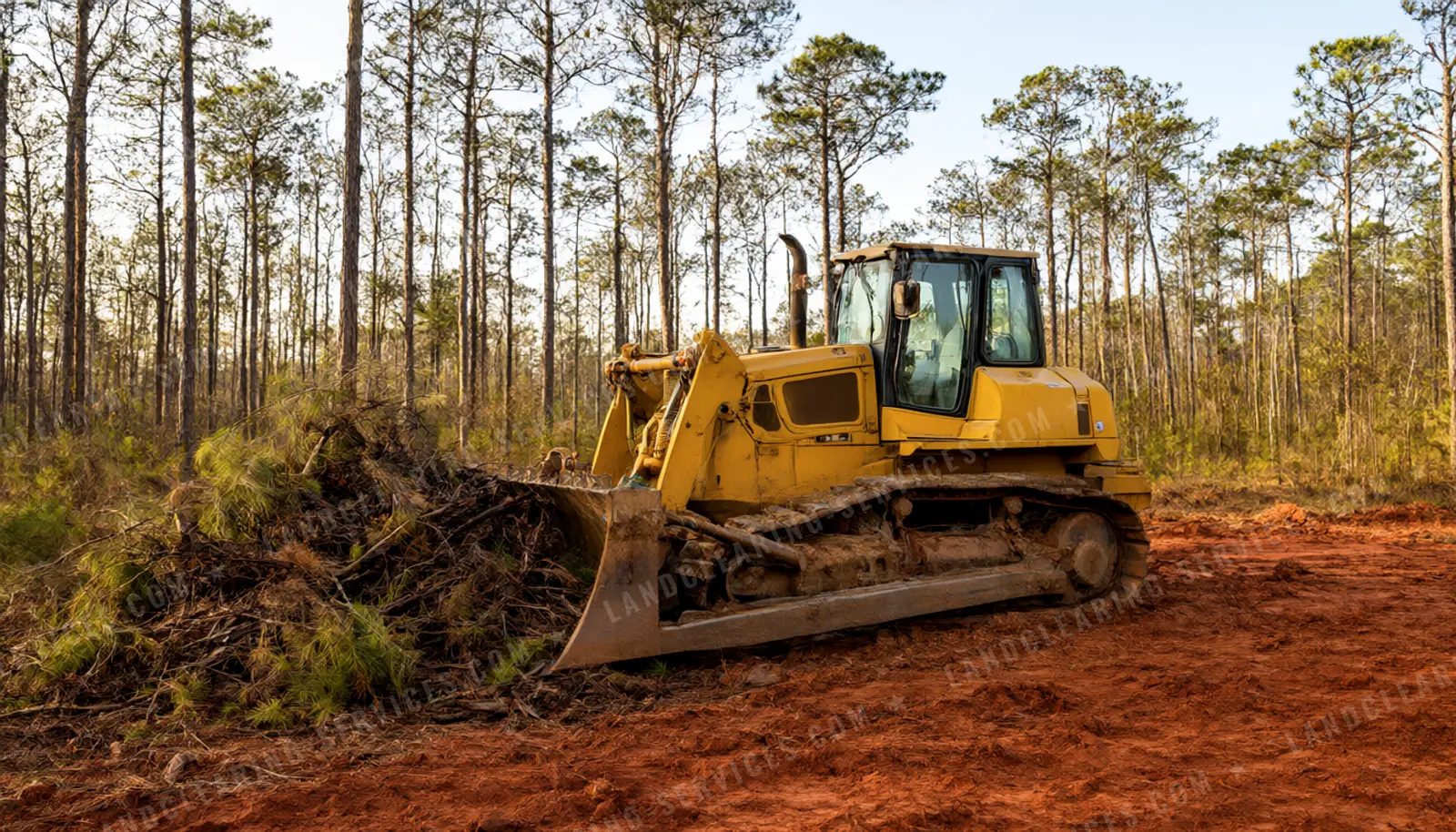
full grubbing, stump extraction, root raking, and rough grading. $2,500 to 6,000 per acre depending on rock, slope, and haul distance.
Lot clearing
a half-acre residential lot is completed in one day for $2,500 to 3,200.
Land clearing and brush clearing
dedicated land clearing where cedar, greenbrier, and honeysuckle overgrow pasture fence lines or building sites.
Stump grinding
$3.50 to 5 per inch of trunk diameter, with a $150 to 200 minimum per stump. Large jobs with dozens of stumps are set by the day rate.
Selective tree removal
brush and tree clearing to clear away unwanted growth while leaving mature hardwoods or pines untouched. Selective clearing keeps key trees intact. Our crew can clear trees and brush together rather than single yard trees.
Site prep and excavation
service for pad preparation, building driveways, or setting a culvert at the road ditch runs $150 to 200 an hour with an experienced operator. Excavation services handle pads and ditching.
Right of way clearing
open corridors for utilities, fence lines, and access roads across large tracts. Way clearing follows exact plan specs.
We do not pour concrete, drill wells, install septic systems, or knock down houses. Trusted land clearing companies give you clear boundaries up front before you clear your land.

Land Clearing Services Across Northwest AR, Little Rock, the Ozarks, and the Delta
This state carries four main soil profiles, and every region changes machine wear and daily output. Clearing contractors who price every county the same get surprised by the ground. Our crews specialize in matching machines to local terrain.
contiguous states
- 01
Northwest AR (Benton and Washington counties)
shallow topsoil over chert rock and clay. Cedar and hardwood sprouts dominate. Stumps add time when pulling to bare dirt.
- 02
The Ozarks and River Valley
steep slopes, ledge rock, and heavy cedar thickets. Equipment traction and tooth wear drive the day rate.
- 03
Central Arkansas around Little Rock
mixed pine, sweetgum, and oak over clay loam. Fast production on residential lots and commercial site prep.
- 04
The Delta and South Arkansas
rich silt loam and wet ground near the rivers, moving into heavy loblolly pine understory with privet to the south. Delta ground adds a wet day most of spring.
Each hub serves its surrounding areas inside a 60-mile transport circle. Past that line, transport fees are written directly on the quote before work starts. Our crews mulch, clear land, and keep full services available across all surrounding areas.
What Local Landowners Clear Most: Cedar, Hardwood Sprouts, and Privet
Eastern red cedar and hardwood sprouts lead most of our work in the northern half of the state. Cedar spreads quickly across unmanaged pasture, blocking sunlight and swallowing fence lines. In south AR, loblolly pine understory dominated by sweetgum and privet is the main target. Honeysuckle and greenbrier cover the ground everywhere in between.
A forestry mulcher turns this dense growth into ground cover in a single pass, leaving desirable oaks and walnuts intact. Smart vegetation management requires understanding how different plants behave after cutting. Cedar dies when cut below the lowest green branch and will not overgrow again from that root. Hardwood sprouts, privet, and greenbrier send up new shoots from the root system unless treated. Minnesota buckthorn and local cedar are the same job with different roots. Professional land clearing services handle both easily. Budgeting a second pass or chemical treatment prevents regrowth on pasture reclaims. Cedar works seven days a week, so getting ahead of it early is the best way to clear land efficiently and mulch fast.
Land Clearing Cost in the Natural State per Acre and Day Rates
Pricing for local land clearing stays within predictable national ranges, with Ozark rock adding a day on pad work or stump removal. I've priced jobs across 11 states over 20 years, and clear arithmetic is always better than a guess. Here is how we build an estimate.
Skid steer mulcher
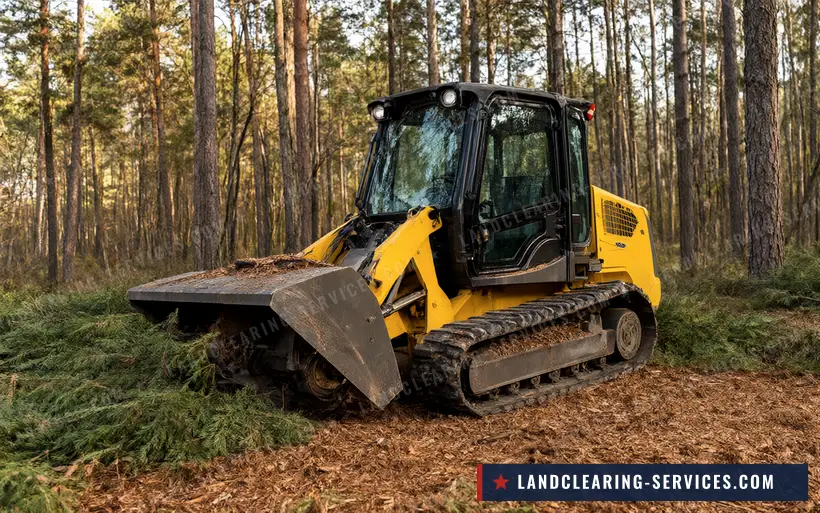
$2,500 to 3,200 per day, transport included inside 60 miles of the yard.
Dedicated 300-hp mulcher
$3,800 to 4,500 per day plus machine transport.
Forestry mulching cost
$1,000 to 2,500 per acre for light to medium cedar or brush; $2,500 to 4,000 per acre for thick hardwoods.
Full dirt clearing with stumps out
$2,500 to 6,000 per acre. Rock depth and transport distance dictate the top end. Single load debris removal runs $600 to 1,300.
Excavator or dozer work
$150 to 200 per hour.
On a job in Logan County, Oklahoma, just across the state line, we cleared 20 acres of dense eastern red cedar pasture reclaim. It took 4 days with a dedicated 300-hp forestry mulcher for $18,500 plus transport. On a tract in Cherokee County, Georgia, we cleared 4 acres of privet under pine in 2 days for $5,800. Daily production logs set the pace: acres per day times the day rate, plus extra time for rock or mud. For detailed pricing tables, visit our state cost page. Hiring land clearing contractors keeps costs predictable. Call (888) 709-7985 or send the form to get your budget range.
Land Clearing Cost Calculator for Arkansas
Planning range from 2025–2026 national price data, adjusted to Arkansas costs. Change any answer and the range updates.
Open the full land clearing cost calculatorBest Season to Clear Land in Arkansas: October to May Window
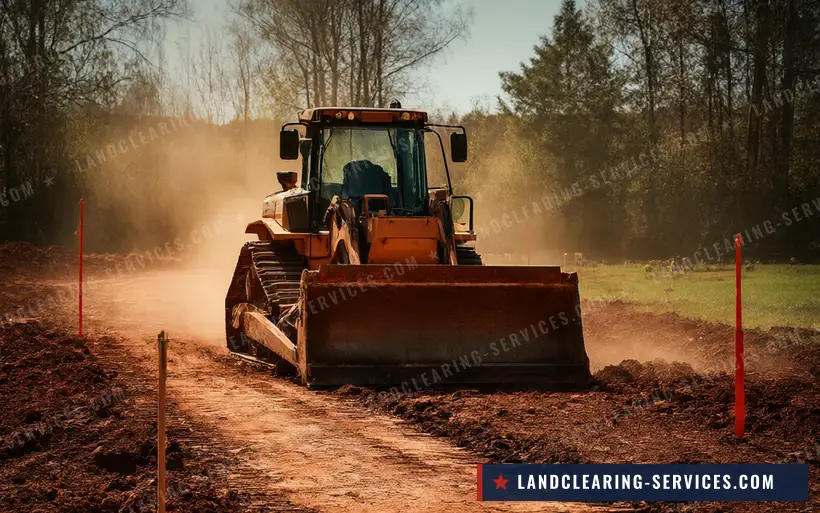
October to May is the prime window when you need land cleared in this state. Winter weather drops the leaves, freezes soft surface dirt, and makes land clearing today much faster. A mulcher floats over damp ground to mulch timber where heavy equipment would sink. This keeps costs down while you mulch timber and clear land.
The summer wet season from June to September adds a day on low ground, especially in the Delta silt loam where water lingers. A dozer operating on wet clay creates deep ruts that require extra grading later.
Arkansas Permits, Burn Rules, Wetlands, and Tree Restrictions
While there is no statewide permit required simply to cut trees on private property, local regulations and federal laws affect many clearing plans. We address these details early so there are no delays.
- 01
Burn permits and burn bans
local authorities like the county courthouse, city hall, or local fire department govern outdoor burning. County judges issue burn bans during dry summer months. The state DEQ Office of Air Quality provides guidance on commercial open burning. We handle tree removal and brush removal in Arkansas safely. Forestry services mulching eliminates burning entirely.
- 02
Wetland limits
the US Army Corps of Engineers (USACE) Section 404 permit regulates filling or disturbing designated wetlands or streams. The Little Rock District covers most of the state, while the Memphis District manages the eastern border. We mark low ground and stop short of jurisdictional boundaries.
- 03
Tree ordinances
municipal tree protection rules are rare here, but Fayetteville and Little Rock maintain local guidelines for development projects.
- 04
Erosion control
land development disturbing more than 1 acre of land requires a stormwater permit from the Arkansas Department of Energy and Environment.
Our dedicated crews carry full insurance, handle utility clearance through 811, and perform work according to plan specifications.
Cost-Share Programs: NRCS EQIP Brush Management in Arkansas
The USDA Natural Resources Conservation Service (NRCS) offers financial assistance through the Environmental Quality Incentives Program (EQIP). Under practice code 314 for brush management, landowners can receive cost-share funding to control eastern red cedar, invasive brush, and unwanted hardwood sprouts on agricultural land or timberland.
This cost-effective program is designed for land management and pasture restoration rather than preparing a residential lot or construction site. A conservation planner evaluates the acreage and writes a plan specifying which plant species stay and which are cleared to minimize bare dirt. Approval takes several months, so application at the local USDA service center must happen early. Once approved, our crews execute the clearing to meet NRCS specifications exactly.
Land Clearing Company Services by Local County and Growth Metros
This state logged 10,298 single-family home building permits in 2025 according to the Census Building Permits Survey. Growth is heavily concentrated in the northwest corner, where rapid residential development requires experienced land-clearing teams with acres of land under management. We deliver quality Arkansas land clearing across the region. Our company serves all major growth areas across the state.
- 01
Northwest Arkansas (Bentonville, Rogers, Springdale, Fayetteville)
Benton County led the state with 4,023 permits; Washington County recorded 1,621 permits. Rapid residential lot prep and acreage clearing keep our mulching services active here year-round.
- 02
Little Rock Metro Area
Pulaski County logged 1,483 permits; Saline County added 477 permits. Commercial site prep and residential pad development drive continuous demand for tree clearing in the capital region.
- 03
Jonesboro and the East
Craighead County registered 580 permits. Agricultural field edges, ditch clearing, and site preparation represent typical projects in this region.
Whether you need to clear today for a single home or multi-acre land development, we handle projects of every size with the right equipment across every county.
Send the Form, Get a Range the Same Day, Walk the Land with the AR Crew
Getting your project priced is straightforward. First, call (888) 709-7985 or submit the online form with your tract acreage, county, and brush density. Marisol reviews the details in the estimating office and emails a budget range the same day. Next, we schedule a free consultation and on-site estimate with the crew lead nearest you, inside 60 miles of our yard.
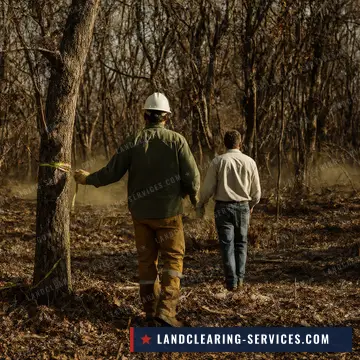
We walk the property line together, mark trees to save, locate wetland edges, and check for shallow Ozark rock. You receive a final written bid with fixed day rates, estimated acres per day, and explicit extra-day terms before equipment unloads. This service includes full equipment setup to mulch efficiently. Since 2019, Clearline Land Services has provided honest pricing for overgrown land, residential building sites, and commercial acreage. On our jobs, clear communication comes first. Contact us today to secure your start date.
Land Clearing Services FAQ
What is the typical land clearing cost per acre in Arkansas?
Forestry mulching runs $1,000 to 2,500 per acre for light to medium brush, and $2,500 to 4,000 per acre for dense cedar or hardwoods. Clearing to bare dirt with stumps removed ranges from $2,500 to 6,000 per acre. Shallow Ozark chert rock or wet Delta soil can add a day to project timelines.
Do I need a permit to clear land on my property in Arkansas?
You generally do not need a state permit to cut trees on private acreage. Local authorities like the county courthouse, city hall, or local fire department regulate open burning, while USACE Section 404 permits apply near wetlands. Cities like Fayetteville and Little Rock enforce local tree ordinances during commercial development.
Can I burn the piles after clearing brush and trees?
Burning depends on local county burn bans and fire department guidelines. The Arkansas DEQ Office of Air Quality outlines rules for open burning commercial clearing debris. Many landowners choose forestry mulching instead, which converts brush and tree material into ground cover without smoke or permit hassles.
What is the best season to clear land in this state?
October through May is the ideal clearing window. Leaves are down, ground temperatures drop, and equipment moves easily through dense brush. The summer wet season from June to September adds time and mud when working in low-lying Delta fields or soft clay pockets.
How fast can a crew clear my acreage?
Marisol emails a budget range the same day you request a quote, with an on-site visit scheduled shortly after. A standard half-acre residential lot takes one day with a skid steer mulcher. Larger 5 acres pasture projects typically take two to three days using a dedicated high-horsepower forestry mulcher.
How do I request a quote for clearing needs?
Call (888) 709-7985 or fill out the website form with your project location and acreage. Marisol emails a line-item budget range the same day and arranges a free on-site walk with the nearest crew leader to confirm final pricing in writing.