Land Clearing Services in Vermont: Common buckthorn and honeysuckle Cleared on Lots and Acreage from Chittenden County to Northeast Kingdom
Land clearing near Chittenden County comes down to two real factors: common buckthorn and honeysuckle take over the abandoned pastures, and Champlain Valley clay stays wet long after the snow melts. I've priced jobs across 11 states since starting on a dozer in Georgia red clay at 19, and the math on Vermont land stays direct. A skid steer mulcher runs $2,500 to $3,200 a day, with transport included inside 60 miles of the yard. Our crews handle clearing for residential build sites and site prep from Chittenden County to the Northeast Kingdom. Call (888) 709-7985 or send the form. Marisol emails a budget range the same day and sets up your free on-site consultation with the crew nearest you.
- 48 contiguous
states - Insured
crews - Same-day
budget range
48 statesContiguous coverage
$2,500–3,200Skid steer mulcher, per day
60 milesTransport included
Same dayBudget range by email
Professional Land Clearing Services and Forestry Mulching in Vermont
Our crew handles overgrown property across the state, from a building lot in Chittenden County to working acreage in the hills. We use specialized machinery to clear vegetation efficiently while leaving usable land behind. Here is how our forestry mulching and land clearing options break down for property owners who need expert land clearing.
Clear to dirt
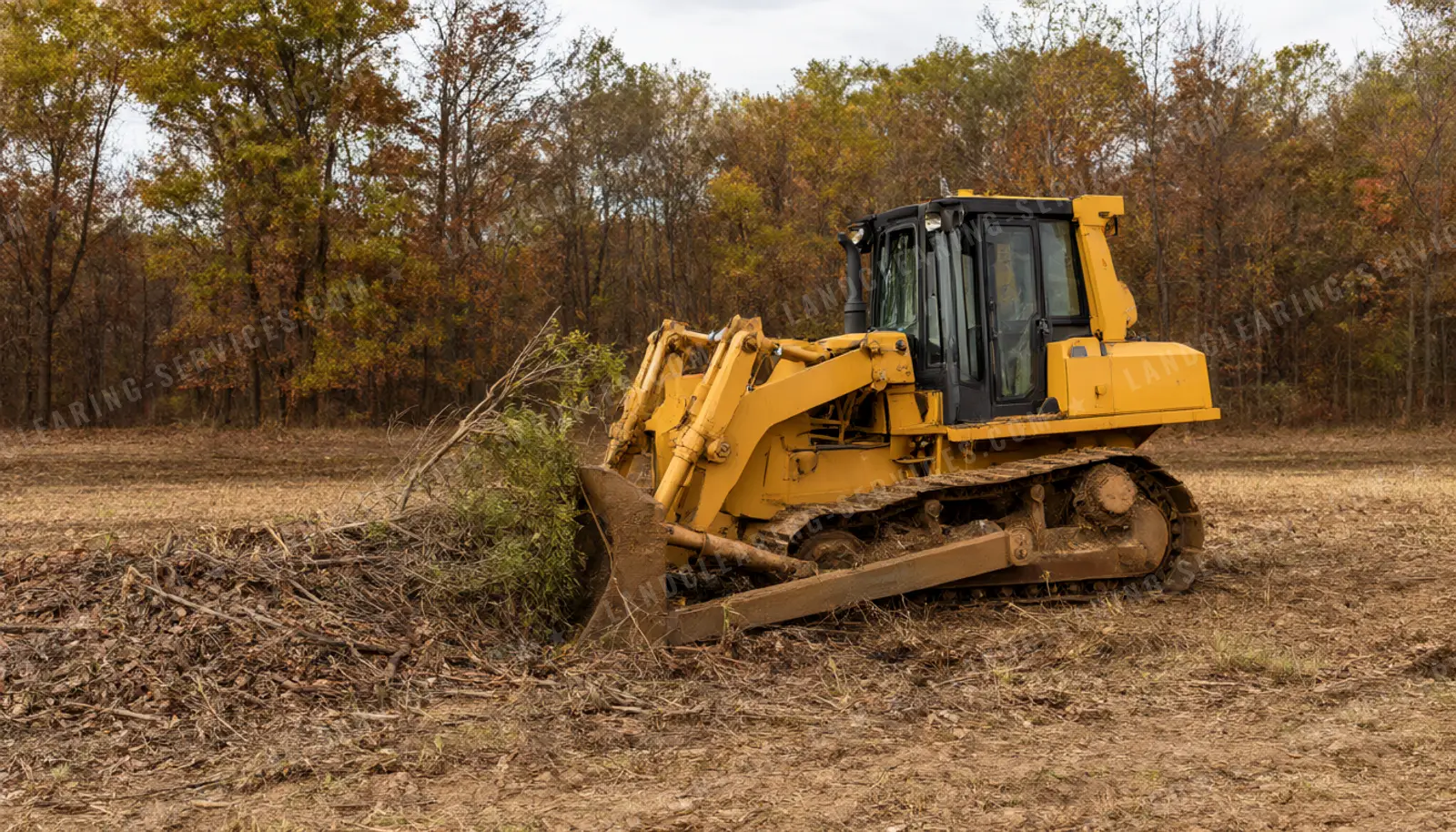
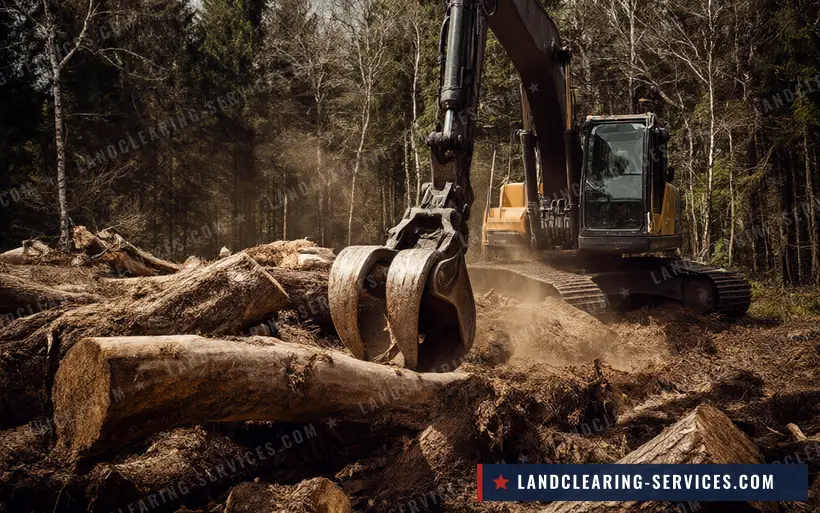
We pull stumps, root rake, pile or truck out debris, and perform rough grading for new home construction. Expect $2,500 to $6,000 per acre depending on ledge and slope.
Forestry mulching services
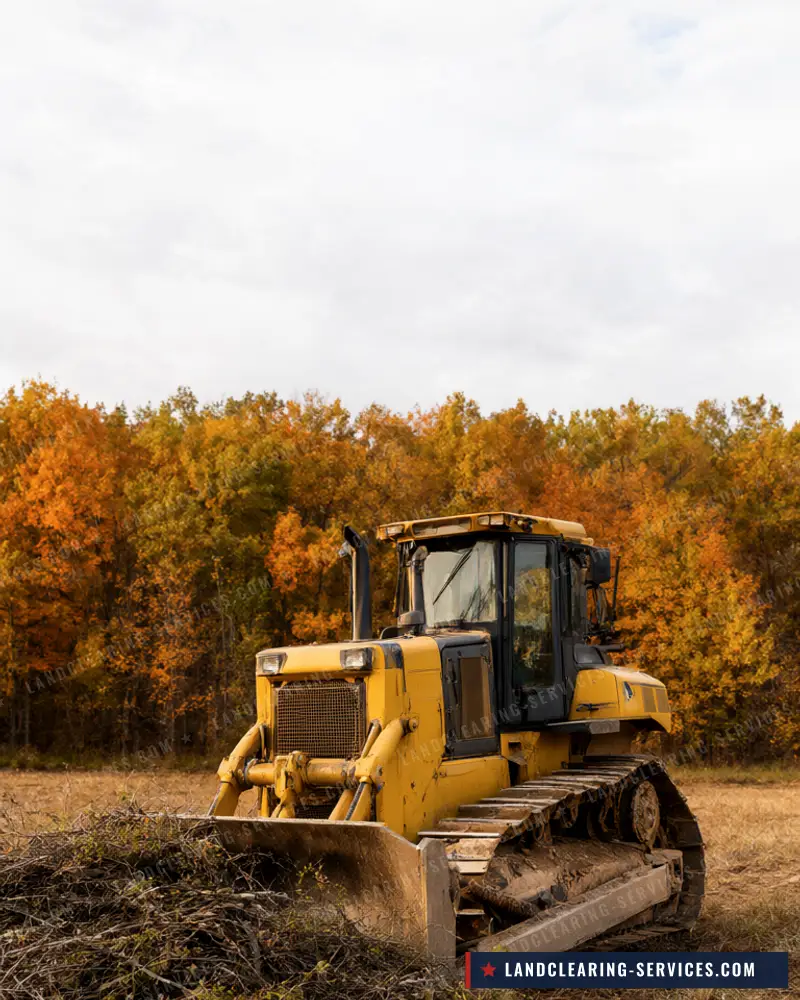
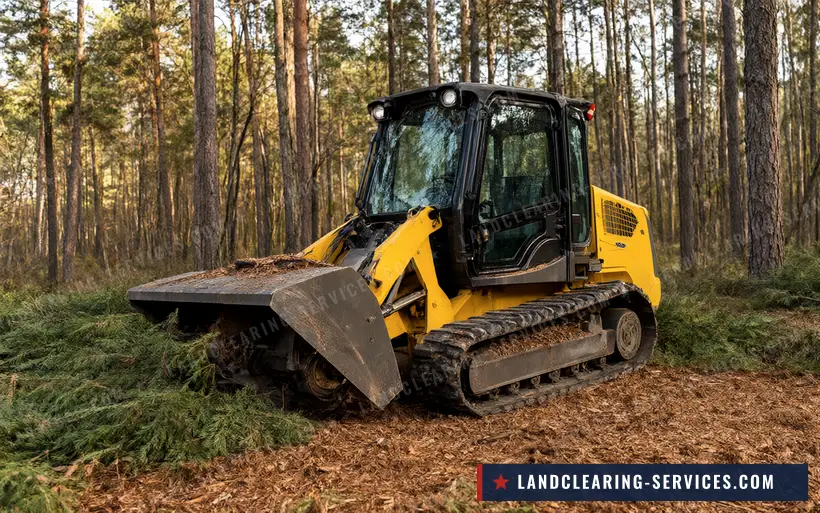
One operator using dedicated forestry mulchers processes brush and small trees into a fine mulch layer. Runs $1,000 to $2,500 per acre for light to medium growth. Traditional land clearing methods push dirt into piles, but professional forestry mulching preserves the topsoil layer.
Lot clearing
A standard half-acre parcel takes one day, running $2,500 to $3,200.
Brush clearing
Targeted removal of invasive species like buckthorn and honeysuckle while preserving mature maple or oak trees. Our crew cuts trails through wooded sections to open up access for hiking or utility vehicles.
Stump grinding
We grind stumps below ground level at $3.50 to $5 per inch of diameter, with a $150 to $200 minimum per stump.
Tree removal at clearing scale
We remove trees and brush together across the tract. We do not do single-tree residential backyard pruning; a local tree service handles that work.
Site preparation
Excavator work with equipment designed for driveways, house pads, and drainage ditches at $150 to $200 per hour with an operator.
We prepare your parcel responsibly, but we do not pour concrete foundations, drill water wells, set septic tanks, or tear down old houses. Check our national hub for general guidelines on land-clearing projects near chittenden county and across the country.

Clearing Across Vermont: Chittenden County, Central Vermont, Southern Vermont, and Northeast Kingdom
Each section of the state presents distinct terrain that affects how fast equipment moves and how many days a project takes.
contiguous states
- 01
Chittenden County and the Champlain Valley
Heavy Champlain clay stays slick into June. Common buckthorn, honeysuckle, and wild parsnip dominate old fields near Burlington, Essex, and Williston. Brush work in chittenden county often involves high density buckthorn thickets.
- 02
Central Vermont
Glacial till with shallow granite ledge around Montpelier, Barre, and Stowe. Poplar, red maple, and gray birch line field edges and driveways.
- 03
Southern Vermont
Rolling hills and rocky ground near Rutland, Bennington, and Brattleboro. Oriental bittersweet and dense brush overgrow historical stone walls and fence lines.
- 04
Northeast Kingdom
Dense fir and spruce regeneration, alder bottoms, and remote acreage. Winter operations on frozen ground allow the cleanest access without rutting the soil.
Every region functions as an active service area. Equipment transport stays included within 60 miles of the yard serving your county land.
What Vermont Landowners Clear Most: Common Buckthorn, Honeysuckle, and Alder
Common buckthorn and honeysuckle dominate the Champlain Valley and central field margins. Class B noxious weeds like Morrow honeysuckle, amur honeysuckle, and Tatarian honeysuckle choke out native sapling growth and turn old pastures into impassable thickets. Minnesota buckthorn and Vermont buckthorn present the same stubborn root system under different skies.
Up in the hills, gray birch, poplar, and wild red maple sprouts push onto open ground within three seasons of neglected mowing. Wild parsnip invades roadsides and ditch lines. A professional landowner knows that overgrowth will cover open fields if left unattended. When we use forestry mulching, our operators grind brush flush with the soil line. Because buckthorn and honeysuckle sprout vigorously from untreated roots, plan to mow the regrowth to keep your land back permanently. Every state has a plant it is embarrassed about, and buckthorn is the one here.
Land Clearing Cost in Vermont per Acre and Day Rates
Local land-clearing costs track closely with national averages, with most job sites falling in the light-to-medium density category. Softwoods and shrubby growth grind fast, but mud and surface rock dictate the total daily timeline.
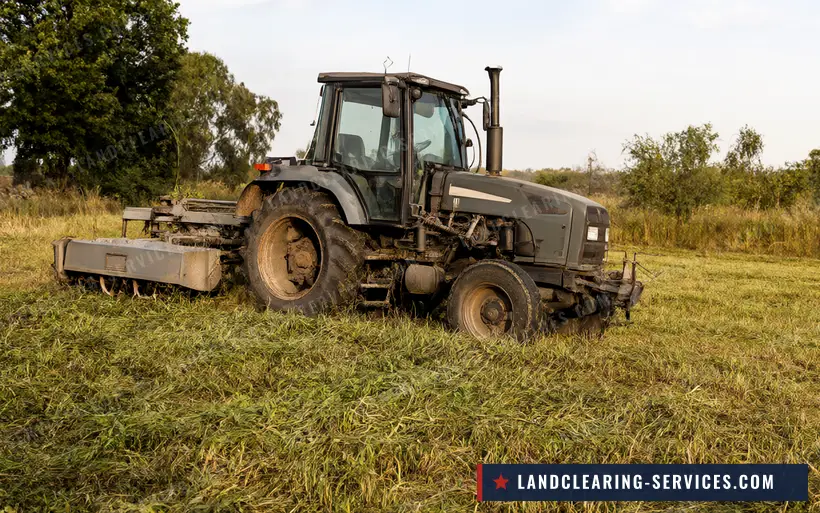
Skid steer with mulching head
$2,500 to $3,200 per day, including trailered transport inside 60 miles.
300-hp dedicated forestry mulcher
$3,800 to $4,500 per day plus transport for heavier trees and dense brush.
Forestry mulching cost
$1,000 to $2,500 per acre for light brush and saplings; $2,500 to $4,000 per acre for thick hardwoods and dense brush.
Full excavation to bare dirt
$2,500 to $6,000 per acre based on acreage, steep slopes, granite ledge, and long haul distance.
Hauling or burning debris
Dump truck hauling runs $600 to $1,300 per load; minimum trip fee sits at $1,000 to $1,500.
On a job in the Hudson Valley last winter, our crew processed an acre of dense multiflora rose and buckthorn on frozen ground in a single day for $3,100. Glacial till is just gravel that got compressed by an ice age. Call (888) 709-7985 or fill out the form to receive your baseline quote.
Land Clearing Cost Calculator for Vermont
Planning range from 2025–2026 national price data, adjusted to Vermont costs. Change any answer and the range updates.
Open the full land clearing cost calculatorBest Season to Clear Land in Vermont: Frozen Ground November to April
Operating on frozen ground from November through April offers the cleanest conditions for forestry mulching in this state. Cold weather freezes the top layer of dirt, creating a firm bridge over soft Champlain clay and wet hollows. Forestry mulchers ride on top of snow and frozen turf without disturbing the root structure or tearing up soil.
Spring thaw brings mud season during April and May, which adds a day to dirt work or heavy excavation projects. Ground work for a new driveway or house pad usually waits for mid-June when the ground dries. When land is cleared over snow, the mulch layer protects the soil underneath while getting trees and brush cleared ahead of spring construction.
Vermont Permits, Burn Rules, Wetlands, and Tree Statutes
Clearing land in VT involves distinct environmental regulations and municipal oversight.
- 01
Open Burning
A burn permit is required from the Town forest fire warden or deputy forest fire warden whenever there is no snow cover surrounding the burn site. The Commissioner of Forests, Parks and Recreation may restrict open burning during high fire risk or Air Quality Alerts. Mulch placement eliminates brush piles and avoids burn restrictions entirely.
- 02
Wetland Regulations
The Vermont Agency of Natural Resources (ANR) enforces Vermont Wetland Rules, establishing 50-foot protective buffers on Class II wetlands and 100-foot buffers on Class I wetlands. USACE Section 404 permits through the New England District govern any dredge or fill placement in streams or wetlands.
- 03
Act 250 and Shoreland Protection
Commercial projects or subdivisions involving 10 acres or more require Act 250 state land use review. The Shoreland Protection Act limits vegetation clearance within 250 feet of lakes and ponds greater than 10 acres.
- 04
Utility companies and state law (30 V.S.A. s. 7004) require an 811 call at least 72 hours before digging, excluding weekends and legal holidays.
- 05
Timber Trespass Laws
Under 13 V.S.A. s. 3606, cutting a neighbor's trees without permission can result in treble damages unless the party proves good reason to believe they owned the timber.
- 06
Invasive Species Rules
Vermont Quarantine #3 lists Class B Noxious Weeds, including tree-of-heaven, oriental bittersweet, honeysuckle varieties, and common buckthorn. State rules govern their movement and disposal.
Cost-Share Programs: NRCS EQIP Brush Management in Vermont
Private landowners managing pasture, forestland, or timber tracts can access cost-share financial assistance through the USDA Natural Resources Conservation Service (NRCS). The Environmental Quality Incentives Program (EQIP) provides funding under practice code 314 for brush management to control invasive woody plants like common buckthorn, honeysuckle, and alder.
You apply for assistance at your local USDA service center before clearing work begins. An NRCS conservation planner surveys your land and drafts a management agreement specifying which invasive brush to remove, how much canopy to keep, and how to establish ground cover that supports land and wildlife. The approval process takes several months, so file paperwork well ahead of your target clearing date. Once approved, our crews clear the acreage to match your conservation plan specifications exactly.
Land Clearing Companies by Vermont County and Growth Areas
Vermont recorded 1,287 single-family building permits in 2025 according to the Census Building Permits Survey. Residential development concentrates in specific valleys where lot clearing precedes earthwork and construction. Here is how single-family permits distributed across top counties last year:
- 01
Chittenden County (Burlington, Essex, Williston)
274 single-family permits. High demand for lot clearing, residential land clearing in Chittenden County, and invasive species management on former agricultural land nearby.
- 02
Franklin County (St. Albans, Georgia): 161 single-family permits. Franklin county leads northern building activity with driveway construction, pasture reclamation, and brush clearing along field edges.
- 03
Washington County (Montpelier, Barre, Waterbury)
130 single-family permits. Slope clearing, site prep on rocky till, and trail cutting through wooded tracts.
- 04
Windsor County (Woodstock, White River Junction) and Windham County (Brattleboro): 119 and 115 permits respectively. Selective clearing for home sites, view corridors, and land restoration.
Our coverage spans all 14 counties across the state. Equipment charges are stated upfront for locations situated past the 60-mile radius from our nearest regional staging yard.
Send the Form, Get a Range the Same Day, Walk the Land with the Vermont Crew
Getting your ground cleared starts with three straightforward steps. First, submit the online form or call (888) 709-7985 with your parcel location, estimated acreage, and brush conditions. Marisol in our estimating office emails a realistic budget range the same day.
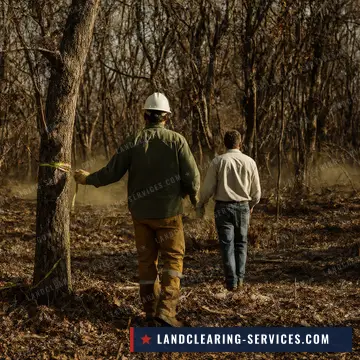
Second, we schedule a free on-site consultation with land clearing experts nearest your tract. We walk the boundary lines with you, locate any wetland buffers or shallow ledge, and flag fallen trees or mature maples you want saved. Third, you receive a clear, written proposal detailing daily machine rates, expected acreage per day, and any contingencies for mud or rock before equipment leaves the yard.
We work with fully insured crews, reliable equipment, and clear scheduling. Whether you need overgrown ground reclaimed, trails established, or complete prep for new home construction, we clear your land with upfront pricing. Our company offers complete cleanup to help property owners reclaim their ground efficiently. Call today to get your clearing schedule locked in.
Land Clearing in Vermont Frequently Asked Questions
How much does land clearing cost per acre in Vermont?
Forestry mulching runs $1,000 to $2,500 per acre for light to medium brush and $2,500 to $4,000 per acre for dense buckthorn or hardwoods. Full clearing to bare dirt with stump extraction ranges from $2,500 to $6,000 per acre depending on granite ledge, steep slopes, and haul distances. A standard half-acre home lot costs $2,500 to $3,200.
Do I need a permit to clear property in Vermont?
You do not need a permit simply to cut brush or trees on your own land outside regulated zones. However, open burning requires a permit from the Town forest fire warden or deputy forest fire warden when ground is snow-free. Work within 50 feet of Class II wetlands requires ANR approval, and commercial projects over 10 acres trigger Act 250 review.
Can I burn the piles after land clearing?
You can burn wood piles if you obtain a permit from your local Town forest fire warden or deputy warden during snow-free periods. Most property owners choose environmentally responsible forestry mulching services to grind brush into mulch, avoiding burn permits and air quality restrictions entirely.
What is the best time of year to clear acreage in Vermont?
Winter from November through April is ideal for forestry mulching because frozen ground prevents equipment from rutting soft clay or wet soils. Mulchers operate cleanly over snow cover. Spring mud season in April and May slows heavy excavation, while summer and fall suit complete site prep and driveway installation once ground dries out.
How fast can a crew clear my land?
A standard half-acre lot clearing project finishes in one day.
How do I get a land clearing quote in Vermont?
Call (888) 709-7985 or submit your project details through our website form. Specify your county, estimated total acreage, and dominant vegetation type. Marisol emails a baseline budget range the same day and arranges a free on-site property walk with the crew nearest you.