Land Clearing Cost per Acre in Louisiana (2026): Chinese tallow, Lots and Acreage Priced from Real Jobs
Land clearing cost in Louisiana starts with Chinese tallow and gumbo clay. On our jobs across the state, the cost to clear an acre of land ranges from $1,000 to $2,500 for light brush clearing and forestry mulching, up to $2,500 to $6,000 per acre to clear to bare dirt with stumps removed. Chinese tallow and yaupon run light to medium on machine density, but tallow roots resprout within a single season if the stump is left untreated. Wet soil along the gulf coast or river basins can add a wet day to the total project cost. Call (888) 709-7985 or send the form. Marisol emails a budget range the same day and books the on-site estimate with the crew nearest you.
- 48 contiguous
states - Insured
crews - Same-day
budget range
48 statesContiguous coverage
$2,500–3,200Skid steer mulcher, per day
60 milesTransport included
Same dayBudget range by email
How Much Does It Cost to Clear Land in Louisiana? Average Cost per Acre
The average cost to clear land in this state ranges from $1,000 to $6,000 per acre depending on vegetation density, soil conditions, and the method of clearing chosen. The price to clear brush with forestry mulching runs $1,000 to $2,500 per acre for light to medium cover like young tallow and yaupon under pines. Dense clearing land work in heavily wooded land full of sweetgum and water oak costs $2,500 to $4,000 per acre to mulch. Full traditional clearing that pulls stumps and grades the ground to bare dirt ranges from $2,500 to $6,000 per acre. Call (888) 709-7985 or submit the online form for precise pricing on your tract.
Land Clearing Cost Calculator for Louisiana
Planning range from 2025–2026 national price data, adjusted to Louisiana costs. Change any answer and the range updates.
Open the full land clearing cost calculatorCost to Clear 1/2 Acre, 1 Acre, 2 Acres, 5 Acres and 20 Acres in Louisiana
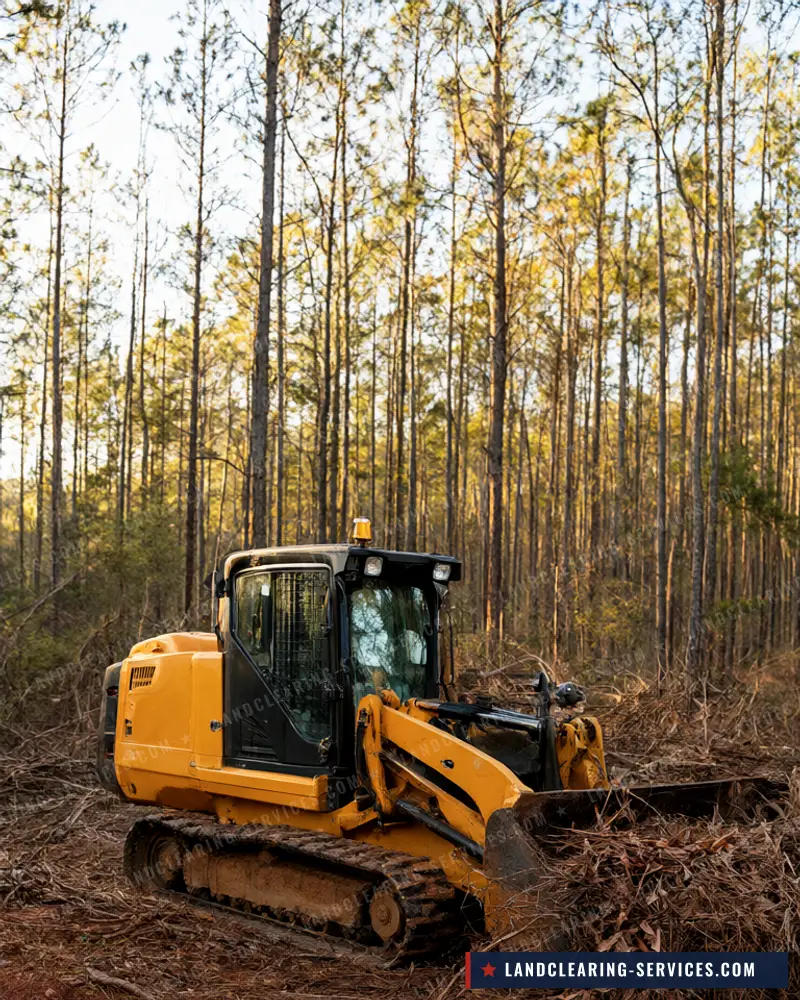
A half acre residential lot is usually a one-day land clearing project that costs $2,500 to $3,200 using a skid steer mulcher, with equipment transport included inside 60 miles of our nearest yard. Clearing one acre of light brush and small trees runs $1,000 to $2,500, while a heavily wooded single acre pushed to bare dirt ranges from $2,500 to $6,000. For 2 acres of mixed brush and timber, expect a cost factor of $2,000 to $5,000 total for mulching, or up to $12,000 for complete stump removal and rough grading.
Larger agricultural land and commercial acreage clearing projects gain efficiency from high-horsepower equipment. A 5 acres pasture reclaim covered in tallow or sweetgum sprouts runs $5,000 to $12,500 for mulching using a dedicated 300-hp mulcher. A 20-acre clearing job with light pine understory and dense yaupon thickets is priced by the day rate, typically running $20,000 to $40,000 total depending on access and terrain wetness.
Cost by Method in Louisiana: Forestry Mulching vs. Dozer vs. Excavator and Haul-Off
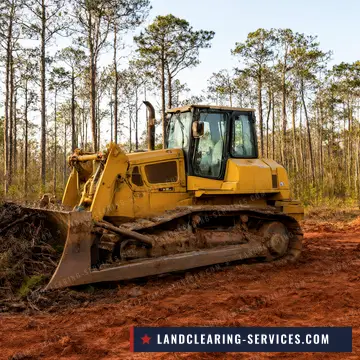
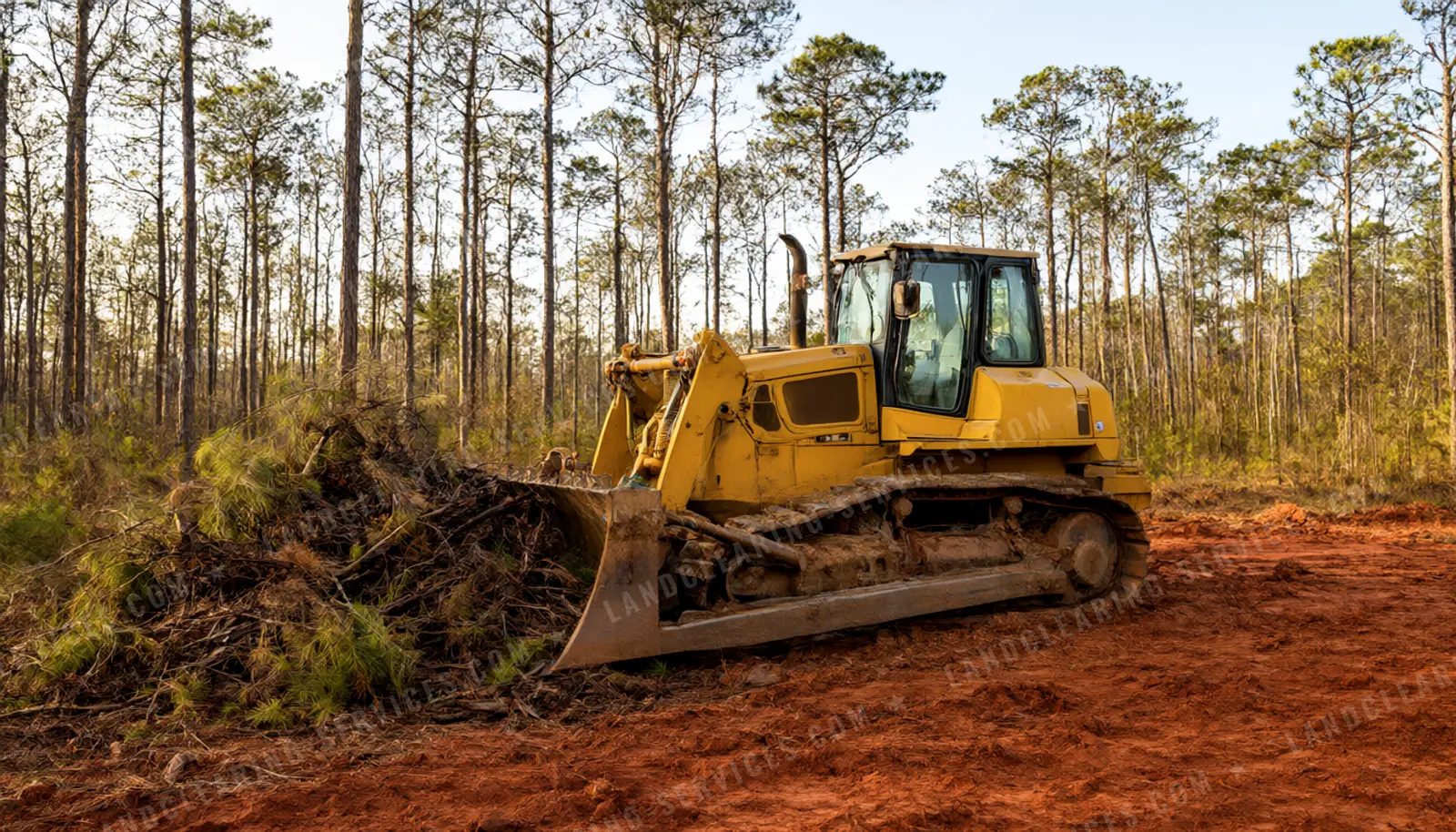
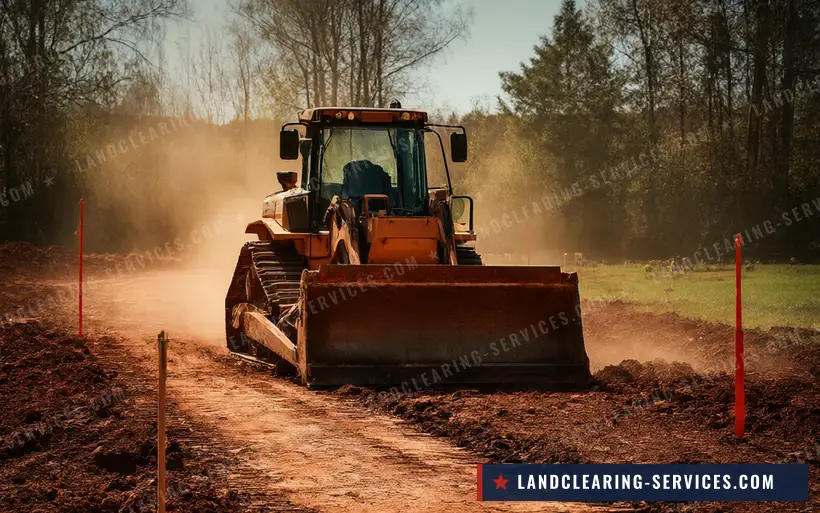
Comparing different clearing methods keeps your forestry mulching cost under control. Forestry mulching is an efficient approach for clearing brush and underbrush control because it uses a single machine pass to shred trees and brush into ground cover. Our crews handle these land clearing tasks efficiently on every job site. Mulching avoids haul-off fees and leaves the root structure intact to prevent soil erosion. Dozer clearing uses a blade to push trees into windrows, with a cost per hour of $150 to $200 for an operator, but it leaves large root holes that require rough grading.
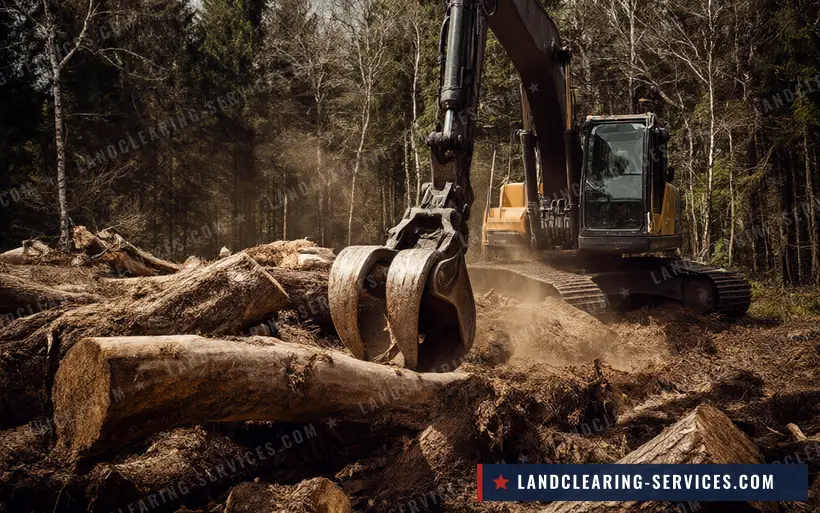
When debris cannot remain on site, an excavator digs stumps and loads dump trucks for haul-off. Haul-off fees run $600 to $1,300 per load, plus tipping fees at local landfills. Burning land clearing debris is governed by the Louisiana Department of Environmental Quality under LAC 33:III outdoor burning exceptions, requiring fires to be at least 1,000 feet from neighboring dwellings with favorable winds. Due to strict air rules, many landowners choose mulching over burning debris piles.

Cost by Vegetation in Louisiana: Chinese Tallow, Yaupon, Oaks and Cypress Edges
The type of wood and plant density directly affect land clearing prices across the state. Chinese tallow, yaupon, and wax myrtle grow quickly under loblolly and slash pine canopies. Tallow is an aggressive invasive plant that forms dense stands, but selective clearing keeps costs down to clear light brush. Tallow roots will sprout back after cutting unless the landowner budgets for a selective herbicide application or grubbing pass.
Hardwoods like water oak and sweetgum sprouts require heavier machinery and slow down the daily acreage rate, pushing costs toward $2,500 to $4,000 per acre for mulching. Bamboo thickets on old homesites require complete root excavation to prevent regrowth, which drives up excavation cost. Sensitive wetland species like cypress and tupelo along bayou edges should be flagged and left alone to avoid environmental violations and high mud-extraction expenses.

Cost by Region: Greater Baton Rouge vs. Acadiana vs. Northshore vs. Shreveport-Bossier vs. Greater New Orleans
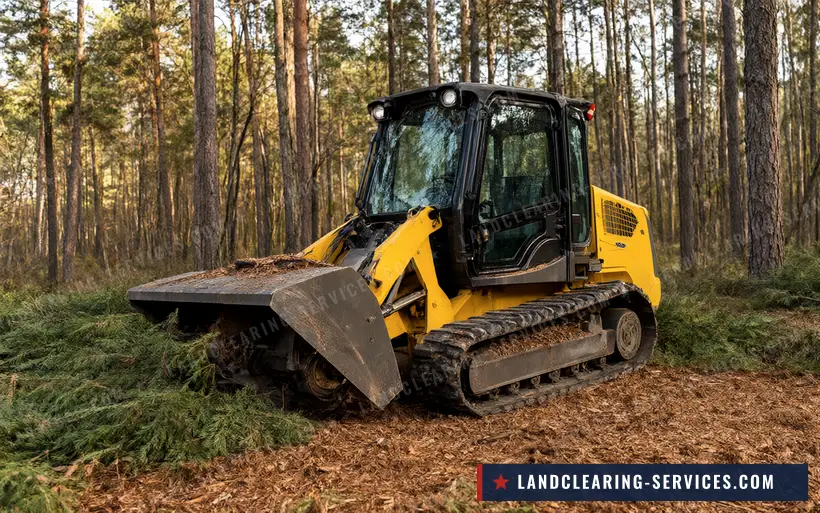
Regional dirt types and moisture levels change overall land costs for your parcel. Land clearing services in Lafayette and the Acadiana region often deal with alluvial silt and low-lying ground where standing water adds a wet day to equipment schedules. In Greater Baton Rouge and along the Mississippi River, heavy gumbo clay absorbs heavy rain and turns to slick mud that can stall a heavy dozer. A tracked mulcher floats over gumbo clay where ground pressure keeps the tracks on top.
contiguous states
The Northshore parishes feature sandy loam soil, giving anyone considering land clearing a lower average cost per acre to clear brush. Up north in the Shreveport-Bossier metro, rolling hills and sandy clay make traditional dozer clearing straightforward, keeping time and cost within baseline national ranges. Greater New Orleans tracts frequently carry coastal zone access restrictions that impact transport logistics.
What Adds a Day in Louisiana: Mud, Wetlands and Debris
Several regional variables act as a cost factor that adds days to a job estimate. Gumbo clay adds a wet day most of the year because heavy machinery cannot gain traction in soaked clay without causing severe rutting. Tracked mulchers manage soft ground better than heavy dozers, but severe mud slows production down. Hurricane debris clearing after major coastal storms is priced per load or by the day due to mixed tree species and buried metal hazard risks.
Working near wetlands line boundaries requires clear flagging because state and federal laws protect low ground. A Coastal Use Permit from the Louisiana Department of Natural Resources may be needed in southern parishes, alongside a USACE Section 404 permit for any fill placed in designated wetlands. Stopping machinery at the flagged line avoids heavy fines and delays. Winter is the dry clearing window across most of the state, offering firm ground conditions that keep daily completion rates high.
Lot Clearing Cost for a New Home in Louisiana
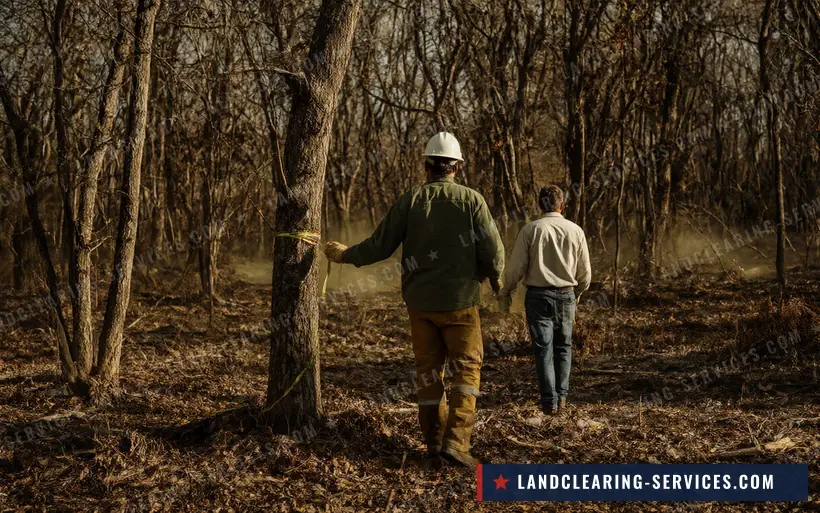
Clearing a residential lot for building site preparation usually takes one day for half an acre, running $2,500 to $3,200 for complete undergrowth and small tree removal. Growth metros across the state are seeing steady single family residential construction that requires site prep before foundation work begins. According to Census Building Permits Survey 2025 single-family permits data, active building areas include Lafayette Parish with 1,612 permits, East Baton Rouge Parish with 1,420 permits, St. Tammany Parish with 1,086 permits, Tangipahoa Parish with 696 permits, and Bossier Parish with 664 permits, contributing to a state total of 11,199 single family building permits.
A heavily wooded lot needs stump removal and surface grading so foundation contractors can pour concrete. Stump grinding runs $3.50 to $5 per inch of diameter with a $150 to $200 minimum per stump. For lots with more than ten stumps, pricing by the daily excavator rate is more economical than paying individual stump fees.
Real Jobs and What They Cost: Florida Citrus, Texas Mesquite and Georgia Clay
To understand land clearing investment requirements, look at real job data from our field operations across different states and vegetation types. Since 2019, I've priced jobs from pine flatwoods to thick pastureland, and the arithmetic relies on day rates and acreage output logs.
- Job log
10 acres, Lake County, Florida
$14,200Dead citrus grove pushed and root raked to clear dirt. 3 days using heavy equipment, total cost $14,200 plus haul-off charges.
- Job log
Half-acre lot, Weatherford, Texas
$2,900Cleared dense mesquite thickets for a home pad. 1 day with a skid steer mulcher, handled by one of our Texas crews for $2,900.
- Job log
4 acres, Cherokee County, Georgia
$5,800On a job in Cherokee County last fall, we cleared dense privet and sweetgum understory beneath native pine timber. 2 days on a skid steer mulcher for $5,800 total.
Whether you need light brush clearing cost estimates or full stump removal, our pricing structure reflects actual field logs rather than vague estimate guesses.
Day Rates and Hourly Rates in Louisiana
Our land clearing contractor pricing is built on standard day rates that cover equipment, fuel, and an experienced operator. A skid steer mulcher costs $2,500 to $3,200 a day, with machinery transport included inside 60 miles of the crew's yard. A dedicated 300-hp mulcher runs $3,800 to $4,500 a day, which shapes the forestry mulching cost per acre. For heavy earthmoving, a dozer or excavator with an operator ranges from $150 to $200 per hour, with a minimum trip fee of $1,000 to $1,500 to cover mobilization.
Having a clear fixed cost eliminates surprise line items on the final invoice. Knowing these base equipment numbers helps any land owner calculate reasonable costs before committing to a major site improvement project. Use our price guide and online calculator to estimate the cost of land clearing per full acre before hiring a land clearing company.
EQIP Cost-Share and Tax Questions in Louisiana
Landowners working on pasture improvement, forestry management, or agricultural land can apply for financial assistance through the NRCS EQIP brush management program under practice code 314. You apply at your local USDA service center before clearing begins. The program reimburses a set dollar amount per acre for clearing invasive brush like tallow or red cedar according to a written conservation plan. Regarding tax treatment, land clearing expenses may be tax-deductible or added to the cost basis depending on whether the land is used for active agriculture, timber production, or personal residential use, so you should consult a qualified CPA for guidance.
Get an Exact Louisiana Land Clearing Quote
Getting a firm price for your site prep or brush removal is simple. Call (888) 709-7985 or send the form with your parish name, total acreage, and a description of the brush or trees to clear. Marisol in our estimating office emails a detailed budget range the same day and books an on-site walkthrough with the crew nearest you. We answer your frequently asked questions about local pricing. You receive written pricing covering day rates and acreage expectations before any equipment unloads on your dirt. Visit our land clearing service page for details on regional coverage. As a professional land clearing team, we clear your dirt safely.