Land Clearing Cost per Acre in Missouri (2026): Eastern red cedar, Lots and Acreage Priced from Real Jobs
I clear trees and brush across this state. The cost of land clearing an acre of cedar on Ozark pasture runs $1,000 to $2,500 for light to medium brush. Dense old cedar hits $2,500 to $4,000 per full acre. Skid steer mulching runs $2,500 to $3,200 a day. Call (888) 709-7985 or send the form. Marisol emails a budget range the same day from our estimating office and books your on-site quote.
- 48 contiguous
states - Insured
crews - Same-day
budget range
48 statesContiguous coverage
$2,500–3,200Skid steer mulcher, per day
60 milesTransport included
Same dayBudget range by email
How Much Does It Cost to Clear Land in Missouri? Average Cost per Acre
The average cost to clear land in Missouri ranges from $1,000 to $6,000 per acre depending on machine choice, stem density and dirt conditions. Understanding land clearing prices starts with comparing raw acreage against field logs for a land owner. We check stem counts and rock depth before setting land costs. Selective clearing on an open acre takes less time than clearing land packed with Osage orange hedgerows. Call (888) 709-7985 to get specific figures for your acreage.
Here is the price guide for clearing an acre of land here:
Light to medium brush clearing and cedar reclamation
$1,000 to $2,500 per acre using a skid steer mulcher.
Heavily wooded land with dense hardwoods or old cedar
$2,500 to $4,000 per acre using a 300-hp dedicated mulcher.
Traditional clearing to dirt with stump removal and rough grading
$2,500 to $6,000 per acre depending on rock and tree size.
Light brush clearing
$350 to $450 minimum for simple bush hogging on open terrain.
Every landowner faces different site realities. Total time and cost depends heavily on whether you need forestry mulching or full excavation with grubbing.
Land Clearing Cost Calculator for Missouri
Planning range from 2025–2026 national price data, adjusted to Missouri costs. Change any answer and the range updates.
Open the full land clearing cost calculatorCost to Clear 1/2 Acre, 1 Acre, 2 Acres, 5 Acres and 20 Acres in Missouri
The total price to clear land changes as tract size expands, but larger tracts bring a lower land clearing cost per acre. Our online calculator helps plan your land clearing project before work starts for clear pricing.
Half acre residential lot
A half acre wooded lot usually takes one full day on a skid steer, costing $2,500 to $3,200 complete.
One acre
Clearing one acre ranges from $1,000 to $2,500 for standard forestry mulching cost, rising to $6,000 if full excavation cost and stump grubbing are required.
2 acres
Clearing 2 acres of mixed cedar and brush costs $2,500 to $5,000 for mulching, or up to $10,000 for grubbing to bare dirt.
5 acres
A 5 acres tract of pasture restoration runs $5,000 to $12,500 for mulching, taking two to three operational days.
Mobilization is a fixed cost inside our 60-mile service radius, making single acre jobs and agricultural land projects straightforward to price upfront.
Cost by Method: Forestry Mulching vs. Dozer vs. Excavator and Haul-Off
The chosen method of clearing dictates your invoice. Our land clearing company relies on three main clearing methods to clear your tract. Our crews tackle large clearing projects with specialized equipment.
Forestry mulching
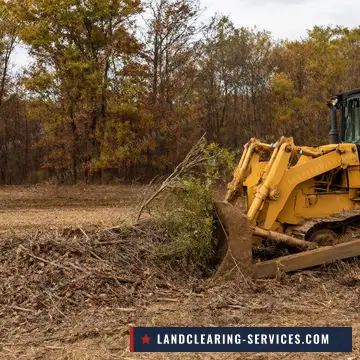
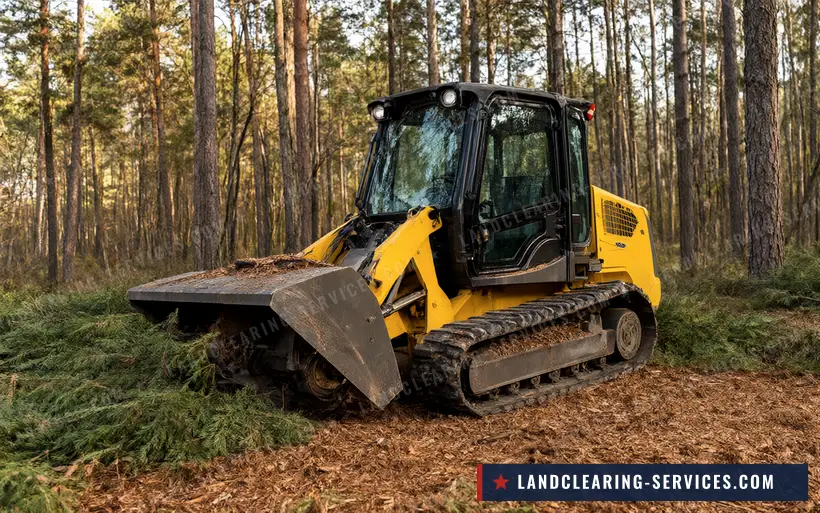
Uses a specialized head to cut brush and trees into ground cover in a single pass. The forestry mulching cost per acre sits at $1,000 to $2,500. Mulch stays on site to stabilize topsoil, eliminating burning or hauling fees.
Dozer clearing
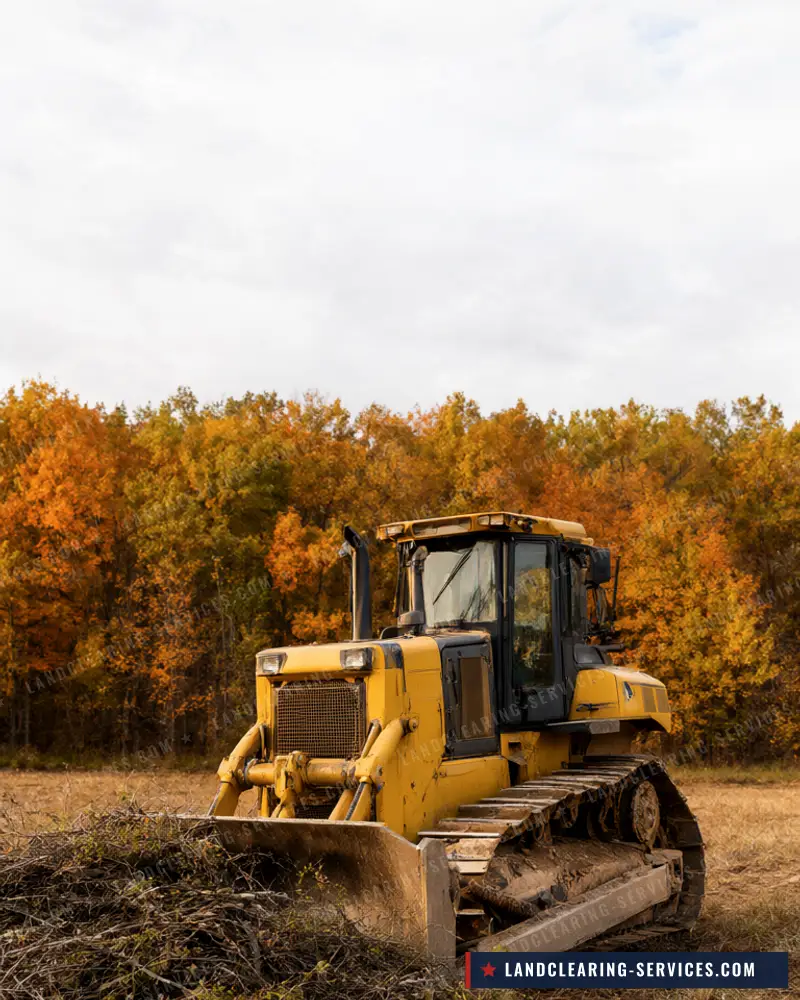
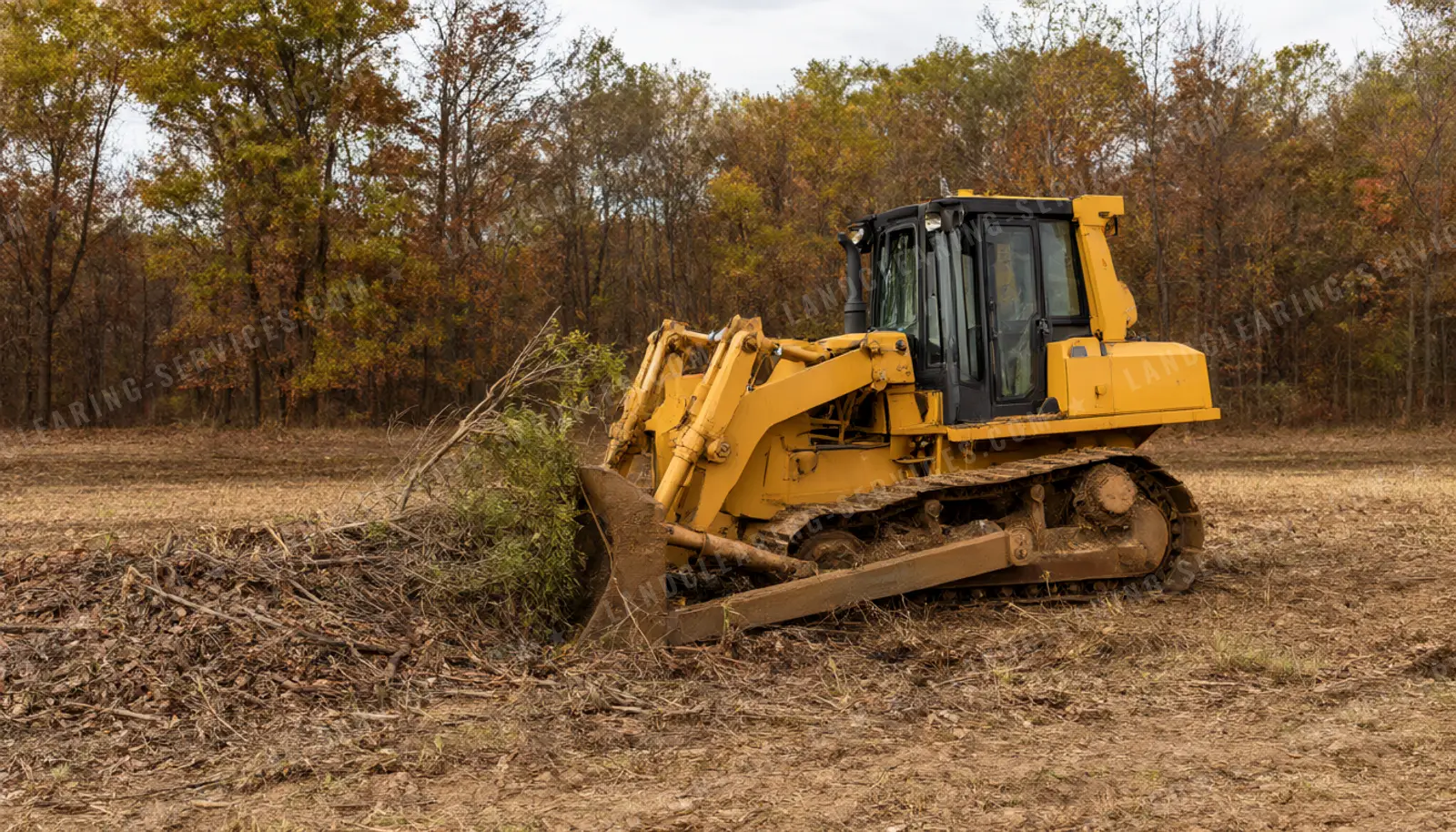
Traditional clearing with a dozer pushes standing timber, root balls and heavy brush into windrows. Stumps are uprooted, leaving bare soil that requires erosion management.
Excavator and haul-off
Grubbing out stumps with an excavator and hauling material off-site runs $2,500 to $6,000 per acre plus trucking fees. Debris haul-off costs $600 to $1,300 per load, with minimum trip fees ranging from $1,000 to $1,500.
If you plan to burn debris, know the state rules.
Cost by Vegetation: Cedar, Bush Honeysuckle and Osage Orange
Vegetation type determines how fast cutting teeth wear down and how many acres a machine turns per day. On our jobs since 2019, we have mapped how local woody plant species impact working schedules here.
Eastern red cedar spreads aggressively over Ozark pasture and limestone glades. Because cedar is a soft evergreen, a heavy mulcher converts dense stands quickly, keeping cedar clearing costs near $1,000 to $2,500 per acre.
Old fields feature invasive autumn olive and multiflora rose, along with sericea lespedeza patches. Multiflora rose is listed on the Noxious Weed List, meaning land owners must control its spread. Historic farm borders contain Osage orange hedgerows and Bradford pear escapes. Osage orange features dense, rock-hard wood that eats carbide teeth, slowing production rates and pushing each cost factor toward the top of standard estimates.

Cost by Region: Kansas City, St. Louis, Ozarks and Columbia
Geographic terrain, soil variations and tree species dictate how fast our machines clear your tract.
contiguous states
- 01
Ozarks (Springfield, Branson, Lake of the Ozarks)
Ozark chert and limestone with thin soil make up the ground here. Shallow rock plates add wear to cutter teeth and complicate stump removal, adding time on pad prep and foundation work.
- 02
Kansas City Metro (Jackson, Clay, Cass)
Features rolling terrain with loess soil along the Missouri River and thick Osage orange hedgerows on former farmland.
- 03
St. Louis Metro (St. Charles, Jefferson, Franklin): Dense hardwood stands, honeysuckle understory and professional land clearing services in St. Charles push lot development projects into medium density categories.
- 04
Columbia and Mid-Missouri (Boone County)
Characterized by northern claypan soils that hold water in spring and fertile river bottom silt near major watersheds.
Each region requires matching machine size to soil hardness and tree species to keep jobs running smoothly.
What Adds a Day in Missouri: Soil, Rock and Wet Seasons
Vegetation density, subsurface rock and wet weather create operational delays that affect land clearing schedules. Weather pattern timing determines whether equipment floats smoothly or sinks into heavy mud. Cedar pasture reclaim runs light to medium, but dense old cedar thickets hit the top end of medium density rates.
Factors that affect your brush clearing cost include:
- Dense old cedar stands that require extra clearing time per acre to process fully.
- Chert and limestone outcroppings add a day on pads and stump removal passes due to blade wear and digging constraints.
- Thick bush honeysuckle banks require thorough double-pass grinding to clear stems to ground level.
- Claypan soils across northern counties hold spring rains, adding a wet day delay from March through May.
- Late summer and fall present ideal conditions for clearing brush across the Ozarks.
Winter ground freezes solid enough to support iron without rutting, making cold months efficient for mulching.
Lot Clearing Cost for a New Home in Missouri
Clearing a residential lot for house construction or driveway installation generally takes one full day on site. A heavily wooded lot costs $2,500 to $3,200 for complete mulching. Grubbing out roots and stumps increases your total project cost to $2,500 to $6,000 per acre.
According to the Census Building Permits Survey 2025, single-family unit permit counts highlight active site preparation areas:
- 01
St. Charles and Jefferson counties: St. Charles County recorded 1,270 permits and Jefferson County logged 609 permits.
- 02
Kansas City south
Jackson County reached 1,299 permits, Cass County added 463 permits and Clay County counted 207 permits.
- 03
Branson and Taney County
Taney County posted 861 permits driven by Ozark residential growth.
- 04
Springfield metro area
Greene County logged 729 permits while Christian County tracked 466 permits.
- 05
Columbia and Mid-Missouri
Boone County registered 611 permits for single-family housing.
Home builders depend on clear estimates before breaking ground on home sites. Before digging foundations or clearing utility lines, state law (RSMo 319.026) mandates calling 811 at least 2 working days but not more than 10 working days prior to excavation.
Real Jobs and What They Cost
Real invoices show how machine selection and stem count combine to form final pricing. Here are actual jobs from our field records:
On a job in Logan County, Oklahoma, our crew completed a 20-acre eastern red cedar pasture reclaim. The tract was heavily overgrown with thick cedar stands. We ran a dedicated 300-hp mulcher for 4 days to convert the evergreen brush into fine ground mulch. Total job cost came to $18,500 plus equipment transport fees.
On a tract in Weatherford, Texas, one of our Texas crews cleared a half acre residential lot covered in mesquite brush. The crew finished the lot in a single day using a skid steer mulcher, bringing the total bill to $2,900.
For comparison on frozen northern terrain, we cleared a 1-acre tract of dense multiflora rose and buckthorn in the Hudson Valley, New York during a cold January run. The single-day frozen ground operation totaled $3,100, proving how cold weather can stabilize soft soil for rapid mulching progress.
Day Rates and Hourly Rates in Missouri
Daily equipment rates reflect total machine horsepower, fuel usage, cutter teeth consumption and operator expertise. Knowing these base rates helps landowners calculate per acre to clear expenses.
Skid steer mulcher
$2,500 to $3,200 per day. Transport is included inside 60 miles of the crew's yard. Handles brush and small trees up to 8 inches in diameter.
Dedicated 300-hp mulcher
$3,800 to $4,500 per day plus transport fees. Knocks down heavy timber and stems up to 12-14 inches in dense stands.
Dozer or excavator with operator
$150 to $200 per hour cost per hour for traditional clearing and stump grubbing tasks. We handle various land clearing tasks to prepare your site.
Stump grinding
$3.50 to $5 per inch of stump diameter, with a $150 to $200 per stump minimum charge.
Minimum trip charge
$1,000 to $1,500 to move heavy machinery for a small clearing job.
As an experienced land clearing contractor, our crews bring specialized iron directly to your fence line.
EQIP Cost-Share and Tax Questions
Agricultural property owners can offset clearing costs through government conservation incentives. The NRCS EQIP program provides brush management cost-share assistance under practice code 314 through your local USDA service center. This funding targets invasive species removal, glade restoration and eastern red cedar control on working pastures.
Landowners who walk their ground with a conservation agent can get clearing plans approved before machine work begins. When considering land clearing investment write-offs, brush removal expenses for agricultural land improvement may be tax-deductible under federal farm conservation rules; consult a qualified CPA to verify how federal tax guidelines apply to your specific land operations.
Property boundaries also carry legal responsibilities. Under state statutes (RSMo 537.340, 537.360), cutting trees on a neighbor's land exposes landowners to treble damages, though single damages apply if the defendant had probable cause to believe the land was his own. Also note that USACE Section 404 permits handle stream and wetland protections through the Kansas City and St. Louis Districts.
Get an Exact Missouri Quote
Our land clearing service requires daily calculations, clear expectations and experienced operators. I clear trees and brush to clear land efficiently. Whether you have half an acre in St. Charles or 20 acres of Ozark cedar pasture, our team provides transparent line-item estimates written out before equipment arrives on site.
Call (888) 709-7985 or send our form today. Marisol will email a budget range the same day and schedule an on-site visit with our local crew. Check our frequently asked questions or visit our state guide at /land-clearing/Missouri/.